

More news on this day
Dream Cruises is setting its sights on a renewed Southeast Asian footprint, outlining an ambitious plan to anchor operations in Singapore while expanding sailings across Malaysia, Thailand and Indonesia as regional tourism rebounds.
Get the latest news straight to your inbox!
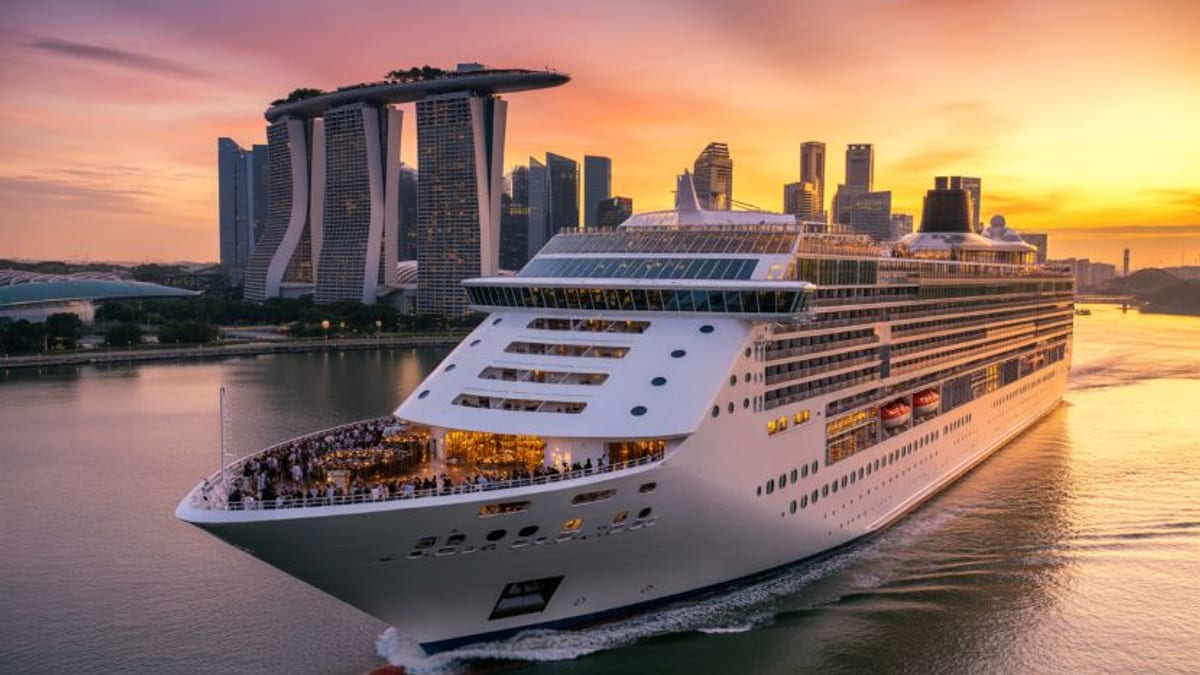
Image by International Cruise News: Latest Cruise Line & Cruise Ship News
Brand Revival Positions Dream Cruises For Regional Growth
The Dream Cruises name is re-emerging in Asia after a major restructuring of its parent group, with the brand now positioned to focus on short-haul, destination-rich itineraries around the Malay Peninsula and the Indonesian archipelago. Publicly available information shows that the former Resorts World Cruises operation is being reorganized under the revived Dream Cruises and Star Cruises brands, with Genting Dream again promoted as the flagship for Southeast Asia.
The shift comes at a time when regional tourism bodies describe a transition from post-pandemic recovery toward longer-term growth. Recent ASEAN outlooks highlight Singapore, Malaysia, Thailand and Indonesia as among the bloc’s strongest performers in international arrivals, supported by open borders, relaxed visa policies and a dense network of air and sea connections.
Within this landscape, Dream Cruises is positioning its product squarely at the mass-premium and family segments, using Singapore as a fly-cruise hub that can draw passengers from across Asia, India, Australia and Europe. The strategy relies on offering multi-country itineraries that compress several classic beach, culture and shopping stops into three to five nights at sea.
Singapore Stays The Nerve Centre Of Dream’s Network
Singapore remains the homeport for Genting Dream, with schedules indicating year-round deployment from Marina Bay. Cruise brochures and deployment announcements describe a pattern of two, three, four and five night voyages looping out from the city-state to nearby ports such as Port Klang for Kuala Lumpur, Penang and selected Thai destinations.
The city’s infrastructure is central to this model. Marina Bay Cruise Centre and the broader cruise hub plan are designed to handle some of the region’s largest ships, while Changi Airport’s wide flight network feeds international passengers into short regional cruises. Industry reports describe Singapore as a lead tourism and business-events destination in ASEAN, which in turn supports demand for pre- and post-cruise stays.
For travelers, Singapore’s role as a turnaround port means simpler visa formalities, efficient check-in and a familiar starting point for repeat guests. It also allows Dream Cruises to package itineraries with city attractions, from urban gardens and museums to major shopping and dining districts, reinforcing the appeal of a cruise that starts and ends in a highly connected global hub.
Malaysia And Thailand Emerge As Core Itinerary Pillars
Schedules for Genting Dream’s current and upcoming seasons point to Malaysia and Thailand as the backbone of the brand’s deployment from Singapore. Penang and Port Klang appear frequently in short-cruise brochures, reflecting their popularity as gateways to heritage districts, coastal scenery and large shopping and dining complexes.
In Thailand, itineraries commonly highlight Phuket and occasionally other Andaman Sea ports, aligning with Thailand’s status as one of ASEAN’s top tourism performers by international arrivals. Tourism data compiled for 2024 and 2025 shows that Thailand and Malaysia together account for a large share of regional visitor volumes, underlining why both markets are central to cruise route planning.
Malaysia has moved rapidly to expand its cruise infrastructure, with recent coverage pointing to terminal upgrades and new berthing facilities along the west coast. This investment is helping absorb rising calls from regional lines, including Genting Dream, and is expected to support more varied patterns such as open-jaw sailings or longer loops that connect several Malaysian ports in a single voyage.
Indonesia Offers New Possibilities For Island-Hopping Routes
Indonesia features in Dream Cruises’ wider ambitions as the brand looks south from Singapore toward the Riau Islands and beyond. Earlier deployment plans for the Genting-linked fleet already reintroduced Indonesian calls as regional travel restrictions eased, and industry commentary suggests that additional Indonesian ports remain under consideration as infrastructure and demand improve.
The archipelago offers clear potential for cruise tourism, from resort islands near Singapore to culture-rich destinations farther afield. National tourism statistics show Indonesia recording steady year-on-year increases in foreign arrivals in 2024 and 2025, with policymakers promoting more diverse entry points beyond Bali. For cruise lines, this opens the door to combining beach stops, UNESCO-listed cultural sites and lesser-known islands in compact itineraries.
For travelers, expanded Indonesian options would mean more varied routing choices from Singapore, including short getaway sailings focused on sun and sea and longer cruises that mix Indonesia with Malaysian or Thai ports. As terminals are upgraded and regulatory frameworks adjusted, observers expect Indonesia to play a larger role in the region’s cruise mix over the next few seasons.
What Travelers Should Watch In The Coming Seasons
Several developments are likely to shape the Dream Cruises experience across Singapore, Malaysia, Thailand and Indonesia over the next few years. The most immediate is the detailed rollout of the brand’s 2026 and 2027 deployment for Genting Dream, with press materials already flagging a refreshed lineup of two to five night cruises from Singapore covering the traditional triangle of Malaysia and Thailand, alongside selected Indonesian calls.
Travelers are also watching how regional tourism policies evolve. ASEAN-level reports describe a continued push toward visa simplification, digital travel passes and greater coordination on port and destination development. Shifts in these areas could make it easier to book multi-country sailings, reduce border formalities at turnaround ports and widen the pool of eligible source markets.
Finally, capacity and pricing trends will be closely followed by both industry watchers and consumers. As more ships homeport or seasonally base themselves in Singapore and Malaysian ports, competition on popular routes may translate into more promotional fares, new onboard concepts and a broader choice of departure dates. For now, Dream Cruises’ renewed focus on Singapore-centered itineraries signals confidence that demand for compact, multi-country sailings in Southeast Asia is entering a new, more mature phase.