

More news on this day
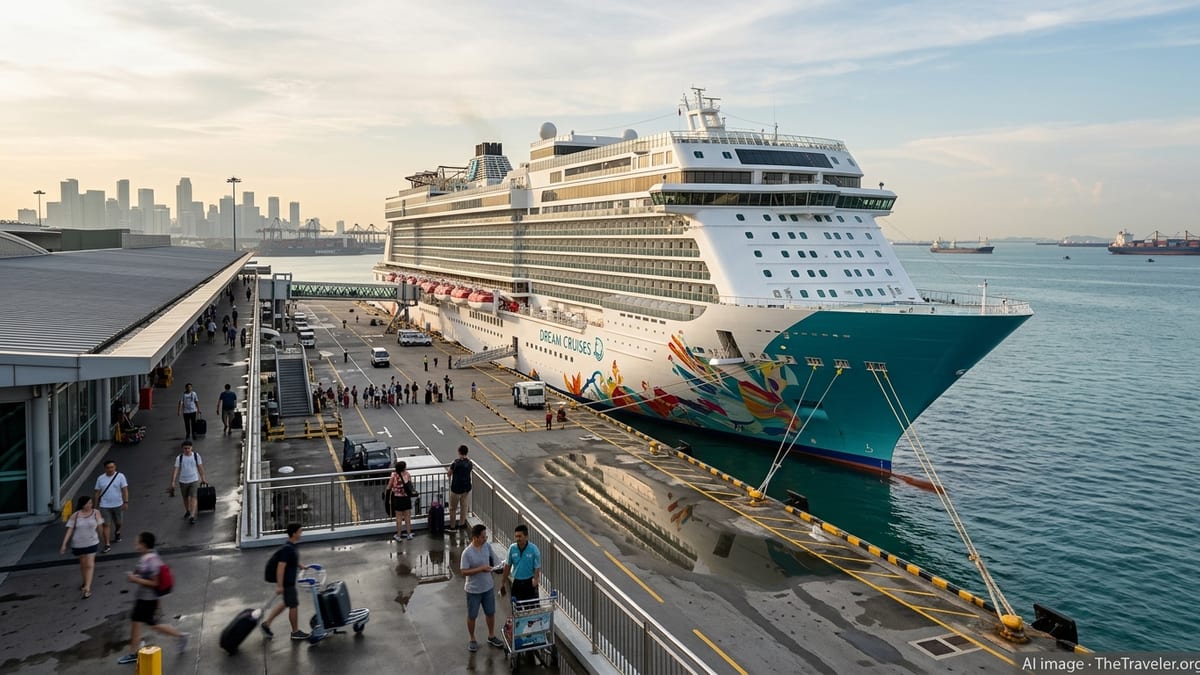
The revival of the Dream Cruises brand in 2025 is reshaping cruise tourism across Southeast Asia, with new itineraries from Singapore signaling a broader push to link key destinations in Malaysia, Thailand and Indonesia.
Get the latest news straight to your inbox!
A Legacy Brand Reemerges From Genting’s Collapse
Dream Cruises, once a casualty of the pandemic-driven collapse of Genting Hong Kong, is reentering the market as part of a wider transition of Resorts World Cruises back to its original cruise identities. Publicly available company information and industry reports indicate that Resorts World Cruises plans to phase out its current branding and reintroduce Dream Cruises and Star Cruises, with operations grouped under a StarDream Cruises structure. This marks a strategic effort to capitalize on strong brand recognition among regional travelers who cruised with Genting-linked companies before 2020.
Background coverage of Genting Hong Kong’s liquidation details how the Dream Cruises name was effectively sidelined following court-ordered wind-up proceedings in 2022, while the hardware, including flagship vessel Genting Dream, continued sailing under the Resorts World Cruises label out of Singapore. The 2025 transition, therefore, is less about launching a new cruise product and more about rebranding an existing Southeast Asia deployment that has already proved resilient in the post-pandemic recovery.
Analysts following the sector note that the decision to restore the Dream Cruises identity aligns with a broader rebound in Asian cruising, as regional ports ease health protocols and upgrade infrastructure. For travelers, the change is expected to be most visible in onboard branding, marketing and itinerary positioning, rather than in radical shifts in hardware or service levels.
Singapore’s Hub Role Anchors Genting Dream Deployment
Singapore remains the central stage for Dream Cruises’ comeback, with Genting Dream continuing as a year-round ship homeported at Marina Bay Cruise Centre. Recent deployment brochures and trade materials for the 2025 to 2026 season show a dense program of two to five night sailings from the city, underscoring Singapore’s role as a gateway for short-break regional cruising. These itineraries are designed to pair pre- or post-cruise city stays with resort-style voyages aimed at both regional holidaymakers and fly-cruise visitors.
Travel trade publications report that Genting Dream’s schedules through early 2026 include frequent departures that loop through Malaysia and Thailand, along with selected sailings to Indonesia. The pattern reflects Singapore’s longstanding ambition to function as a cruise hub for Southeast Asia, building on its air connectivity and upgraded terminal infrastructure to attract lines that can base ships in the city for extended seasons.
Industry studies on the post-pandemic cruise restart point out that Singapore was among the first Asian ports to pilot tightly controlled sailings, setting the foundation for today’s more expansive deployment. For Dream Cruises, anchoring its relaunch in Singapore offers access to a large, cruise-aware local market as well as regional passengers who see Changi Airport as an easy entry point to the region.
Malaysia, Thailand And Indonesia Take Center Stage On New Routes
The heart of Dream Cruises’ tourism vision lies in the triangle of Malaysia, Thailand and Indonesia, which feature prominently in published itineraries and destination marketing. Cruise brochures and destination briefings highlight Port Klang for Kuala Lumpur and Penang in Malaysia, along with Thai staples such as Phuket and the Gulf of Thailand, as core ports on multi-night sailings from Singapore. These ports provide a mix of city access, heritage attractions and beach escapes that can be packaged into short regional holidays.
In Indonesia, existing and emerging calls, including popular islands close to Singapore as well as longer-range sailings toward Bali and other ports, are being positioned as part of a broader Indonesian cruise arc. Trade documents outlining 2025 to 2026 schedules for Genting Dream reference “South and North Bali” itineraries within a five night framework, signaling a willingness to push deeper into the Indonesian archipelago for guests seeking more immersive voyages.
Tourism board communications from Malaysia and Indonesia emphasize that cruise-related investment is being aligned with this pattern of calls. Reports point to terminal enhancements, improved shore excursion offerings and coordinated marketing to ensure that passenger flows from ships like Genting Dream translate into measurable local spending. For travelers, these developments translate into smoother embarkation and disembarkation experiences and a broader menu of shore options at each port.
StarDream Structure Signals A Regional Growth Strategy
Beyond individual itineraries, the restructuring of Resorts World Cruises into a StarDream Cruises platform with both Dream Cruises and Star Cruises brands indicates a longer-term regional strategy. Industry news outlets report that in parallel with Genting Dream’s Singapore-based routes, sister operations under the Star Cruises name are planning sailings from Singapore and other Asian homeports, including itineraries that link Krabi and Penang and then redeploy ships seasonally to Taiwan, Japan and South Korea.
This multi-brand approach suggests a portfolio strategy in which Dream Cruises focuses on the premium, resort-style Southeast Asia market from Singapore, while Star Cruises is positioned to cover broader North and Northeast Asia circuits. For destination planners in Singapore, Malaysia, Thailand and Indonesia, the structure creates opportunities to negotiate recurring calls, themed cruises and shoulder-season deployments that keep terminals active outside traditional peak travel months.
Public information from trade shows and cruise forums also indicates a stronger emphasis on cooperation between cruise lines and regional tourism organizations. Memoranda of understanding and marketing partnerships are increasingly framed around multi-country itineraries, with Singapore at one end and ports in Malaysia, Thailand, Indonesia and sometimes Vietnam at the other. Dream Cruises, as part of this network, stands to benefit from bundled promotion and shared infrastructure upgrades that make complex itineraries more viable.
What Travelers Should Watch In The Coming Seasons
For travelers planning cruises in 2025 and 2026, several developments around Dream Cruises in Southeast Asia merit close attention. First, the formal transition of Genting Dream’s onboard and shoreside branding back to Dream Cruises is expected to unfold over several months, meaning that sailings marketed under different names may in practice offer similar products. Checking the operating ship, rather than only the brand name, will be important for understanding cabin layouts, amenities and onboard experiences.
Second, itinerary fine-tuning remains likely as ports refine terminal capacity and as lines balance demand between short “taster” cruises and longer regional voyages. Recent notices of schedule changes, including adjustments to departures from Malaysian ports, suggest that routes may continue to evolve as Dream Cruises tests which combinations of Singapore, Malaysia, Thailand and Indonesia deliver the strongest demand. Travelers may find additional or altered sailings opening up as the season progresses.
Third, ongoing investments in cruise infrastructure around the region, from expanded check in areas in Singapore to upgraded terminals in Malaysian and Indonesian ports, are gradually improving the passenger journey from curb to cabin. As these projects complete, embarking and disembarking in multiple countries on a single voyage should become more seamless, with knock-on benefits for shore excursion timing and same day flight connections.
Finally, prospective guests should monitor how Dream Cruises and its StarDream sister operations coordinate deployment. The ability to combine a Singapore based cruise featuring Malaysia, Thailand and Indonesia with future sailings in North Asia under a related brand could appeal to repeat cruisers building multi-year travel plans. For now, the relaunch of Dream Cruises from Singapore stands as a clear sign that Southeast Asia’s cruise sector is entering a new phase, with the region’s key destinations more tightly linked by sea than at any point since before the pandemic.