

From the Gulf Coast beaches to the Appalachian foothills, Alabama is a rewarding state to explore by car. Yet visitors are often surprised by how local traffic laws, enforcement practices, and road conditions differ from what they are used to at home. Whether you are flying in and picking up a rental car or driving across state lines as part of a longer U.S. road trip, understanding the basics of driving in Alabama will make your journey safer, smoother, and less stressful.
Licenses, Insurance and Basic Legal Requirements
Visitors who are at least 16 years old and hold a valid driver’s license from another U.S. state or from most foreign countries are generally allowed to drive in Alabama for a limited time as tourists. Short-term visitors typically do not need to obtain an Alabama license, provided their existing license is valid, unexpired, and written in English or accompanied by an accurate translation or an international driving permit. Rental car companies may have stricter requirements, so it is wise to check age limits, credit card policies, and any additional driver rules before arrival.
Alabama, like other U.S. states, requires drivers to have liability insurance that meets minimum state standards. Your rental car agreement will usually include coverage that satisfies Alabama law, though deductibles and coverage levels can vary. If you are driving your own vehicle from another state, your existing policy will typically extend into Alabama, but it is important to carry proof of insurance in the vehicle and verify that you meet or exceed Alabama’s minimum coverage requirements. Law enforcement can request proof of insurance during any traffic stop.
All vehicles must be properly registered and display a current license plate. If you are driving a rental car, this will already be in place. If you are visiting from another state with your own vehicle, current registration from your home state is usually sufficient for a temporary stay. Mechanical condition matters as well. Alabama law prohibits operating vehicles that are unsafe or that have obvious equipment defects, such as broken headlights or missing mirrors. A basic inspection of tires, lights, wipers, and fluid levels before a long drive is strongly recommended.
Visitors should also be aware that Alabama, like many states, treats driving as a privilege closely tied to public safety. Serious violations, such as driving under the influence, reckless driving, or leaving the scene of a crash with injuries, can result in arrest, fines, and potential jail time. Even if you live outside Alabama, offenses can be reported to your home state and may affect your driving record there. Treat your time on Alabama roads as you would in any unfamiliar country: conservative driving choices reduce the chances of difficult encounters with the law.
Speed Limits, Road Types and Enforcement Culture
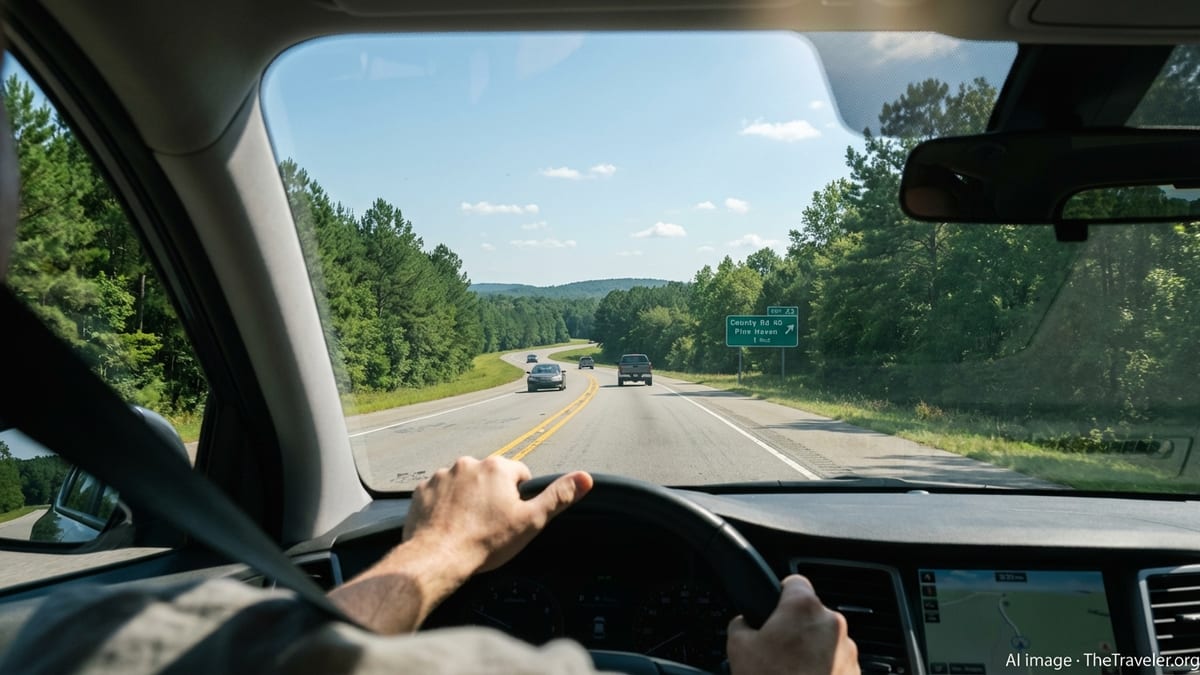
Alabama’s roads range from multilane interstate highways that cross forested hills to narrow two-lane rural routes where farm vehicles and logging trucks are common. Speed limits vary accordingly. On rural interstate segments, the posted limit often reaches 70 miles per hour, while urban stretches can drop to 55 or 60 miles per hour. Many state highways and U.S. routes outside cities are posted around 55 miles per hour, with lower limits through small towns, school zones, and residential areas. In built-up areas, limits near 25 to 35 miles per hour are common.
State and local law enforcement pay close attention to speed, particularly in areas with higher crash rates. Visitors may notice regular patrol cars or unmarked vehicles monitoring highway traffic. Speed cameras are less widespread than in some countries, but officers frequently use radar or laser speed detection. It is common for speeds on rural interstates to creep a little above the posted limit, yet relying on the flow of traffic as your guide can be risky. For visitors unfamiliar with local norms, the safest approach is to treat the posted limit as a true maximum and to slow down promptly when entering small communities or construction zones.
Construction zones and active work areas are taken seriously in Alabama. You will often see reduced limits, lane shifts, or workers close to moving traffic. Fines for speeding or unsafe driving in work zones can be higher than elsewhere, reflecting the increased risk to road crews. At night, lighting may be limited even on major roads, and wildlife, especially deer, can be active near tree-lined highways. Maintaining a margin below the posted limit at night or in poor visibility is a practical way to reduce your chances of a collision.
While some visitors worry about so-called “speed traps” in small towns, the state has worked in recent years to emphasize safety over revenue. Still, abrupt changes in speed limits are not unusual when you approach town centers or school zones. Look ahead for signs, especially flashing school-zone indicators, and adjust your speed early rather than braking suddenly. Smooth, predictable driving tends to draw far less attention from law enforcement and contributes to safer journeys for everyone.
Seat Belts, Child Seats and Passenger Safety
Alabama law requires seat belts for the driver and for all passengers in the vehicle, whether they are in the front or back seats. This requirement applies to visitors as well as residents. Failing to buckle up is a primary offense, which means law enforcement can stop a vehicle solely for a seat belt violation. The base fine for an adult seat belt ticket is relatively modest, but any interaction with law enforcement can consume valuable vacation time and potentially expose other issues, such as uninsured driving or outstanding warrants.
Child passenger safety is given particular attention. Alabama’s child restraint law requires children to ride in age and size appropriate car seats or booster seats. Infants and very young toddlers are expected to ride in rear-facing seats, then graduate to forward-facing seats with a harness. Children who have outgrown traditional car seats typically transition to booster seats until they are large enough for the vehicle’s lap and shoulder belt to fit correctly, which often does not occur until late elementary school age. Public health agencies in the state emphasize that many child seats are installed incorrectly, so rental car pickup or a stop at a car seat inspection station can be a useful precaution for families.
Although the specific weight and age categories can be detailed, visitors can follow a simple rule of thumb: every child under the mid-teen years should be in some form of dedicated child restraint or booster if the seat belt does not fit perfectly across the chest and upper thighs. Children 13 and under are safest in the back seat, away from active front airbags. For families renting vehicles, booking a car seat in advance from your rental company is often the easiest option, though bringing your own seat ensures familiarity and may provide better comfort for the child.
Alabama’s public health and safety campaigns actively promote seat belt and car seat use, especially during peak travel seasons and holiday weekends. Traveling with children without proper restraints may expose visitors to fines and, more importantly, serious injury in the event of a crash. Before leaving the airport or hotel parking lot, take a few minutes to confirm that every occupant is properly secured. This small investment of time can make a decisive difference if something goes wrong on the road.
Hands-Free Law, DUI Rules and Other Key Regulations
Distracted driving has been a growing concern across the United States, and Alabama has strengthened its rules in response. A statewide hands-free law now makes it illegal to hold and use a cell phone or similar electronic device while driving in ways that take your eyes, hands, or attention away from the road. Law enforcement can issue citations if they observe you holding your phone to talk, typing a text, scrolling social media, or watching videos while operating a vehicle. Even tapping more than a single button or swipe to initiate a call can be considered a violation in many situations.
Visitors can greatly reduce risk by enabling hands-free features before starting the car. Place your phone in a secure mount or store it out of reach, use Bluetooth or built-in vehicle systems for calls, and rely on voice commands for navigation. If you must input an address or respond to a message, pull over to a safe location and park first. Fines for violating the hands-free law start relatively low but increase for repeat offenses within a few years, and points can be added to your driving record. For out-of-state visitors, these points may be reported back to your home licensing authority.
Driving under the influence is treated seriously in Alabama, as it is nationwide. It is illegal to operate a vehicle with a blood alcohol concentration of 0.08 percent or higher, and lower thresholds can apply to commercial drivers or young drivers. Impairment from drugs, including certain prescription medications and cannabis products, can also lead to a DUI charge if it affects your ability to drive safely. Penalties may include fines, license suspension, mandatory education programs, and possible jail time, depending on circumstances and prior history.
Other rules of note include Alabama’s move over law, which requires drivers to change lanes or significantly slow down when approaching stopped emergency vehicles, law enforcement, tow trucks, and certain roadside work vehicles with flashing lights. Failing to move over can result in a citation and is also an important safety consideration, as many responders have been injured by passing traffic. Additionally, local ordinances in some cities, like regulations on excessively loud exhausts or street racing, are increasingly enforced. Visitors who enjoy customized vehicles or performance driving should be aware that what might be tolerated at home could draw fines in certain Alabama municipalities.
Road Conditions, Weather and Regional Driving Differences
Alabama’s geography creates a mix of driving environments. In the north, rolling hills and sections of the Appalachian foothills bring curving roads and occasional steep grades. In central Alabama, major corridors link cities such as Birmingham, Montgomery, and Tuscaloosa, with traffic that can be busy during commuting hours and on college football weekends. Further south, the terrain flattens as you approach the Gulf Coast, but heavy vacation traffic can clog routes to popular beaches, especially in summer and during spring break.
The state experiences a humid subtropical climate with long, hot summers and generally mild winters. In summer months, afternoon thunderstorms are common and can produce intense downpours that dramatically reduce visibility in minutes. When rain begins, it is wise to ease off the accelerator, increase following distance, and switch on your headlights so other drivers can see you. Standing water can collect in low spots and on the shoulders of rural highways, creating a hydroplaning risk if you drive too fast through puddles.
Winter driving in Alabama is usually straightforward, but sudden cold snaps can bring freezing rain or light snow, particularly in northern counties and higher elevations. Because such events are relatively rare, road crews and local drivers may not be as accustomed to winter weather as in northern states. When temperatures hover near freezing, bridges and overpasses can become icy even if the main roadway appears just wet. If a winter storm is forecast during your visit, consider adjusting travel plans or allowing generous time and driving with extreme caution.
Rural roads in Alabama can be narrow, winding, and bordered by ditches or trees close to the pavement edge. Nighttime visibility is often limited. It is common to encounter farm machinery moving slowly or wildlife near the roadway. In these settings, patient and defensive driving pays dividends. Use low-beam headlights in fog, refrain from tailgating, and expect the unexpected when cresting hills or navigating blind curves. In contrast, urban expressways can feel fast and congested, with short on-ramps and multiple lane changes required for exits. Planning your route in advance and staying in the center lanes until you approach your exit can make interstate driving less stressful.
Dealing With Law Enforcement and Emergencies
Knowing what to expect if you are stopped by law enforcement can reduce anxiety and help the interaction proceed smoothly. If an officer signals you to pull over, use your turn signal and move safely to the right-hand shoulder or the nearest safe area, such as a wide shoulder or parking lot. Put the vehicle in park, turn off your radio, and remain inside the car unless instructed otherwise. At night, switching on the interior light can help the officer see you clearly, which in turn can make the encounter feel safer for everyone.
In Alabama, officers will typically ask for your driver’s license, vehicle registration, and proof of insurance. Keep these documents where they are easy to reach without sudden, dramatic movements. If your license is from another country, an international driving permit and a passport can help clarify your identity and driving credentials. Be polite and responsive, answer questions briefly and honestly, and avoid arguing on the roadside. If you believe a citation is unjustified, the appropriate place to contest it is in court, often with the help of a local attorney if the matter is serious.
If you are involved in a crash, you are expected to stop, check for injuries, and, if it is safe, move your vehicle out of the flow of traffic. For any collision involving injuries, suspected impairment, or significant property damage, call 911 to request police and, if needed, medical assistance. Exchange names, contact details, license numbers, and insurance information with other drivers. Taking photographs of the scene and the vehicles can be helpful later. Rental car companies typically ask that you contact them promptly after any crash so they can advise on towing, repairs, and replacement vehicles.
Visitors should also be aware of seasonal safety campaigns that highlight the so-called “100 deadliest days” between late May and early September, when road travel and crash risk both increase. Law enforcement and highway agencies may stage extra patrols during holidays and major sporting events, focusing on impaired driving, speeding, and seat belt use. During these periods, take extra care to rest well, share driving duties when possible, and avoid late-night, high-traffic journeys if you are unfamiliar with the area.
Practical Advice for Rentals, Navigation and Daily Driving
Most visitors experience Alabama from behind the wheel of a rental car. Airport locations in cities such as Birmingham, Huntsville, Montgomery, Mobile, and the Gulf Coast region offer a wide range of vehicles. When booking, it is sensible to choose a car size you are comfortable maneuvering, rather than the largest vehicle available. Compact SUVs and midsize sedans often strike a good balance between comfort, luggage space, and ease of parking. Before leaving the rental lot, take a few minutes to adjust mirrors and seats, locate the lights, wipers, hazard indicators, and fuel door release, and pair your phone with the car’s audio system if you plan to use hands-free calling or navigation.
Navigation is straightforward in most of Alabama’s cities and along main highways, but rural areas may have limited mobile data coverage. Downloading offline maps before you set out, and carrying a simple paper map as backup, can prevent frustrating detours. Many small roads are numbered rather than named, and signage may appear with little advance warning. When using navigation apps, remember that glancing repeatedly at your phone can still distract you, even if it technically complies with hands-free rules. Setting destinations in advance and relying on spoken directions is usually safer than trying to interpret the screen while driving.
Gasoline stations are easy to find along interstate corridors and near population centers, but can be more widely spaced in remote rural regions. It is a good habit to refuel when your tank reaches around a quarter full, especially at night or when heading into less populated areas. Most stations accept major credit and debit cards at the pump. In smaller communities, pay-at-the-counter setups still exist, so give yourself a few extra minutes during fuel stops if you are on a tight schedule.
Parking regulations vary by city and town. In downtown districts, visitors should watch for signs indicating time limits, permit requirements, or paid parking zones. Some smaller communities have free street parking but strictly enforce no-parking areas around fire hydrants, crosswalks, and loading zones. If you are unsure, choosing a well-lit public lot or parking garage can reduce the risk of tickets and make it easier to locate your car later, particularly after evening events.
The Takeaway
Driving in Alabama offers the freedom to explore coastal dunes, pine forests, historic towns, and lively college cities at your own pace. The key for visitors is to pair that freedom with a clear understanding of local rules and customs. Respecting speed limits, wearing seat belts, using child restraints correctly, and keeping your phone out of your hands are all straightforward steps that dramatically reduce both crash risk and the chance of encountering legal trouble.
Beyond formal rules, success on Alabama’s roads depends on situational awareness. Weather can change quickly, rural roads may present unexpected obstacles, and urban expressways can feel brisk and crowded to those accustomed to quieter environments. Giving yourself extra time, planning routes in advance, and driving defensively will help you adapt to local conditions with confidence.
Ultimately, visitors who approach Alabama’s roads with patience, courtesy, and a willingness to drive conservatively will find that getting around the state is relatively simple. With a bit of preparation and respect for local laws, your time behind the wheel can become one of the most enjoyable aspects of your journey, connecting you safely to the landscapes, communities, and experiences that make Alabama memorable.
FAQ
Q1. Can I drive in Alabama with my foreign driver’s license?
Most short-term visitors can drive in Alabama using a valid foreign driver’s license. If it is not in English, carrying an international driving permit and passport is strongly recommended.
Q2. What are the general speed limits in Alabama?
Rural interstates often allow speeds up to about 70 miles per hour, while urban interstates, state highways, and city streets have lower posted limits that you should follow closely.
Q3. Is it really illegal to hold my phone while driving in Alabama?
Yes. Alabama’s hands-free law prohibits holding and using a phone in distracting ways while driving. Use built-in car systems, mounts, or voice commands instead.
Q4. Do all passengers have to wear seat belts?
Yes. Alabama law requires the driver and all passengers, regardless of seating position, to use seat belts, and police can stop a vehicle solely for seat belt violations.
Q5. What should I know about child car seat rules in Alabama?
Children must ride in age and size appropriate car seats or boosters until adult seat belts fit correctly. Infants start in rear-facing seats, progressing through forward-facing seats to boosters.
Q6. What is the legal blood alcohol limit for drivers?
For most drivers in Alabama, it is illegal to drive with a blood alcohol concentration of 0.08 percent or higher. Lower limits and stricter rules apply to some professional and young drivers.
Q7. How should I handle a traffic stop as a visitor?
Pull over safely, stay inside the vehicle, keep your hands visible, and provide your license, registration, and insurance when requested. Be polite, and address disputes later through the court process.
Q8. Are Alabama roads difficult to drive in bad weather?
Heavy summer rain and occasional winter ice can make driving challenging, especially at night or on rural roads. Slowing down, increasing following distance, and using headlights greatly improve safety.
Q9. Do I need special insurance to drive a rental car in Alabama?
Rental companies typically include basic coverage that satisfies Alabama’s minimum requirements, but you may wish to add extra coverage or rely on your own policy or credit card benefits for greater protection.
Q10. Is it safe to drive long distances at night in Alabama?
Many visitors drive at night without problems, but reduced visibility, wildlife, and fatigue increase risk. Plan breaks, share driving when possible, and consider limiting nighttime travel on unfamiliar rural roads.