

Driving in Arkansas offers a mix of open interstates, winding Ozark mountain roads, and quiet rural highways that can feel wonderfully uncrowded to visiting drivers. At the same time, the state’s changing weather, wildlife, and patchwork of urban and country road conditions mean that preparation is essential, especially if you are renting a car or planning a road trip. Understanding the rules of the road, how local drivers behave, and what to expect from seasonal conditions will help you travel confidently and safely across the Natural State.
Licensing, Insurance, and General Road Rules
Visitors to Arkansas who hold a valid driver’s license from another U.S. state or many foreign countries can typically drive legally for a limited period without obtaining a local license. Rental car agencies will require your physical license, and many also ask for a credit card in the primary driver’s name. If your license is not in English, it is wise to carry an official translation or an international driving permit to avoid delays if you are stopped by law enforcement.
Arkansas law requires that any vehicle operated on public roads carry minimum liability insurance, and rental vehicles are generally insured by the rental company’s policy. At the counter, you will be offered optional extra coverage. While not legally required, supplemental insurance can be worthwhile if you are unfamiliar with local driving conditions or concerned about gravel roads, wildlife strikes, or hail damage. Always verify what coverage your own auto or travel insurance already provides before purchasing more.
The state follows the standard U.S. rule of driving on the right side of the road and passing on the left. Centerline markings, speed limit signs, and stop signs broadly match what you see across most of the United States. Right turns on red are usually permitted after a complete stop unless a sign says otherwise. At four way stops, vehicles proceed in the order in which they arrived, and courtesy is generally high in rural areas, though you should never assume another driver will yield correctly.
Seat belts are mandatory for drivers and most passengers, and children must be secured in appropriate child safety seats or booster seats depending on age, weight, and height. Smoking in a vehicle with young children is restricted, and open containers of alcohol are prohibited in the passenger area. These rules are enforced with fines that can disrupt your trip, so buckle up, secure child restraints before moving, and keep alcohol sealed in the trunk.
Speed Limits, Enforcement, and Driving Culture
Speed limits in Arkansas vary widely between urban freeways and quiet rural roads. On many sections of interstate, you will see limits around typical U.S. highway speeds, while two lane state highways and rural routes are posted more conservatively. Within town and city limits, speeds drop significantly, especially near schools, residential neighborhoods, and downtown districts with frequent pedestrian traffic.
Enforcement levels can feel different from one region to another. Around larger cities, drivers often travel slightly above posted speeds, but highway patrol and local police do conduct frequent speed checks, particularly in construction zones and near town entrances. In small communities where the main road doubles as the town’s main street, you should expect strict attention to speed limits. It is common for speed limits to drop quickly as you approach a town, so prepare to slow well in advance.
Arkansas has laws against aggressive driving and racing on public roads. Tailgating, weaving between lanes, or passing in clearly marked no passing zones can quickly lead to citations. Local driving culture is generally patient, but some interstate corridors see fast moving traffic and commercial trucks. If a vehicle is following you closely on a two lane road, look for a safe place to pull over briefly to let it pass rather than feeling pressured to speed.
Construction zones deserve special consideration. Fines for speeding in these areas can be significantly higher, and workers may be very close to moving traffic. Lanes can narrow suddenly, merge patterns can change from one day to the next, and temporary rumble strips or uneven pavement may appear without much warning. Reduce your speed as soon as you see work zone signs and avoid abrupt lane changes that could surprise drivers behind you.
Mobile Phones, Impaired Driving, and Key Safety Laws
Arkansas restricts handheld mobile phone use while driving, especially in school zones and for younger drivers. Even where not fully prohibited, using a phone in your hand can be grounds for a traffic stop in some circumstances. The safest choice for visitors is to use a hands free mount for navigation and activate voice commands before you begin driving. If you need to type an address or send a message, pull off the road into a safe parking area.
Texting while driving is broadly prohibited. Law enforcement agencies across the state conduct periodic campaigns focused on distracted driving, and fines can increase if your distraction contributes to an accident. In many rural regions where wildlife and slow moving farm vehicles are common, a second of inattention can have serious consequences. Silence non essential notifications and set your navigation in advance so that you can keep your full attention on the road.
Driving under the influence of alcohol or drugs is treated seriously. Arkansas sets legal blood alcohol concentration limits that match common U.S. standards, with even stricter expectations for commercial drivers and underage drivers. Penalties can include fines, license suspension, mandatory classes, and, in serious cases, jail time. Visitors should avoid any uncertainty by designating a sober driver, relying on taxis or ride share services in larger cities, or staying within walking distance of nightlife.
Seat belt enforcement is typically primary, which means you can be stopped solely for not wearing a belt. Child passenger safety checks are offered in some communities, and if you are uncertain about local requirements for car seats or boosters, you can often find up to date guidance through state agencies or local law enforcement offices before you arrive. Always install rental car seats carefully and test them before driving away from the lot.
Road Conditions, Terrain, and Seasonal Weather
Arkansas includes a variety of landscapes, from the flat agricultural Delta in the east to the hills and forests of the Ozarks and Ouachitas in the north and west. Interstates are generally in good condition, but you may encounter rougher pavement, narrow shoulders, and occasional potholes on some secondary state highways and county roads. In rural areas, some roads transition to gravel or dirt without much warning, and heavy rainfall can turn low lying sections muddy or even impassable.
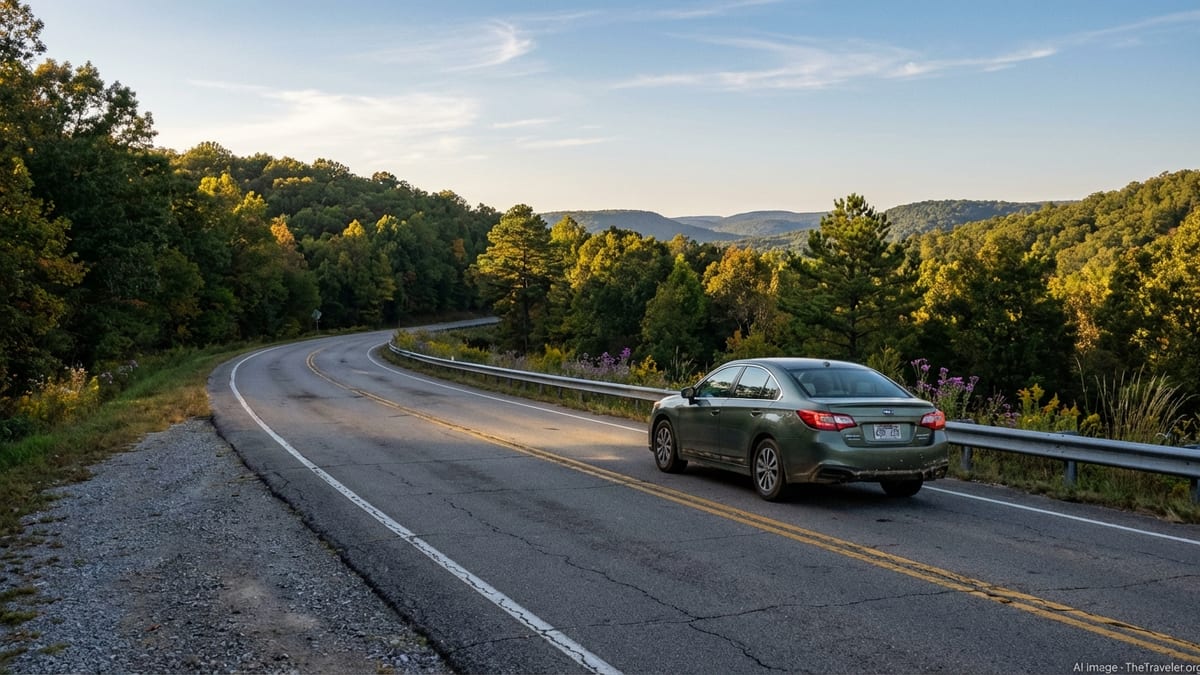
Mountainous regions in the north and west feature winding roads with sharp curves, steep grades, and limited passing zones. These routes can be beautiful, with views over rivers and forests, but they demand slower speeds and attentive driving. Use lower gears when descending long downhill sections to avoid overheating your brakes, and resist the urge to cut corners on blind curves. Pullouts and scenic overlooks offer safer places to stop for photos than shoulderless bends.
Weather can change quickly throughout the year. Spring and early summer often bring strong thunderstorms, heavy rain, and occasional hail. Intense rainfall can temporarily flood low water crossings, and localized flash flooding may cause short term closures or detours. When you see water flowing across a road, do not attempt to drive through, even if it looks shallow. Turn around and seek an alternate route rather than risking your vehicle being swept away.
Winters are usually milder than in many northern states, but cold snaps can produce freezing rain, sleet, or light snow, especially in the higher elevations. Because severe winter weather is relatively infrequent, some drivers are less experienced in icy conditions, and roads may not be treated as quickly as in places where snow is constant. If a winter storm is forecast, consider delaying travel or planning shorter distances. In hot summers, protect your car by checking coolant levels, watching tire pressures, and never leaving children or pets unattended in parked vehicles.
Wildlife, Rural Hazards, and Night Driving
Wildlife encounters are one of the more distinctive driving concerns in Arkansas, particularly in forested and rural regions. Deer are active around dawn and dusk, and collisions are most common along tree lined highways and near fields. When you see a deer near the road, reduce your speed and be prepared for more animals to follow, as they often move in groups. Do not swerve sharply to avoid a deer, since leaving your lane at high speed can lead to more serious crashes.
Smaller animals such as raccoons, armadillos, and stray dogs may also dart into the roadway without warning, especially on lightly traveled roads where they are accustomed to quiet. At night, use high beams on unlit rural stretches when no oncoming traffic is present, and dim them promptly when another vehicle approaches. Clean windshields, properly aimed headlights, and reduced speeds after dark can all make a critical difference in spotting hazards early.
Farm equipment is another common sight on rural Arkansas roads, particularly during planting and harvest seasons. Tractors and combines often move slowly and may occupy a large portion of the lane, especially on narrow paved routes. Be patient, keep a generous following distance, and pass only when legal and clearly safe, with ample visibility ahead. Expect these vehicles to turn into unmarked field entrances or side roads without obvious warning.
Some back roads have limited shoulders, abrupt drop offs, or open drainage ditches directly beside the travel lane. Gravel surfaces can hide soft spots, ruts, or washboarding, which can unsettle vehicles at speed. Visitors in rental cars should ask whether off pavement driving is allowed under their contract and should avoid unpaved roads after heavy rain. If you must travel on gravel, slow down significantly, avoid sudden steering inputs, and leave more room to stop.
Urban Traffic, Parking, and Sharing the Road
Arkansas’s cities, including Little Rock, Fayetteville, and other regional centers, see predictable rush hour congestion around work start and end times. Compared with major coastal metros, traffic volumes are moderate, but interchanges, river crossings, and downtown arterials can still back up. Navigation apps can help you select less crowded routes, but be mindful that some suggested shortcuts may run through residential neighborhoods where children play and speeds are lower.
Parking availability varies by city and district. Downtown cores often use metered street parking, municipal garages, or private lots near offices, restaurants, and entertainment venues. Always read local signs carefully for time limits, payment hours, and event day restrictions, especially near stadiums or arenas. Some neighborhoods around universities have residential permit zones where visitors may face tickets or towing if they park during restricted hours.
Bicycles, pedestrians, and in some places electric scooters share Arkansas streets with motor vehicles. Drivers are generally required to give cyclists room when passing and to yield to pedestrians in crosswalks. Around college campuses and entertainment districts, especially in the evenings, watch for people stepping into the street between parked cars or jaywalking. Slow down near trail crossings and multi use paths that intersect the roadway, even when you have the right of way.
Public transit exists in several Arkansas cities but is more limited than in larger metropolitan areas, so ride share vehicles and taxis can also be part of the traffic mix. When picking up or dropping off passengers, do so only where it is safe and legal, rather than stopping in active travel lanes. In entertainment areas, police and event staff may set up temporary traffic controls after concerts or sporting events; follow their directions even if they differ from usual patterns.
Planning a Road Trip and Staying Prepared
Arkansas is well suited to road trips, with scenic byways, state parks, and lake regions linked largely by car. To make the most of your journey, plan realistic daily distances, taking into account slower speeds on mountain roads and possible weather delays. In more remote areas, services such as fuel, groceries, and lodging may be spaced farther apart than in densely populated states, so top off your tank before long stretches and keep drinking water and snacks on hand.
Cell coverage is good along major corridors but can be patchy in mountainous or heavily forested regions. It is wise to download offline maps for the areas you plan to visit, and to note key route numbers and town names in case your signal drops. In unfamiliar territory, do not rely solely on a navigation app’s shortest route option, as it may send you along narrow, poorly maintained back roads that are slower and less safe than slightly longer highways.
Basic emergency supplies can make breakdowns or delays far less stressful. Consider carrying a compact first aid kit, flashlight, reflective triangle or flares, a tire pressure gauge, and a small air compressor or can of tire sealant. Many rental cars include only the bare minimum equipment, so it is worth checking the trunk for a spare tire or repair kit before leaving the lot. If you experience a mechanical problem on a busy highway, move as far onto the shoulder as safely possible, turn on your hazard lights, and exit the vehicle on the side away from traffic.
In hot months, hydration and sun protection are important. Long drives without shade can lead to fatigue and headaches, so schedule regular breaks to stretch, drink water, and rest your eyes. If you are touring popular destinations such as national parks or lake marinas, check operating hours in advance and arrive early when possible to reduce time spent in slow moving entrance lines or searching for parking.
The Takeaway
Driving in Arkansas can be one of the most rewarding ways to experience the state’s rivers, forests, small towns, and mountain vistas. With generally manageable traffic and a network of scenic roads, it invites slow travel and spontaneous detours. At the same time, visitors need to respect the realities of changing weather, rural road conditions, wildlife, and differing driving cultures between urban and country areas.
By learning the fundamentals of Arkansas traffic laws, preparing for seasonal conditions, and giving yourself extra time and space on unfamiliar roads, you can explore the Natural State with confidence. Whether you are cruising open interstates or navigating a twisting mountain byway at sunset, a thoughtful, cautious approach to driving will help ensure that your Arkansas journey is memorable for all the right reasons.
FAQ
Q1. Can I drive in Arkansas with a foreign driver’s license?
Yes, many visitors can drive legally with a valid foreign license for a limited stay, but carrying an international driving permit or official translation is strongly recommended.
Q2. Are right turns on red allowed in Arkansas?
Yes, right turns on red are generally allowed after a complete stop, unless a sign specifically prohibits it at that intersection.
Q3. How strict are Arkansas police about speeding?
Enforcement varies by area, but you should expect active speed enforcement on interstates, in small towns where limits drop quickly, and in construction zones.
Q4. Is texting while driving illegal in Arkansas?
Yes, texting while driving is prohibited, and using a handheld phone can lead to fines, especially in school zones and for younger drivers.
Q5. What should I know about winter driving in Arkansas?
Winters are often mild, but occasional ice, sleet, or snow can create hazardous conditions, particularly in higher elevations where drivers may have less experience on slick roads.
Q6. Are Arkansas roads safe at night?
Many roads are safe but can be more challenging after dark due to limited lighting, wildlife such as deer, and slow moving farm equipment on rural highways.
Q7. Do I need a four wheel drive vehicle in Arkansas?
Most major highways and city streets are accessible in standard vehicles, but four wheel drive can be useful on steep, unpaved, or muddy back roads, especially after heavy rain.
Q8. How common are toll roads in Arkansas?
Arkansas currently has very few, if any, toll facilities on major routes, so most visitors will not encounter toll roads during typical trips.
Q9. Is it safe to drive in the mountains in the Ozarks?
Yes, if you drive cautiously. Mountain roads can be narrow and winding, so use lower speeds, stay in your lane on curves, and watch for wildlife and changing weather.
Q10. What should I do if I hit a deer or other animal?
First, pull over safely, turn on hazard lights, and check for injuries. Do not approach a wounded animal, and contact local law enforcement or emergency services for guidance.