

Florida is built for road trips. From theme parks and beaches to freshwater springs and the Keys, most of the state is easiest to explore by car. Yet for many visitors, Florida’s mix of toll roads, fast multilane highways and evolving traffic laws can feel confusing. Understanding the basics before you get behind the wheel will make your trip smoother, safer and less expensive.
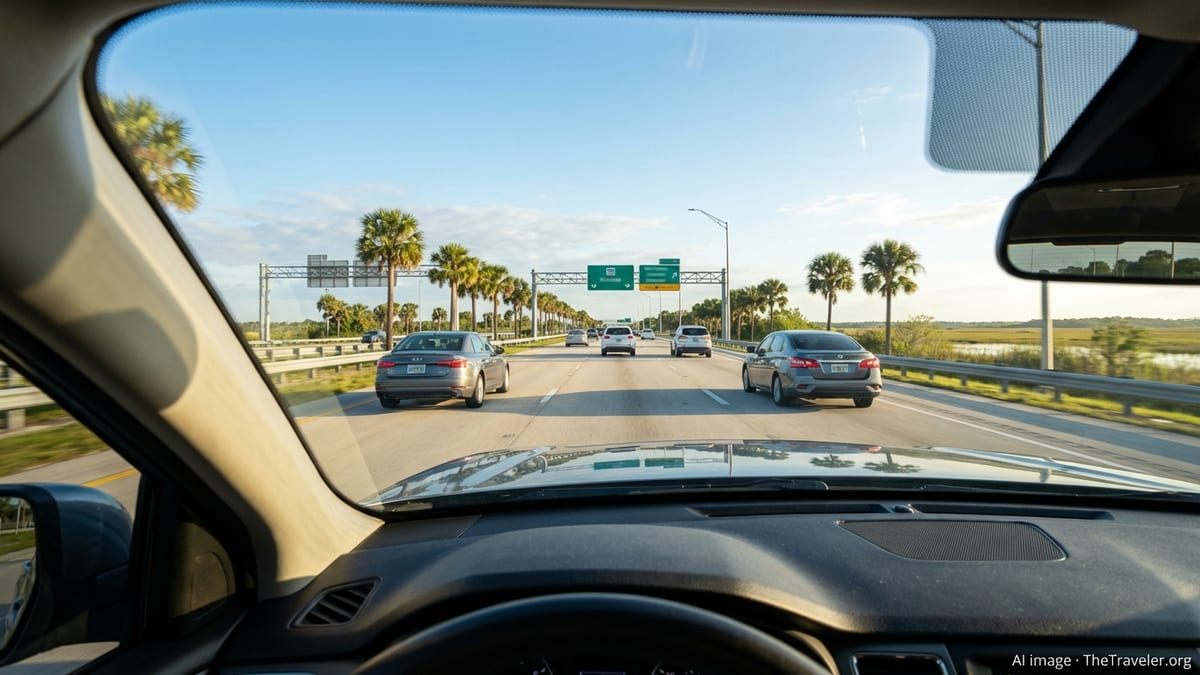
Who Can Drive in Florida as a Visitor
Most tourists can legally drive in Florida using a valid driver’s license from their home state or country, as long as they are at least 16 years old and their stay is temporary. Rental car companies may set higher minimum ages, often 21 or 25, and sometimes add extra fees for younger drivers. If your license is not in English, it is wise to bring an International Driving Permit along with your original license, even though this is not strictly required for every country. It helps police and rental agencies quickly understand your driving credentials if you are stopped.
Florida operates under a strict implied consent system for alcohol and drug testing. By driving, you agree to take a breath, blood or urine test if an officer suspects you are impaired. Refusing can lead to an automatic license suspension on top of any criminal penalties. The legal blood alcohol limit is similar to most of the United States, but enforcement can be vigorous, especially in nightlife destinations and during holiday periods. If you are visiting from abroad, a drunk driving arrest can have serious immigration and travel consequences, so the safest plan is not to drive after any drinking.
Recent changes also affect people seeking a Florida license rather than just visiting. As of February 6, 2026, state policy requires all driver tests to be taken in English only, with no translators. This has no impact on tourists who are simply renting a car with their foreign license, but it has made longer-term driving more difficult for residents who are not fluent in English. Visitors planning to relocate should factor this into their preparations and consider taking driving theory courses in English well before they move.
Insurance is another critical point. Rental cars in Florida must carry minimum liability coverage, but that basic protection may not fully cover injuries or property damage if you cause a crash. Many visitors rely on their home auto policy or a credit card benefit for extra coverage, yet those protections vary widely. It is worth confirming what is and is not covered outside your home country or state, and considering supplemental liability or collision damage coverage for peace of mind on busy Florida roads.
Essential Florida Road Rules Tourists Should Know
Florida follows standard United States traffic laws, but some details catch visitors by surprise. You must drive on the right-hand side of the road and pass on the left. Everyone in the vehicle must wear a seat belt. Children typically must be in an age-appropriate child seat or booster, which you can rent from most car hire agencies. Speed limits are clearly posted and usually range from around 25 to 35 miles per hour in city areas, 45 to 55 on many main roads, and roughly 65 to 70 on rural interstates and Florida’s Turnpike. Limits can drop sharply near schools and construction zones, so watch signs carefully.
One of Florida’s most important safety regulations is the Move Over law. As of January 1, 2025, it requires drivers to move over a lane for any vehicle stopped on the roadside with hazard lights, flares or emergency signage, not just police and tow trucks. If you cannot safely change lanes, you must slow significantly below the posted limit. This rule protects stranded motorists as well as responders and is actively enforced. On multi-lane highways, plan ahead when you see flashing lights on the shoulder and change lanes early.
Right turns on red are generally allowed after a complete stop unless a sign says otherwise. Come to a full stop, check for pedestrians and oncoming traffic, then turn only when it is clearly safe. At four-way stop intersections, the first car to arrive has the right of way; if you reach the stop at the same time as another vehicle, the driver on the right typically goes first. Pedestrians in crosswalks always have priority, even if you have a green light when turning.
Florida has strict rules about school buses. When a school bus stops and extends its stop sign with red lights flashing, traffic in both directions must stop on two-lane roads and on undivided multi-lane roads. You can only continue when the lights stop flashing and the stop sign arm retracts. On divided highways with a physical barrier or unpaved median, traffic moving in the opposite direction from the bus is usually not required to stop, but it must still drive cautiously. Violating school bus rules can lead to significant fines and points on your driving record.
Texting, Phones and Distracted Driving
Florida treats texting and driving as a primary traffic offense. Police can stop and ticket you solely because they see you typing on or reading from a phone while the car is moving. The law focuses on manual entry of letters, numbers or symbols for texting, emailing or instant messaging, but any interaction that takes your eyes and attention off the road is risky. While the base fines may appear modest, additional court costs and license points can add up and may affect rental car accident claims or insurance later.
There are also special rules for school and work zones. In these areas, using a mobile device in your hand while driving is prohibited, not just for texting but for any handheld use. You may still use a hands-free system, such as Bluetooth or built-in car controls, but the safest approach in these vulnerable zones is to avoid calls completely and slow down. Officers regularly patrol near schools, and enforcement can be strict around construction areas where workers are exposed to traffic.
Florida’s road safety campaigns emphasize that distraction is broader than just phones. Eating, adjusting navigation, reaching for items in the back seat, and managing pets or children can all create dangerous lapses in attention. On high-speed roads like Interstate 95 or Interstate 4, traffic can change quickly and congestion can appear suddenly. Planning your route in advance, mounting your phone securely for navigation, and setting music or climate controls before you drive will reduce the temptation to fiddle with devices while moving.
Rental cars today often include sophisticated infotainment systems and built-in navigation that can also be distracting if you are unfamiliar with them. Take a few minutes in the parking lot to learn where key controls are and to pair your phone if needed. Program your first destination before you leave the rental center and pull over somewhere safe if you need to adjust your route. Florida law allows you to use devices for navigation, but it is your responsibility to do so safely.
Understanding Florida’s Toll Roads and SunPass
Florida has one of the most extensive toll road networks in the United States, particularly around Orlando, Tampa, Miami and on the Turnpike that runs through central and south Florida. Many of these roads now use all-electronic tolling, with cameras recording your license plate as you pass under overhead gantries. Instead of stopping to pay cash, visitors either use an electronic transponder such as SunPass or are billed later through a system often called toll-by-plate, which can be more expensive and may involve administrative fees from rental companies.
SunPass is the state’s prepaid toll program. By attaching a small transponder inside your windshield and loading funds into an account, your tolls are automatically deducted as you drive. SunPass users pay the lowest available toll rates, and the transponder is accepted on virtually all Florida toll roads and many bridges. Current versions are also interoperable with systems in several other states, including major networks that use E-ZPass and similar devices, making road trips beyond Florida more seamless for frequent visitors.
The SunPass PRO portable transponder, which is popular with travelers, costs under twenty dollars before tax and can be purchased online, by phone or at many retail locations throughout Florida. Once linked to a credit or debit card, it can be set to auto-replenish so you do not have to monitor your balance during your trip. For many tourists who plan to drive frequently on toll roads, especially around Orlando’s theme parks or between Miami and the Keys, this pre-planning can save time and reduce confusion over later toll invoices.
If you choose not to get a transponder, tolls will typically be charged through toll-by-plate. Cameras capture your license plate, and an invoice is mailed to the vehicle’s registered owner, which is usually the rental company. The rental firm then passes the charge on to you, often adding its own daily service fees. Policies vary widely between companies, so check the fine print before you sign your rental agreement. In some cases, a few days of toll administration fees can exceed what you would have paid for a SunPass device and the actual tolls combined.
Rental Cars, Insurance and Parking Pitfalls
For most tourists, a rental car is the simplest way to drive in Florida. Major airports and cities offer a wide range of vehicles, from compact cars to SUVs suitable for family road trips. When comparing rates, remember that advertised prices may not include taxes, surcharges, toll processing fees or optional insurance. Clarify whether your rental includes a toll program, how it is billed and whether you can opt out in favor of your own SunPass device. Some companies allow you to add your personal transponder number to the rental vehicle’s plate, while others prefer you to use their in-house system.
Insurance deserves careful attention. The basic coverage included with the car may meet Florida’s minimum legal requirements but offer limited protection in real-world crashes, especially for injuries. If you have your own auto insurance policy back home, ask your insurer how it applies to rental cars in the United States, and whether there are exclusions for international travel. Many premium credit cards offer collision damage coverage when you pay for the rental with that card and decline the rental company’s collision waiver, but they might not cover liability to other drivers or medical costs. In busy tourist regions, where minor fender-benders are common, knowing your coverage can prevent stressful arguments at the counter or at the roadside.
Parking can also catch visitors off guard. In cities like Miami, Tampa and Orlando, you will find a mix of street meters, municipal garages and private lots, each with its own rules and enforcement. Look for posted signs about time limits, resident permits and overnight restrictions. In many coastal areas, parking near popular beaches is paid and strictly timed, with fines or towing for overstays. Keep your payment receipts visible if required, and avoid blocking driveways or parking too close to intersections, fire hydrants or crosswalks. In residential neighborhoods, be mindful of local rules that may restrict non-resident parking during events or busy weekends.
When visiting theme parks, stadiums or cruise terminals, parking is usually well signposted but often expensive. Some venues allow you to pay with your toll transponder for parking, integrating the charge into your SunPass account. In downtown districts, consider parking once and using public transport or rideshares to avoid navigating heavy city traffic and complicated street grids. Late at night, park in well-lit, busy areas and avoid leaving luggage or electronics visible inside the car, particularly in tourist zones where thieves target rental vehicles.
Weather, Wildlife and Seasonal Driving Hazards
Florida’s subtropical and tropical climate shapes its driving conditions. From roughly June through November, the state experiences hurricane season, with the highest risk typically in late summer and early autumn. Even when no hurricane is present, heavy afternoon thunderstorms are common in many regions. These downpours can quickly reduce visibility and create standing water on the roads. If you are caught in intense rain, slow down, increase your following distance and turn on your headlights. On some highways, it is safer to exit and wait for the worst of the storm to pass rather than continue at high speed.
Hydroplaning is a particular concern on Florida’s smooth, flat roads. Driving too fast in wet conditions can cause your tires to lose contact with the pavement, making steering and braking difficult. Cruise control should be avoided during heavy rain because it can delay your reaction if the car begins to slide. Instead, keep both hands on the wheel, make gentle steering inputs and avoid sudden braking. Remember that Florida law requires headlights when it is raining, not just at night, and many locals automatically turn them on with the first drops of rain.
Wildlife and water are other distinct hazards. In rural areas and near wetlands, you may see signs warning of deer or even alligators. While alligator encounters on major highways are relatively rare, they do sometimes wander onto smaller roads, especially near canals and lakes. If you see an animal crossing, brake firmly but stay in your lane if possible. Swerving sharply can lead to a rollover or collision with oncoming traffic. In low-lying coastal zones and the Keys, tidal flooding or storm surge can leave water over the roadway. Never drive into water that looks deeper than a few centimeters; it can hide washed-out pavement or strong currents.
Heat also affects vehicles and drivers. High summer temperatures and humidity can quickly overheat engines and tires if they are not properly maintained. Rental companies generally service their fleets regularly, but you should still check that the air conditioning works well and that the spare tire and jack are present. Keep water in the car for long drives, especially if you are traveling with children or older adults. On sunny days, sunglasses help cut glare, and using sunshades when parked can make the interior more bearable when you return.
Urban Highways, Scenic Routes and Driving Culture
Florida’s driving experience varies widely between regions. In Miami, Fort Lauderdale and West Palm Beach, interstates like I-95 and express lanes often feel intense, with fast-moving traffic, frequent lane changes and impatient drivers. Plan your route in advance and try to stay in the middle lanes if you are uneasy about vehicles merging or exiting quickly. In central Florida, Interstate 4 between Tampa and Orlando is known for congestion, particularly near theme parks and major attractions. Allow extra time, expect slowdowns and keep plenty of space between you and the car ahead.
In contrast, scenic routes such as the Overseas Highway through the Florida Keys or coastal roads along the Gulf and Atlantic offer more relaxed, picturesque driving. These roads still require attention, as they may have narrow shoulders, frequent bridges and sudden slowdowns near popular viewpoints, but the pace generally feels less hectic than in major urban corridors. Pull into designated viewpoints or rest areas to take photos rather than slowing in the travel lane, and be patient behind slow-moving vehicles; passing opportunities may be limited.
Florida’s driving culture reflects its mix of locals and visitors. You will encounter drivers from across the United States and the world, with different habits and comfort levels. Some may drive well below the speed limit in the left lane because they are unfamiliar with the area, while others weave aggressively in congested traffic. Staying calm, signaling early and making deliberate lane changes will help you avoid conflicts. Remember that horn use is generally reserved for safety warnings rather than expressing frustration.
Many attractions are located just off major highways, but smaller local roads can quickly become confusing with similar-sounding street names and frequent turns. Rely on clear, turn-by-turn navigation and consider downloading offline maps in case of poor mobile coverage. Gas stations are widespread, but in rural stretches of the Turnpike or Alligator Alley, distances between services can be longer. Refuel when your tank drops below half on long rural segments so you are not searching for fuel late at night or in bad weather.
The Takeaway
Driving in Florida gives you the freedom to explore beaches, parks, cities and hidden corners that are hard to reach without a car. With that freedom comes responsibility. Understanding local rules like the Move Over law, strict distracted driving regulations, and school bus requirements will help you share the road safely with residents and other visitors. Familiarizing yourself with toll systems such as SunPass and the realities of rental car insurance can prevent unpleasant financial surprises after your trip.
If you plan ahead for weather, wildlife and urban traffic, Florida’s roads become part of the adventure rather than a source of stress. Take time to study your routes, build extra minutes into your schedule for sudden storms or congestion, and drive conservatively while you adjust to local conditions. Whether you are cruising across the Keys at sunset, crossing the Everglades on a long causeway or navigating the interchanges around Orlando, a little preparation will go a long way.
Above all, remember that the goal of every drive is to arrive safely and enjoy the journey. Slow down when conditions change, keep your focus on the road and let the scenery, not your phone, be the main distraction. With sensible habits and an understanding of Florida’s specific driving environment, your road trip can be both memorable and safe.
FAQ
Q1. Can I drive in Florida with a foreign driver’s license?
Yes. Most visitors can drive with a valid foreign license during a temporary stay. If your license is not in English, carrying an International Driving Permit alongside it is strongly recommended.
Q2. Do I need a SunPass to use Florida’s toll roads?
No. You can drive on toll roads without a SunPass, but you may pay higher toll-by-plate rates and rental car administration fees. A SunPass or compatible transponder usually offers lower tolls and more convenience.
Q3. Are cash toll booths still available in Florida?
Some locations still accept cash, but many toll roads have converted to all-electronic systems. Visitors should not rely on finding cash booths and should plan for electronic payment options.
Q4. Is texting while driving illegal in Florida?
Yes. Texting while driving is a primary offense, so police can stop you solely for texting. Fines, court costs and license points can apply, especially for repeat violations.
Q5. What does Florida’s Move Over law require?
The law requires drivers to change lanes away from any stopped vehicle with hazard lights, flares or emergency signage when possible. If you cannot move over safely, you must slow down significantly.
Q6. Can I use my phone for navigation while driving?
Yes, you may use your phone for navigation, but it is safest to mount the device and use voice directions. In school and work zones, handheld use is restricted, so rely on hands-free operation.
Q7. What should I do if I encounter heavy rain or a tropical storm while driving?
Slow down, increase following distance, turn on headlights and avoid sudden maneuvers. If visibility becomes very poor, exit the road safely and wait for the storm to ease.
Q8. Are there special rules for school buses in Florida?
Yes. When a school bus stops with red lights flashing and the stop arm extended, traffic generally must stop in both directions on undivided roads and remain stopped until the bus moves or the signals stop.
Q9. Is it safe to drive at night in rural parts of Florida?
Many rural roads are safe but can be dark, narrow and bordered by water or wildlife areas. Reduce your speed, use high beams when appropriate and be alert for animals and slower vehicles.
Q10. Do I need extra insurance when renting a car in Florida?
It is not legally required beyond basic coverage, but additional insurance can be wise. Check how your home auto policy or credit card covers rentals in the United States before deciding.