

For many travelers, driving in Germany is a bucket-list experience, especially the chance to cruise the famous Autobahn. Yet the reality on German roads is far from a lawless high-speed playground. Most of the network is carefully regulated, enforcement is strict and expectations of driver discipline are high. For visiting motorists, understanding the rules and culture before turning the key is essential to staying safe, avoiding costly fines and actually enjoying the journey.
Understanding the Autobahn Today
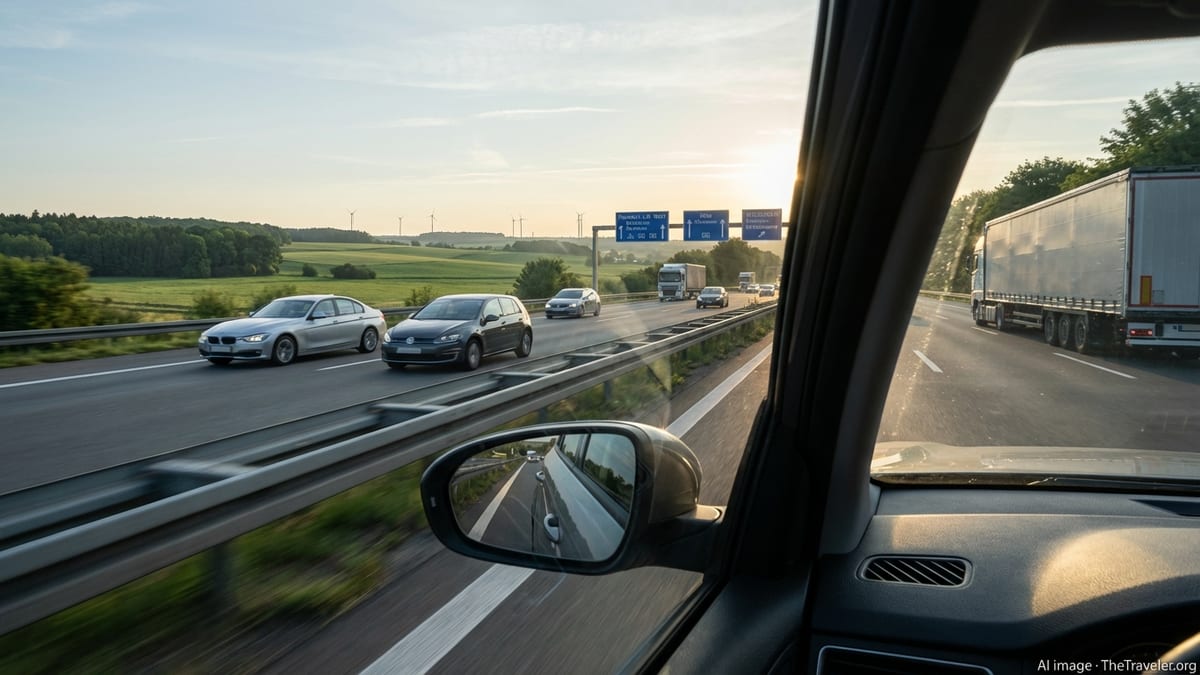
The German Autobahn has a mythical status, often reduced to a simple idea that there are no speed limits. In practice, the network is a modern, heavily managed motorway system where rules and expectations are clear, and high speeds are allowed only in specific conditions. Large portions of the Autobahn have permanent or variable limits, while some stretches remain unrestricted but still subject to an official advisory speed of about 130 km/h. Drivers are expected to adapt their speed to traffic, weather and visibility, not to the maximum their car can reach.
Compared with motorways in many other countries, the Autobahn demands more concentration and discipline. Traffic can flow very quickly in the left lane, with powerful cars appearing in the rear-view mirror far faster than many tourists anticipate. At the same time, dense truck traffic occupies the right lanes, and frequent construction zones and interchanges require calm, anticipatory driving. Visitors who arrive with a realistic picture of how the Autobahn works are far better prepared than those who come expecting an unlimited racetrack.
German authorities have also become increasingly focused on safety and enforcement. National discussions about speed limits, vehicle emissions and road deaths continue, and police regularly stage large-scale speed control campaigns. For tourists, that means even relatively small infractions can be detected and fined, especially on busy routes near major cities and holiday regions. A respectful approach to both the written rules and the unwritten etiquette goes a long way toward trouble-free driving.
Speed Limits, Advisory Speeds and Enforcement
Germany uses a mix of fixed limits, variable signs and unrestricted sections. Where no specific sign is posted, the default is 50 km/h in built-up areas and 100 km/h on rural roads for cars without trailers. On many Autobahn sections, permanent limits between 100 and 130 km/h are common, especially near urban areas, interchanges, tunnels and accident-prone stretches. Variable electronic signs may lower speeds in response to heavy traffic, rain, snow, fog or road works, and these limits are just as binding as fixed metal signs.
On stretches without a posted maximum, there is still a recommended speed known as Richtgeschwindigkeit, set at 130 km/h. Driving faster is legal for suitable vehicles in good conditions, but it carries consequences. If a crash occurs at very high speed, courts can conclude that the driver’s decision to exceed the recommended speed contributed to the risk, which may reduce insurance payouts or increase civil liability. Tourists should see the advisory speed as a sensible upper guideline rather than an invitation to push far beyond it.
Speed enforcement is rigorous and increasingly technology-based. Fixed cameras, mobile radar units and unmarked police cars are common tools. Exceeding the limit by a small margin may result in a modest fine, but higher excess speeds can quickly escalate into several hundred euros and temporary driving bans within Germany. Construction zones, tunnels and urban areas are particularly sensitive, and fines tend to be higher where pedestrians, workers or dense traffic are involved. Foreign drivers can be required to pay on the spot, and unpaid fines may cause problems on future trips.
Recent European efforts to improve cross-border enforcement mean that ignoring a ticket sent to your home country has become riskier. Data sharing between authorities makes it easier to trace non-resident offenders and pursue payment. While exact penalties vary with speed and circumstances, visitors should plan as if any violation will be recorded and enforced sooner or later. Respecting limits and adjusting speed to conditions is both the safest and the simplest strategy.
Lane Discipline, Overtaking and Autobahn Etiquette
Perhaps the most important rule that surprises many tourists is the principle of keeping right. On the Autobahn, you are expected to use the right-most lane that is appropriate for your speed and to move left only to overtake. Cruising indefinitely in the middle or left lane at a moderate pace is frowned upon and can be dangerous, because faster traffic in Germany can approach very quickly from behind. Once you have passed a slower vehicle, you should signal and return to the right lane as soon as it is safe.
Overtaking on the right is generally illegal on multi-lane roads and especially on the Autobahn. This rule is taken seriously, because drivers rely on the predictability that faster traffic will always come from the left. In slow-moving congestion, minor exceptions apply, but as a visiting driver the safest approach is simple: pass only on the left, and never weave or dart between lanes. Abrupt lane changes, tailgating and aggressive moves are not only risky but may also attract police attention.
Another aspect of etiquette involves how drivers communicate. Flashing headlights from behind in the left lane is often used as a signal that a faster car wishes to pass. While deliberate intimidation is prohibited, you should treat such a flash as a clear request to move right when possible. Likewise, indicators are used conscientiously to show lane changes and exits; failing to signal or signaling too late contributes to misunderstandings at high speeds. Maintaining large following distances, checking mirrors frequently and planning moves well in advance are essential habits.
Stopping on the Autobahn is strictly limited to true emergencies and designated rest areas. Running out of fuel is not considered a valid excuse and can itself be fined, as it suggests poor planning. Hard shoulders are reserved for breakdowns and emergency vehicles; they are not for short rest stops, phone calls or scenic photos. If you do have a breakdown, switch on hazard lights, move everyone behind the guardrail and use the roadside emergency phones or your mobile to call for assistance.
Documents, Vehicle Requirements and Seasonal Rules
Before driving in Germany, you must carry valid proof that you are legally allowed to drive and that your vehicle is properly registered and insured. For many visitors, a domestic license from their home country is sufficient, but some nationalities may also need an International Driving Permit as a translation. In addition, tourists should have their passport or national identity document, the vehicle registration papers and proof of third-party liability insurance in the car at all times. If you are renting, the agency handles registration and insurance, but you are still responsible for carrying the paperwork provided.
German law also requires certain safety equipment to be present in the vehicle. A warning triangle is mandatory, as is at least one reflective safety vest and a properly stocked first aid kit. Rental cars are generally equipped with these items, but it is sensible to check before leaving the depot, especially when picking up a vehicle late at night or during busy holiday periods. If you are arriving in Germany in your own car from another country, ensure it meets local standards, including headlight alignment and emissions rules where applicable.
Seasonal conditions matter. In winter weather, appropriate tires are compulsory, even for visiting vehicles. The rule does not specify exact calendar dates but instead requires winter or all-season tires marked for severe snow conditions whenever roads are icy, snowy or slushy. Driving on summer tires in those conditions can lead to fines and liability in the event of an accident, and insurers may limit coverage. In alpine or hilly regions, carrying snow chains may be recommended or required on certain days, and local signs will make this clear.
Emissions and environmental regulations also play a role in many German cities. Low-emission zones, typically marked at city entrances, may require a windshield sticker proving the car meets specific standards. Rental cars based in Germany are commonly equipped for these zones, but cars brought from abroad may need advance arrangements. Visitors planning to drive into large cities should check whether such zones apply and confirm with their rental provider that the vehicle is properly certified.
Policing, Fines and What Foreign Drivers Should Expect
Germany treats road safety as a serious public policy issue, and fines are calibrated to discourage dangerous behavior. Speeding penalties rise with both the degree of excess and the location. A small overshoot on a quiet rural road may result in a relatively modest fine, while substantial speeding in an urban area, near schools or in construction zones can quickly climb into several hundred euros and trigger temporary driving bans from German roads. Repeat offenses or reckless conduct can lead to higher penalties still.
For foreign drivers, enforcement is increasingly streamlined. Police can request payment of fines on the spot, and if a motorist refuses to pay, authorities may secure the amount through a deposit or, in serious cases, impound the vehicle. Modern databases allow officers to check whether a foreign driver has previous recorded offenses in Germany, and new rules are moving more of this information into central digital registers. The practical effect is that a ban from driving in Germany is easier to record and verify, even if the driver holds a license from another country.
Automated enforcement plays a major role. Speed cameras and red-light cameras capture both number plates and the driver’s face, because in Germany it is the driver, not the vehicle owner, who is held liable. If you are flashed by a camera, expect documentation to be sent to the registered keeper of the car, which in the case of rentals is the hire company. They will typically pass on your details and may charge an administrative fee in addition to the official fine. Very high speeds, dangerous maneuvers or driving under the influence are more likely to bring direct police stops and potentially criminal proceedings.
Tourists should also be aware of strict rules on mobile phone use and alcohol. Holding a phone while driving is prohibited and now carries higher penalties than in the past, reflecting concern about distraction-related crashes. Alcohol limits are lower than in some countries, and enforcement spot-checks, especially on weekends and during festival seasons, are common. The safest approach is simple zero-tolerance for alcohol if you intend to drive and to treat German roads as places where every error may be both recorded and penalized.
Comparing German Roads to Driving at Home
Visitors from North America and other regions often find German roads both reassuringly well built and surprisingly demanding. Surface quality on the Autobahn is generally high, and signage is logical once you learn a few key terms. Yet the combination of high speeds, dense traffic and strict rules can feel intense. In contrast to some countries where limits are relatively low but widely ignored, Germany pairs reasonably high posted limits with active enforcement. The result is a driving culture in which most people respect the rules but expect others to do the same.
One major contrast with many countries is the discipline around lane use and overtaking. The expectation to keep right and use the left lane only for passing makes traffic flow smoother at high speeds, but it can be stressful for visitors who linger too long while overtaking trucks. Learning to anticipate closing gaps in the left lane and planning passes more assertively, yet calmly, is a skill that many tourists need a few hours to develop. Renting a car that you feel comfortable handling at motorway speeds is more important than choosing the most powerful model available.
Signage on the Autobahn emphasizes destinations rather than route numbers, which can be unfamiliar to visitors used to relying heavily on numbered interstates or motorways. Major cities and regions appear frequently on direction signs, and exit numbers are clearly displayed, but recognizing the name of your next junction in advance is essential. Reliable navigation, whether built into the car or on your phone, is extremely helpful, but you should avoid making last-second lane changes based on navigation prompts. Planning ahead and accepting the occasional missed exit is safer than abrupt maneuvers.
Outside the Autobahn, country roads and small towns present their own challenges. Speed limits can drop suddenly as you enter villages, and traffic-calming measures such as narrowings and pedestrian crossings require attention. Cyclists and pedestrians are common, especially in scenic regions popular with tourists. Compared to some countries, German authorities are quick to place cameras and police checks on rural roads where serious crashes have occurred. Treating every village entry and every country intersection as a potential enforcement point is a wise habit.
Practical Tips for Tourists Planning an Autobahn Trip
For many travelers, the most satisfying approach to the Autobahn is to treat high speed as an option, not an obligation. Begin your trip by driving at or slightly below the advisory speed of around 130 km/h, even on unrestricted stretches, to get used to the flow. Gradually build confidence in the car, the mirrors and the lane patterns before considering higher speeds. Remember that at very high velocities, small errors in judgment can have large consequences, and other drivers may be traveling significantly faster than you expect.
Choosing the right vehicle matters. For most tourists, a comfortable mid-size car with modern safety features is a better choice than an ultra-powerful sports model. Look for good visibility, stable handling and ideally adaptive cruise control and lane-keeping assistance, while recognizing that these tools support rather than replace your attention. If you are not familiar with manual transmissions, specifically request an automatic, as struggling with gears during busy traffic is unnecessary stress.
Plan your route with rest in mind. The Autobahn network includes many service areas and rest stops where you can refuel, eat and take breaks. Fatigue is a serious risk at high speeds, particularly after long flights or during late-night drives. Aim to stop every two hours, even if only for a brief walk and coffee. In heavy holiday traffic, especially during summer and long weekends, be prepared for congestion and slower travel times than your navigation might initially suggest.
Finally, embrace a mindset of patience and respect. German drivers generally appreciate predictable behavior more than bold moves. Signal early, maintain safe distances, respect road works and never take risks to save a few minutes. If you find the Autobahn experience overwhelming, there is no shame in choosing slower secondary roads, which can be more scenic and relaxed. A road trip is meant to be enjoyed, not endured.
The Takeaway
Driving in Germany, and particularly on the Autobahn, can be a highlight of a European trip, but it rewards preparation and humility. The combination of high speeds, disciplined lane use and strict enforcement creates a driving environment that is both efficient and unforgiving of carelessness. Visitors who arrive informed about speed limits, lane rules, required documents and seasonal obligations are far better placed to navigate the system confidently.
For tourists, the most important adjustments are cultural as much as legal. Keeping right, overtaking only on the left, planning ahead for exits and respecting advisory speeds are central to staying safe. At the same time, understanding that fines can be high and that cross-border enforcement is improving should encourage a cautious approach. Rather than chasing maximum speed, focus on smooth, predictable driving and regular rest.
With realistic expectations and a respectful attitude, the German road network opens up a wealth of experiences, from river valleys and wine regions to historic cities and alpine passes. Treat the Autobahn not as a playground but as a shared public space, and it can become one of the most memorable and satisfying parts of your journey.
FAQ
Q1. Do all sections of the German Autobahn have no speed limit?
Not at all. Many stretches have permanent or variable speed limits, and only some sections are unrestricted, though an advisory speed of about 130 km/h still applies.
Q2. How fast is it reasonable for a tourist to drive on an unrestricted Autobahn section?
For most visitors, staying close to the advisory 130 km/h is a sensible upper limit. Higher speeds demand significant experience, quick reactions and full familiarity with local traffic patterns.
Q3. Can I be fined for driving too fast if there is no posted limit?
On truly unrestricted sections, exceeding the advisory speed is not a violation by itself, but if a crash occurs, very high speed can increase your liability and affect insurance outcomes.
Q4. What documents do I need to carry when driving in Germany?
You should have a valid driving license, passport or ID, vehicle registration papers and proof of insurance. If you are renting, keep the rental agreement and any insurance certificates in the car.
Q5. Is my home-country driving license enough, or do I need an International Driving Permit?
Many visitors can drive with their domestic license, but some nationalities are advised or required to carry an International Driving Permit. Check current rules before you travel and follow the guidance of your rental company.
Q6. Are winter tires compulsory for tourists driving in Germany?
Yes, in wintry conditions all vehicles, including rentals and foreign cars, must use appropriate winter or all-season tires marked for severe snow. Driving on summer tires in snow or ice can lead to fines and liability.
Q7. What happens if I am caught speeding in a rental car?
The fine notice is usually sent to the rental company, which then identifies you as the driver and forwards the ticket. They may also charge an administrative fee for handling the paperwork, in addition to the official penalty.
Q8. Is it legal to overtake on the right on the Autobahn?
Generally no. Overtaking on the right on multi-lane roads is prohibited in normal conditions. You should keep right except when passing and always overtake on the left.
Q9. What should I do if my car breaks down on the Autobahn?
Pull onto the hard shoulder if possible, switch on hazard lights, have all occupants move behind the guardrail and use an emergency phone or your mobile to call for assistance. Do not stand near the traffic lanes.
Q10. Are German traffic fines enforced once I return home?
Increasingly yes. Cooperation between countries makes it easier to trace non-resident drivers and pursue payment, so you should assume that serious or repeated violations will follow you after your trip.