

Driving in Greece can be a memorable way to explore the country’s islands, mountain villages, and coastal roads at your own pace. It also comes with its own quirks: narrow lanes, assertive local drivers, and a patchwork of modern highways and winding rural routes. Understanding the basic rules of the road and how car rental works will help you enjoy the freedom of a Greek road trip while staying safe and on the right side of the law.
Understanding the Basics of Driving in Greece
Greece drives on the right-hand side of the road, with overtaking on the left. Most rental cars are manual, so travelers who need an automatic should reserve early, particularly for peak season from late June to early September. The minimum legal driving age is 18 for residents, but many rental companies set a higher minimum, typically 21 or 23, and may add surcharges for drivers under 25 or over a certain age. Visitors should always carry a valid driving license, passport or ID, and rental documents in the car while driving.
Speed limits are generally 50 km/h in built-up areas, 90 km/h on rural roads, and up to around 120 km/h on major motorways, unless signs indicate otherwise. Limits can change frequently near villages, schools, and construction zones, so paying attention to roadside signs is crucial. Greek police use mobile speed checks and fixed cameras, particularly on busy routes and near urban areas. Fines can be substantial and unpaid violations may be passed on to your rental company.
Seat belts are compulsory for all passengers, and children must use appropriate child seats according to their age and size. Using a mobile phone while driving is prohibited unless you have a proper hands free system. Alcohol limits are stricter than many visitors are used to, and enforcement can be serious, especially in areas with heavy nightlife. It is safer to avoid drinking altogether when you know you will be behind the wheel.
Most road signs are written in both Greek and Latin characters, especially on major routes and around popular destinations. In more remote regions, you may encounter signs only in Greek, so it can help to learn the Greek alphabet or rely on up to date offline navigation maps. Patience, defensive driving, and an awareness of local habits will go a long way toward making your experience behind the wheel more relaxed.
Road Types, Conditions, and Navigating Cities
Greece’s road network is a mix of modern highways, older national roads, and narrow village streets that predate the car. The main motorways connecting Athens with Thessaloniki, the Peloponnese, and parts of central Greece are usually in good condition, with clear signage and regular service stations. These roads often have toll booths, so drivers should be prepared with cash or a suitable payment card, and allow extra time for potential queues during holidays or summer weekends.
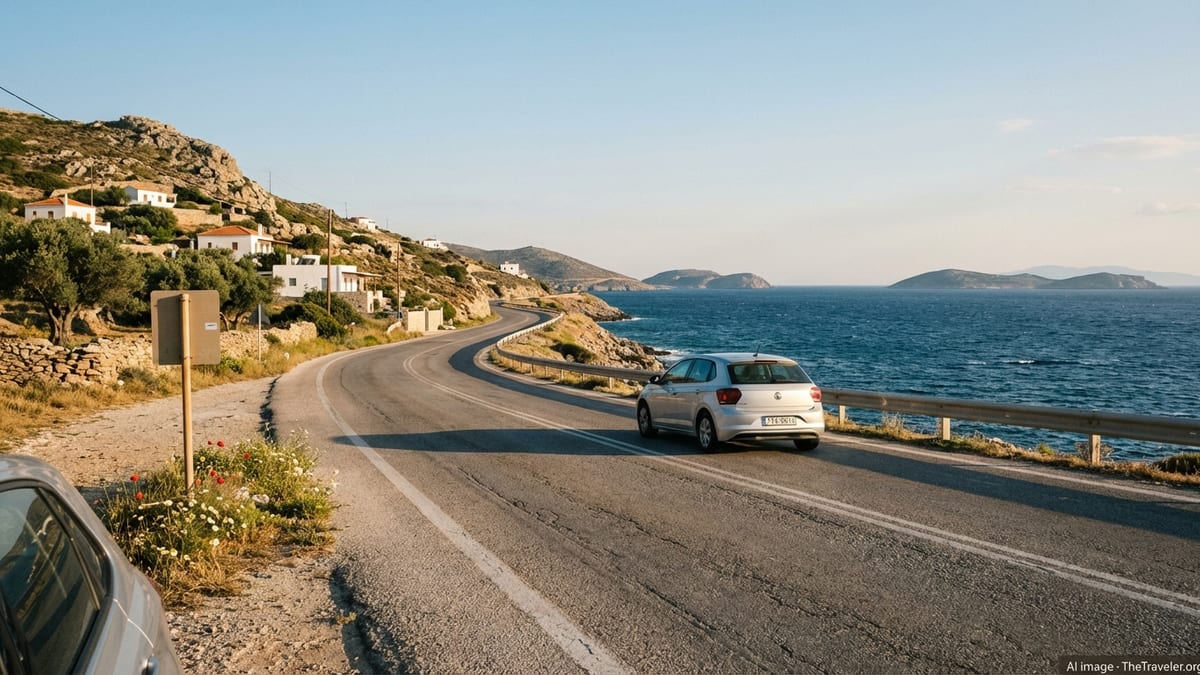
As you leave the primary routes, conditions can vary. Secondary roads may be narrower, with faded lane markings, tight bends, and occasional potholes. In mountainous regions, expect steep sections, hairpin turns, and limited guardrails. Drivers should slow down before bends, avoid cutting corners, and use low gears on descents to reduce brake wear. On islands, roads can be particularly narrow, with sharp drops, minimal shoulders, and pedestrians or animals sharing the space.
Driving in Greek cities like Athens and Thessaloniki can be stressful for visitors. Traffic is dense, parking scarce, and local driving styles can seem aggressive or improvisational. It is common to see scooters weaving between cars and vehicles stopping briefly in traffic lanes to pick up passengers. Visitors who are not comfortable in busy urban traffic may prefer to avoid driving in central districts, instead collecting their rental car from the airport or a suburban location and using public transport or taxis within the city centers.
Parking rules vary by city and neighborhood, with a mix of free street parking, paid zones with meters or scratch cards, and private garages. Signs may indicate resident only areas or restricted times, particularly in historic centers. When in doubt, it is wiser to use a paid car park than risk fines or towing. In some towns, especially on islands during high season, streets can become congested with parked vehicles, making maneuvering difficult. Choosing smaller cars and planning where you will park before arriving can make a significant difference.
Driving Etiquette and Local Habits
Greek drivers are often described as fast and assertive, but most are also experienced and aware of local road peculiarities. Visitors may notice drivers using the right hand side of their lane or partially moving onto the hard shoulder to let faster vehicles pass. On some undivided roads, cars may straddle the edge line to create more space in the center for overtaking. While this can be disconcerting, observing how locals position their vehicles can help you anticipate what other drivers might do.
Use of indicators can be inconsistent, particularly when changing lanes in busy traffic or entering roundabouts. Because of this, never rely solely on turn signals to judge another driver’s intentions. Instead, maintain safe distances and be ready for sudden lane changes or stops. Horns are used more liberally than in some countries, often as a polite nudge or warning rather than an expression of anger. Do not take every horn personally, but also do not ignore it entirely, as it may signal a hazard you have not yet seen.
Pedestrians may cross the road away from designated crossings, and on islands you will often share space with tourists walking along the edge of the road, sometimes at night. Be especially careful in resort towns and coastal promenades where bars and restaurants line the street. Scooters and motorbikes are common and can appear suddenly from blind spots, cutting through traffic or passing on the inside. Frequent shoulder checks and mirror use are essential, particularly when changing lanes or turning.
Patience and courtesy help maintain a smoother flow, even in challenging situations. Allow local drivers to pass if they are clearly faster, and do not feel pressured to match their speed. Use your hazard lights briefly if you must stop unexpectedly on a narrow road. When driving in rural areas, keep an eye out for livestock, agricultural machinery, and slow moving vehicles. Understanding that you are a guest on the road can help you adapt to the rhythm of Greek driving without escalating tensions.
Tolls, Fuel, and Practicalities on the Road
Many of Greece’s major highways have toll stations at intervals along the route. The cost depends on the distance and vehicle type, with cars paying a moderate fee at each booth. Some segments also use electronic toll systems, but most visitors will encounter traditional booths where you pay an attendant or use automated machines. Having small denomination cash on hand is helpful, although card payments are increasingly accepted. Check with your rental company if the car is equipped with any automatic toll devices and how charges are handled.
Fuel stations are common along main roads and in towns, though they may be more spread out in remote rural areas and on smaller islands. Most stations offer unleaded petrol in different octane ratings and diesel, and many still provide attendant service, meaning staff will pump fuel for you. Operating hours can vary; in cities and along major highways, many stations are open late or around the clock, while in small villages they may close in the afternoon or early evening. It is wise to refill before long stretches in sparsely populated regions or night drives on islands.
Payment by card is widely accepted at fuel stations, but having some cash as a backup is useful, particularly in more remote areas. Fuel prices in Greece are often higher than in some other European countries, and can be noticeably more expensive on islands compared to the mainland. Since prices can change frequently, plan a budget with some flexibility rather than relying on exact figures. Keep fuel receipts in case your rental company asks for them or for your own record of expenses.
Beyond fuel, roadside assistance services and repair shops are available in most populated regions. Many rental agreements include a basic level of assistance, such as help with breakdowns or towing to the nearest garage. Check the emergency number and procedures in your rental documents and store them in your phone before setting out. In the event of a collision, drivers in Greece are typically expected to remain at the scene, exchange details, and contact the police and insurance or rental company as instructed by their contract.
Car Rental Requirements and Insurance Considerations
Renting a car in Greece is relatively straightforward, but specific requirements can vary between companies and locations. Most agencies require a valid driving license held for at least one year, a passport or national ID, and a major credit card in the main driver’s name for the security deposit. Citizens from European Union countries can usually rent with their domestic license. Travelers from outside the EU may need an International Driving Permit in addition to their national license, and some rental counters will insist on this even if it is not uniformly enforced.
Age policies differ, but many rental companies set a minimum age of 21 or 23 and may require drivers under 25 to pay a young driver surcharge or limit them to certain vehicle categories. There can also be upper age limits, especially with smaller local agencies or for certain types of vehicles such as larger SUVs or vans. Checking these conditions carefully when booking online can prevent surprises at the counter. Always ensure the name on your booking matches the person who will actually be driving and providing the payment card.
Basic insurance coverage is usually included in the rental price, often in the form of collision damage waiver and theft protection with an excess, which is the amount you are responsible for in case of damage. This excess can be relatively high, and rental desks will commonly offer additional coverage to reduce or eliminate it. Travelers may already have some protection through their credit card or separate car hire insurance policies, but they must understand the terms, exclusions, and claim procedures before declining extra coverage. Glass, tires, undercarriage damage, and roof damage are sometimes excluded from standard policies.
Before accepting the vehicle, inspect it thoroughly and note any existing scratches, dents, or interior damage on the rental form, ideally taking dated photos or video on your phone. Check that the spare tire, jack, and safety equipment such as warning triangle and reflective vest are present where required. Confirm the fuel policy, mileage limits if any, and rules about taking the car on ferries, off paved roads, or between islands and neighboring countries. Having clarity on these issues in advance reduces the risk of additional charges later.
Island Hopping, Ferries, and Special Situations
Many travelers use a rental car to explore Greek islands, where public transport can be limited away from main towns. However, not all rental companies allow their vehicles to be taken on ferries. Those that do may require written permission and may specify that any damage occurring during the crossing or on another island is not covered by standard insurance. If you plan to combine mainland and island travel, discuss your route in detail with the rental company before finalizing the booking.
On islands like Crete, Rhodes, or Corfu, road conditions may change drastically over short distances, from modern multi lane roads to single track lanes bordered by stone walls. Coastal routes can be spectacular, with sweeping views and dramatic cliffs, but they can also be exposed to strong winds. In high season, narrow roads in resort areas can be crowded with pedestrians, cyclists, and scooters, and parking can become a serious challenge. Choosing a smaller vehicle and driving early in the morning or later in the evening can make sightseeing trips less stressful.
Weather can also affect driving in Greece. Summers are typically dry and hot, which can fatigue both drivers and vehicles. Keeping hydrated, using sunshades, and taking regular breaks is essential, especially on long highway stretches. In winter, particularly in northern and mountainous regions, snow and ice are possible. Chains or winter tires may be required on certain routes, and some roads can close temporarily. If you are visiting during colder months, check the conditions, and ensure your rental car is appropriately equipped before heading into higher elevations.
Special events, religious holidays, and local festivals sometimes lead to temporary road closures, diversions, or heavy congestion, especially around popular pilgrimage sites or major city centers. Allow extra time during national holidays and weekends when many Greeks travel by car. When using navigation apps, remember that not every small rural track is suitable for regular passenger cars, even if it shows as a valid route. If a road appears too rough or narrow, it is usually better to turn back and find an alternative.
Staying Safe and Avoiding Common Pitfalls
Many of the risks visitors face when driving in Greece are manageable with careful planning and a conservative driving style. Fatigue is a common problem, especially after long international flights or overnight ferry crossings. It is not advisable to collect a rental car immediately after a long journey and then drive for several hours on unfamiliar roads. Planning an overnight stay in a gateway city before a long driving leg can make your trip safer and more enjoyable.
Overconfidence on scenic routes is another frequent pitfall. Mountain passes and coastal roads may invite frequent photo stops, but sudden halts on blind bends or narrow sections can cause accidents. Use designated lay-bys, parking areas, or wider shoulder sections rather than stopping in the traffic lane, and always signal early. In summer, wildfires can occasionally disrupt travel and result in road closures or reduced visibility in affected regions. Keeping informed about local conditions through news outlets or your accommodation hosts can help you adjust plans if necessary.
Theft from vehicles, particularly in tourist hotspots, is generally a matter of opportunity rather than widespread organized crime. Basic precautions help minimize risk: avoid leaving valuables on display, lock the car each time you leave it, and park in well lit or supervised areas when possible. Some travelers prefer to keep trunk contents minimal or bring luggage into their accommodation overnight, especially in busy urban or port areas where cars may be left unattended for several hours.
In the event of an accident, even a minor one, remaining calm and following procedures is key. Do not move the vehicles unless they are causing a serious obstruction or you are instructed to do so by the police, especially if injuries are involved. Exchange details with other parties, take photos of the scene, and contact your rental company and insurance assistance line as soon as possible. Police may need to attend to file a report, particularly if there are disagreements or injuries. Keeping these steps in mind before anything happens will help you react more effectively under stress.
The Takeaway
Driving in Greece rewards travelers with freedom and access to places that can be difficult to reach by public transport, from hidden coves and remote monasteries to traditional mountain villages. It also demands respect for local road conditions, an understanding of both formal rules and informal habits, and realistic expectations about journey times and comfort. By approaching Greek roads with a mix of caution and curiosity, most visitors find that the benefits outweigh the challenges.
Planning ahead, choosing the right vehicle, and familiarizing yourself with rental and insurance terms will significantly reduce stress once you are on the road. Adapting to local etiquette, allowing generous time buffers, and driving defensively are simple habits that can transform your experience from tense to enjoyable. Whether you are tracing the coastline of a sun drenched island or crossing the mountains of the mainland, the journey itself becomes one of the highlights of a Greek adventure.
With thoughtful preparation and a flexible mindset, you can navigate Greece’s varied roads safely and confidently. The memories you create along winding coastal drives, rural byways, and lively harbor towns will likely stay with you long after the rental car is returned and the trip has ended.
FAQ
Q1. Do I need an International Driving Permit to drive in Greece?
Requirements depend on your home country and the rental company. Many European Union licenses are accepted as is, while travelers from some non EU countries may be asked to present an International Driving Permit alongside their national license. It is safer to obtain one before travel if your license is not from the EU.
Q2. Is driving in Greece difficult for first time visitors?
Experiences vary, but many visitors manage well if they drive defensively and avoid the most congested urban centers. Highways are generally straightforward, while mountain roads, narrow village streets, and busy island resorts can be more challenging. Taking your time and choosing a small car helps.
Q3. What side of the road does Greece drive on?
In Greece, vehicles drive on the right hand side of the road and overtake on the left. This is similar to most of continental Europe, but different from countries where driving is on the left, so visitors from those places should allow time to adjust.
Q4. Are road signs in English in Greece?
On major highways, national roads, and around popular tourist areas, most signs display both Greek and Latin characters, which makes navigation easier. In more remote areas, you may see signs only in Greek, so having offline maps or navigation apps and a basic familiarity with the alphabet can be helpful.
Q5. Can I take my Greek rental car on a ferry to the islands?
Some rental companies allow their vehicles on ferries with prior written permission, while others forbid it. Insurance coverage may be limited during sea crossings or on certain islands. You should always check the rental terms and get explicit approval before booking ferry tickets for the car.
Q6. What is the usual speed limit in Greece?
Typical limits are around 50 km/h in built up areas, about 90 km/h on rural roads, and up to roughly 120 km/h on major motorways, unless signs indicate otherwise. Limits may change frequently near villages, schools, and worksites, so drivers should always follow posted signs rather than relying on general rules.
Q7. Is it safe to drive at night in Greece?
Highways and main roads are usually well maintained, but night driving on rural or island roads can be more demanding because of narrow lanes, sharp bends, and limited lighting. Animals, pedestrians, and slow vehicles may be harder to see. If you are unfamiliar with the route, it is often safer to drive in daylight when possible.
Q8. Do I need a specific type of insurance when renting a car in Greece?
Basic coverage such as collision damage waiver and theft protection is normally included, but it often comes with an excess that you must pay if the car is damaged. Additional insurance or excess reduction products can limit that liability. Review your own travel or credit card coverage before deciding whether to purchase extra protection at the counter.
Q9. What kind of car is best for driving in Greece?
A small to medium sized car is often the most practical choice, especially if you will be visiting islands, mountain villages, or old town centers with narrow streets and tight parking. Larger vehicles can be more comfortable for long highway journeys, but they can be harder to maneuver and park in older or more crowded areas.
Q10. How strictly are drink driving laws enforced in Greece?
Drink driving laws in Greece are relatively strict compared with some countries, and police carry out checks, especially in areas with busy nightlife. Exact limits and penalties can vary, but to stay safe and avoid any legal issues, it is advisable not to drink at all when you plan to drive.