

Hong Kong is built for public transport, yet driving can still be a convenient way to explore the New Territories, reach hiking trails or connect onward to the Greater Bay Area. For visitors and new residents, however, the city’s dense traffic, complex tunnels, recent electronic toll changes and strict parking enforcement can feel intimidating. With a bit of preparation, understanding the rules and planning where to park, driving in Hong Kong becomes manageable and often surprisingly efficient.
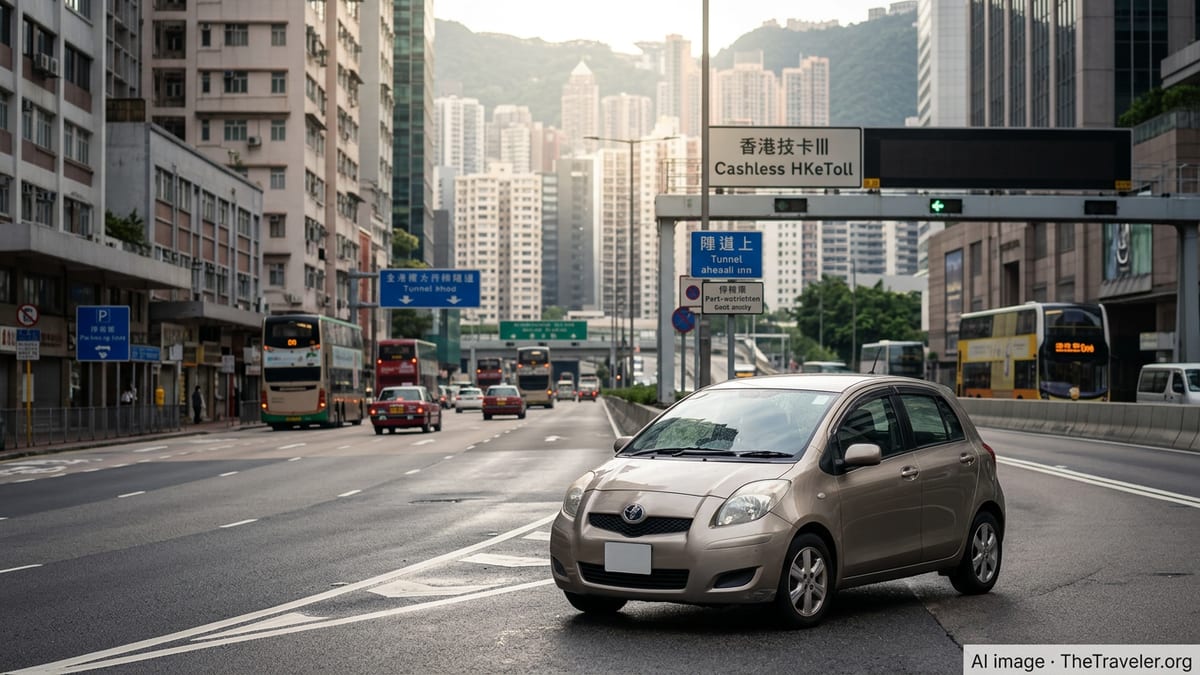
Who Can Drive in Hong Kong and Licensing Basics
Hong Kong drives on the left, using right-hand-drive vehicles, and follows a legal framework largely inherited from British traffic law. Visitors may be able to drive on a valid overseas licence for a short period, but anyone staying longer term is expected to obtain a Hong Kong driving licence. The exact requirements vary by nationality and residence status, so it is important to check Transport Department guidance before you travel or rent a car.
Short-stay visitors from many countries can typically use their full, valid foreign licence for up to 12 months from the date of their last arrival, provided the licence is in English or Chinese and clearly shows the driver’s details. If the licence is not in these languages, an International Driving Permit or an official translation is generally recommended. Police have wide powers to require production of a licence at the roadside, and driving without valid authorisation is treated as a criminal offence.
For those planning to live or work in Hong Kong, a local full driving licence is the long-term solution. Holders of licences from certain approved jurisdictions can often apply for a Hong Kong licence by “direct issue,” without re-taking a driving test, as long as they meet residence and experience conditions. The application process has become more digitised, and non-local drivers now need to secure online queue tickets when using this route, reflecting growing demand for conversions and the authorities’ desire to replace overnight queues at licensing offices.
Anyone who does not qualify for direct issue must go through the standard Hong Kong driving test route, including written and road examinations. New drivers receive a probationary licence with specific restrictions, such as lower speed limits and the requirement to display a “P” plate. Rental companies are generally reluctant to provide vehicles to probationary drivers, so visitors should ensure they hold a full licence, valid for at least one or two years, before expecting to rent a car.
Key Road Rules and Driving Culture
Traffic in Hong Kong keeps to the left, with overtaking on the right, and most road signs follow international conventions using English and Chinese. Speed limits are tightly enforced, particularly in urban districts, where typical limits for private cars are 50 kilometres per hour on most streets, rising to 70 or 80 kilometres per hour on major highways and 100 or 110 kilometres per hour on certain expressways. Speed cameras, both fixed and average-speed types, are common, and fines can be substantial.
Seat belts are compulsory for drivers and all passengers, front and rear, wherever belts are fitted. Children must use appropriate restraints, and riding with a child unrestrained can lead to penalties for both the driver and, in some situations, the parent or guardian. Using a handheld mobile phone while driving is prohibited, and even with a hands-free kit, Hong Kong police may charge a driver with careless or dangerous driving if distraction contributes to an incident.
Hong Kong’s driving culture can appear assertive compared with many Western cities, but it is also rule-conscious, especially around lane markings, yellow-box junctions and no-stopping zones. Blocking a yellow-box junction, stopping on double yellow lines or entering a tram lane illegally are all treated as serious infractions. Many junctions and box areas are covered by cameras, and penalties for illegal stopping and careless lane discipline have been increased in recent years to manage chronic congestion in busy districts.
Drink-driving laws are strict. Roadside breath testing is routine during enforcement operations, and legal blood alcohol limits are low. Convictions for driving under the influence can result in heavy fines, disqualification and even jail time, with serious long-term consequences for immigration and professional prospects. Visitors should treat Hong Kong as a zero-tolerance environment: if you plan to drive, avoid alcohol entirely and rely on the city’s excellent taxis and public transport for nights out.
Navigating Hong Kong’s Roads, Tunnels and Bridges
Hong Kong’s geography means that tunnels and bridges are central to its road network. Urban Kowloon and Hong Kong Island are linked by several harbour crossings, while the New Territories depend on long road tunnels and viaducts. Despite limited land, the highway system is modern and well signposted, but traffic flows can change rapidly with accidents, rainstorms and cross-boundary surges near major control points.
The most iconic bottlenecks are the harbour tunnels, which now use time-varying tolls to spread demand across peak and off-peak periods. On the New Territories side, routes like the Tai Lam Tunnel and Tsing Sha Control Area link western districts to the urban core, while other free tunnels provide alternative corridors at the cost of longer travel time. Electronic signs above major roads provide live information about congestion and incidents, and navigation apps widely used locally incorporate government traffic data to suggest faster routes.
Driving conditions vary sharply between dense urban streets and more rural areas. In Central, Mong Kok and Causeway Bay, lanes are narrow, pedestrian crossings frequent and bus and tram stops tightly spaced. Patience and fine vehicle control matter more than speed. In the New Territories, roads around Sai Kung, Tai Po and northern villages can be winding, with steep gradients, blind corners and occasional livestock or cyclists, particularly near country parks. In heavy rain or typhoons, landslip and flooding warnings are not uncommon, and drivers should heed advice to avoid affected roads.
Cross-boundary driving between Hong Kong, Macau and mainland China involves separate regulatory systems, licences and insurance. Although specific schemes allow approved vehicles to use links such as the Hong Kong Zhuhai Macao Bridge, private visitors renting a car in Hong Kong should not assume that they can simply drive across borders. Rental contracts typically restrict use to within the Hong Kong Special Administrative Region only, and additional permits for cross-border use are limited to schemes with prior authorisation.
The New Era of Tolls and the HKeToll System
In recent years Hong Kong has moved decisively toward all-electronic tolling at government-managed tunnels. Manual booths and Autotoll lanes have been progressively removed and replaced by a free-flow system known as HKeToll, which uses overhead gantries and on-board tags or licence-plate recognition to charge vehicles at normal cruising speed. This change aims to reduce tailbacks at tunnel portals and cut emissions from idling traffic.
Most tunnels operated by the government now rely entirely on electronic collection, including key harbour crossings and major New Territories links. Time-varying tolls have been introduced at some high-demand tunnels to encourage drivers to shift away from the busiest peaks or choose alternative crossings where capacity is underused. The Tai Lam Tunnel, formerly run as a private concession, reverted to government control and adopted a new toll structure after May 2025, with reduced costs for many vehicle classes and integration into HKeToll.
For local drivers, using HKeToll typically involves opening an account, attaching a vehicle-specific tag and maintaining a sufficient balance or linked payment method. Overseas visitors renting cars benefit from the fact that rental fleets are already equipped for electronic tolling, and charges are usually passed on automatically. Car rental agreements explain how tunnel fees will be billed, whether as an itemised cost per crossing or as part of a daily toll package, and renters should read this section carefully to avoid surprise charges after their trip.
Authorities are also exploring related tools to manage congestion in critical urban corridors, and public debate continues about potential electronic road pricing zones. So far, tolls apply primarily to tunnels and a few specific roads, rather than to broad city-centre driving, but the technological groundwork laid by full electronic tolling means that drivers should expect continued policy evolution. Keeping an eye on official announcements, especially around new tunnels or bypasses, is wise for anyone planning to drive regularly in Hong Kong.
Parking in One of the World’s Densest Cities
Parking is often the single biggest challenge of driving in Hong Kong. With extremely limited land and high vehicle ownership costs, space for private cars is at a premium. On-street parking is tightly regulated, and locals often remark that there is effectively no truly free street parking in central districts. Instead, drivers rely on metered spaces, government car parks and a broad range of private parking garages attached to shopping malls, office towers and housing estates.
On-street parking meters are widespread in commercial and mixed-use neighbourhoods. Fees have risen over time as part of efforts to manage demand and ensure turnover, and most meters now support electronic payments via stored-value cards or dedicated apps. Time limits vary, but it is common to find maximum stays of one or two hours during daytime, after which drivers must move their vehicle. Metered periods often end in the evening, but rules differ by zone, so always check the signs printed on the meter or roadside plates before leaving the car.
Illegal parking is taken increasingly seriously. Double parking, stopping on yellow lines, blocking loading bays or occupying bus stops can lead to fixed-penalty tickets or towing, especially in congestion hotspots. Fines for illegal parking and related violations have been raised in recent years to deter habitual offenders, and publicity campaigns highlight both the safety and traffic-flow impacts of thoughtless stopping. Enforcement can be particularly active around schools, hospitals and busy junctions where blocked lanes quickly cause long tailbacks.
For visitors, the most practical solution is often to use commercial car parks, especially those in shopping centres and hotels, which typically offer clear pricing, 24-hour access and security. Rates can be high in core districts such as Central or Tsim Sha Tsui, especially during working hours, but become more modest in outlying suburbs and New Territories towns. Many drivers plan trips around car parks, choosing destinations like large malls or park-and-ride facilities where parking is almost guaranteed, then switching to public transport, taxis or walking for the last leg into the most crowded areas.
Renting a Car in Hong Kong: What to Expect
Because public transport is so efficient, car rental in Hong Kong is a relatively niche market, focused on business travellers, long-stay visitors and residents who need a vehicle temporarily. A handful of international and local rental brands operate at Hong Kong International Airport and in urban branches. Advance booking is strongly advised, particularly if you need an automatic transmission, a larger vehicle or extras such as child seats.
To rent a car, you will typically need a valid full driving licence, held for at least one or two years, a passport, a credit card and, for some companies, an International Driving Permit if your licence is not in English. Age limits often require drivers to be at least 25 for standard vehicles, with surcharges or outright restrictions for younger drivers. Most rentals are automatic-transmission private cars, with limited availability of manual gearboxes or larger vans. Booking terms rarely allow vehicles to leave Hong Kong’s territory, and cross-border rental to mainland China or Macau is nearly always excluded.
Insurance is a critical clause in any Hong Kong rental contract. Basic coverage is typically included as required by law, but excesses can be high, and damage to tyres, windscreens or the underbody may be excluded unless additional coverage is purchased. Given the tight parking spaces and close traffic, many visitors choose to buy extra insurance to reduce their liability. Carefully inspecting the car at collection, taking date-stamped photos of any existing damage and confirming fuel and mileage policies all help avoid disputes when returning the vehicle.
Navigation and tolls are more straightforward than they once were. Hong Kong’s compact size and clear directional signage mean that a smartphone with a local data connection is usually all you need. Many rental cars support smartphone integration, and some companies provide portable navigation units on request. Because all major government-managed toll tunnels are now electronic, rental vehicles are typically pre-registered under a fleet HKeToll account. Renters should confirm how tolls will appear on their final bill and whether any administrative fees are added per crossing.
Safety, Enforcement and Practical Tips for Drivers
Hong Kong’s roads are generally safe, with accident rates lower than in many large Asian cities, thanks to stringent licensing standards, strong enforcement and extensive public transport that keeps many would-be drivers out of private cars. That said, the combination of steep hills, intense urban density and frequent heavy rain demands full concentration. Defensive driving, smooth braking and conservative following distances are important habits, especially when unfamiliar with local routes.
Traffic police and transport officers conduct regular campaigns against drink-driving, speeding, illegal parking and use of mobile phones at the wheel. These efforts are reinforced by a network of cameras at junctions, on expressways and in tunnels. Foreign visitors should not assume that they are invisible to enforcement just because they are using a rental car; fines and penalty notices can be passed on by rental companies, sometimes with additional administrative charges, and serious offences can lead to court appearances.
Typhoon season, typically spanning the warmer months, is another key factor. When strong wind or rainstorm signals are hoisted, driving conditions can deteriorate quickly. Low-lying roads may flood, visibility can drop sharply and fallen branches or other debris may obstruct lanes. Official advice sometimes urges drivers to avoid exposed highways, bridges or coastal routes during higher warning levels. Road closures and diversions are broadcast on radio, shown on electronic signs and pushed through popular traffic apps.
From a practical standpoint, visitors will find that combining driving with other transport options yields the most relaxed experience. Many travellers choose to rent a car only for days when they plan to explore the New Territories or reach remote trailheads, and rely on the Mass Transit Railway, buses, trams, taxis or ride-hailing for urban sightseeing. This hybrid approach minimises parking headaches while still giving the flexibility to reach beaches, reservoirs and country parks that are awkward by public transport alone.
The Takeaway
Driving in Hong Kong is not essential for enjoying the city, but it can add a layer of freedom for certain itineraries, especially those focused on the New Territories, country parks or cross-regional business travel. The key is to recognise that this is one of the most space-constrained urban regions in the world, with parking and tunnels carefully managed through regulation and pricing rather than left to chance.
For visitors, success hinges on three pillars: ensuring that your driving licence status is crystal clear and valid, respecting local road rules that are strictly enforced and planning in advance where you will park. Understanding the all-electronic HKeToll system, reading rental contracts closely and keeping a cautious, defensive driving style will go a long way toward making your time behind the wheel smooth and stress-free.
In the end, Hong Kong rewards those who treat driving as a practical tool rather than an impulsive adventure. If you approach its roads with preparation and respect, you will discover that even in this famously crowded city there are quiet stretches of highway, coastal drives and mountain views that make the effort worthwhile.
FAQ
Q1. Can I drive in Hong Kong on my foreign licence as a tourist?
Many short-stay visitors can drive using a full, valid foreign licence for up to 12 months from arrival, if it is in English or Chinese or supported by an International Driving Permit or official translation.
Q2. Do I need an International Driving Permit to rent a car in Hong Kong?
An International Driving Permit is not always legally required, but some rental companies insist on it if your home licence is not in English, so it is wise to obtain one before travel.
Q3. Is parking really that difficult in Hong Kong?
Parking in dense urban areas is challenging and expensive, with very limited on-street space. Using commercial car parks and planning around them usually makes the experience much easier.
Q4. How are tunnel tolls paid now that booths are being removed?
Government-managed tunnels use an all-electronic system known as HKeToll, where overhead gantries detect vehicles and charge accounts automatically, including those used by rental fleets.
Q5. Are there tolls on all highways in Hong Kong?
No, tolls apply mainly to certain tunnels and specific roads. Many highways and several tunnels remain toll free, though time-varying tolls exist at busy harbour crossings.
Q6. Is it safe to drive in Hong Kong during typhoons or heavy rain?
Driving is possible in weaker storms but can quickly become hazardous as conditions worsen. Authorities advise avoiding exposed routes and following official weather and traffic warnings closely.
Q7. What are the speed limits for private cars?
Typical limits are around 50 kilometres per hour on urban streets, 70 to 80 kilometres per hour on many highways and up to about 100 or 110 kilometres per hour on certain expressways.
Q8. Can I take a Hong Kong rental car into mainland China or Macau?
In almost all cases rental contracts restrict vehicles to Hong Kong only. Cross-boundary use requires special permits and schemes that are not usually available to short-term renters.
Q9. Are ride-hailing services like Uber legal and widely used?
Ride-hailing platforms operate in Hong Kong under a tightening regulatory framework, and new licensing rules are being implemented. Visitors commonly rely on them alongside taxis and public transport.
Q10. Should I rely on driving for sightseeing in central Hong Kong?
For central sightseeing it is usually easier to use the Mass Transit Railway, trams, buses and taxis, reserving driving for days when you want to explore the New Territories or more remote areas.