

Few travel experiences are as intense and unforgettable as a journey on India’s roads. From the dense traffic of Delhi and Mumbai to the winding mountain passes of the Himalayas and the coastal highways of Goa and Kerala, driving here can feel equal parts exhilarating and overwhelming. For international visitors, understanding license rules, road safety realities, and when it is wiser to hire a driver is essential to turning that intensity into a rewarding adventure rather than a stressful ordeal.
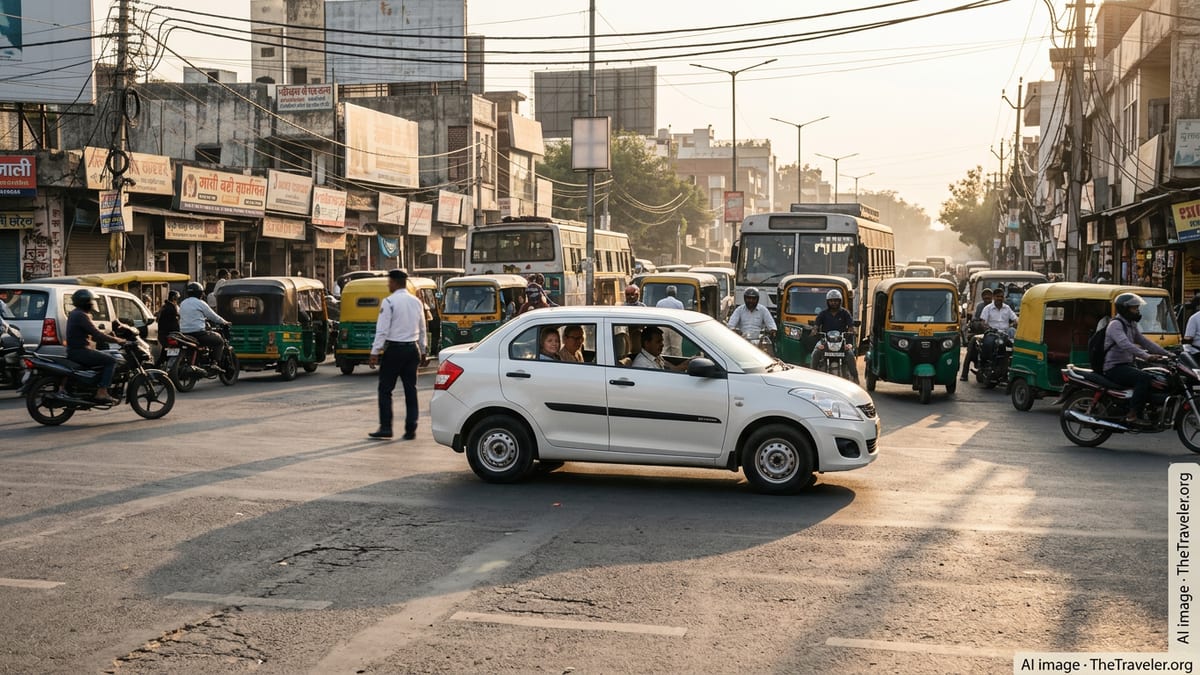
Understanding How India Treats Foreign Driving Licenses
India does not have a single global rule covering every foreign driver, but there are clear principles that most visitors can follow. In broad terms, tourists are expected to drive with a valid license from their home country, ideally supported by an International Driving Permit, and only for a temporary stay. Once you cross from short-term visitor to longer-term resident, Indian law expects you to obtain an Indian driving license. The exact transition point can vary in practice, but the spirit of the rules is that a foreign license is for visitors, not permanent residents.
India is a party to international road traffic conventions that underpin the concept of the International Driving Permit, which acts as a translation of your home license rather than a stand-alone credential. Under these frameworks, contracting countries agree to recognize each other’s licenses and permits, subject to local regulations. In India’s case, the Motor Vehicles Act and related Central Motor Vehicle Rules give legal force to these arrangements and empower local authorities and traffic police to check and enforce documentation.
In real-world terms, that means a foreign tourist driving on Indian roads should expect to be asked for three things if stopped: their original home-country license, their passport (and visa or e-visa), and an International Driving Permit if they are behind the wheel themselves. Car rental companies, highway checkpoints, and city traffic officers are accustomed to seeing this combination, and having it ready usually avoids confusion or delays.
Visitors should also understand that individual states and cities can interpret rules somewhat differently. While the legal framework is national, on-the-ground enforcement in Mumbai, Bengaluru, or Jaipur may vary, especially when it comes to short-term visitors or digital copies of documents. Carrying originals or officially accepted digital versions, along with printed copies, remains the safest choice.
International Driving Permits: When You Need One and Why
The International Driving Permit, or IDP, is one of the most misunderstood documents in global travel, and India is no exception. The permit does not replace your home license. Instead, it accompanies it as a standardized translation into multiple languages, referencing internationally recognized license categories. This makes it easier for rental companies, police, and insurance investigators in India to understand what you are legally allowed to drive.
For foreign visitors, the key question is whether an IDP is required to drive in India. Official guidance and practical experience both point in the same direction: while some visitors manage with only a foreign license, an IDP is strongly recommended and may effectively be mandatory for certain rentals, insurance policies, and police checks. Many major international and Indian car rental brands ask foreign tourists to present an IDP when renting self-drive cars. Without one, they may refuse the booking or impose stricter conditions.
Indian authorities treat the IDP as a recognized document issued under international conventions. In line with these frameworks, an IDP is typically valid for up to one year from its date of issue or until the underlying home license expires, whichever comes first. Visitors planning extended trips across India’s states and union territories should ensure their IDP will remain valid for the full length of their stay, especially if they aim to drive overland routes or cross regional borders where checks can be more frequent.
Insurance is another crucial reason to carry an IDP. In the event of a serious collision, insurers and legal authorities will look closely at whether you were driving in full compliance with documentation rules. Even if the law in a given situation might not explicitly prosecute a tourist without an IDP, an insurer could argue that you failed to meet policy conditions, creating complications for claims. For most travelers, the cost and minor administrative effort of obtaining an IDP at home are modest compared with the potential legal and financial exposure of driving without one in India.
India’s Road Reality: Risk, Culture, and What to Expect
India’s roads are dynamic, crowded, and often unpredictable. International studies and rankings frequently place India among the most challenging or dangerous countries to drive in, both because of its absolute number of road deaths and because of the mix of traffic types, speeds, and enforcement levels. Surveys of foreign tourists regularly highlight India as one of the places they are most nervous to rent a car, citing dense traffic, unfamiliar rules, and the presence of everything from trucks and buses to bicycles, rickshaws, and wandering livestock in the same lanes.
Part of the challenge lies in the diversity of users sharing limited road space. On a single stretch of highway, you may encounter slow-moving tractors, overloaded trucks, small motorcycles carrying whole families, pedestrians crossing mid-block, and dogs or cattle drifting into the flow. Lane discipline is loose by Western standards, and horns are used more as a signaling tool than an expression of anger. Distances between vehicles are tighter, and drivers rely heavily on eye contact, informal cues, and experience rather than strict adherence to markings or signs.
Road safety data tells a sobering story. India records a high number of traffic fatalities each year compared with many countries that have similar or lower vehicle fleets. Urban congestion, speeding on new expressways, inconsistent helmet and seat belt use, and drunk or distracted driving all contribute to the toll. At the same time, the government has in recent years strengthened penalties for key offenses, invested in highway improvements, and promoted road safety campaigns in an effort to change behavior and reduce deaths.
For foreign visitors, the most practical takeaway is to treat India’s roads with deep respect. Even experienced drivers can find the sensory load exhausting, especially in their first days on the ground. Jet lag, heat, pollution, and unfamiliar signage can compound the risk. It is not unusual for seasoned travelers who happily self-drive across Europe or North America to decide, after a brief trial, that hiring a driver in India is the smarter choice.
Legal Basics: Documents, Insurance, and Police Encounters
Anyone driving in India, local or foreign, must be prepared to produce documents when requested by traffic police or other authorized officers. For international visitors behind the wheel, that typically means three layers of paperwork: identity and immigration documents, driving credentials, and vehicle and insurance records. Keeping everything neatly organized in a folder or digital wallet makes roadside encounters smoother and less stressful.
Your core identity documents are your passport and proof of lawful entry, such as a visa sticker or e-visa confirmation. Some officers may also ask for a copy of your arrival stamp or electronic arrival record, especially near borders or in sensitive regions. For your driving credentials, you should carry your original home-country driver’s license, plus an International Driving Permit that covers the class of vehicle you are operating. If your license is not in English, the IDP is particularly important, since it provides an official translation.
Vehicle documentation includes the registration certificate, proof of current road tax where relevant, and at least third-party insurance, which is mandatory throughout India. If you rent a car, the rental company should provide the vehicle papers and insurance documents, often stored in the glove compartment. Before leaving the lot, always double-check that these papers are present, up to date, and match the license plate of the vehicle you are taking. If you are self-driving a friend’s or relative’s car, ensure that your name is listed on the insurance policy if the insurer requires it for foreign drivers.
Encounters with police are generally straightforward if your paperwork is in order. Officers may stop vehicles at checkpoints to verify documents, enforce helmet or seat belt rules, check for drunk driving, or manage traffic around festivals and demonstrations. Remain calm, keep your documents accessible, and avoid argumentative behavior. If you do not understand what is being asked, politely request clarification or assistance from your hotel, host, or rental company by phone. Serious disputes or accidents should be reported to your embassy or consulate as well as local authorities.
Should You Self-Drive or Hire a Driver in India
For many foreign visitors, the biggest decision is not which highway to take, but whether to drive at all. While self-driving offers freedom and spontaneity, hiring a local driver can transform India’s sometimes-chaotic roads into a more relaxed, immersive experience. The right choice depends on your experience, itinerary, appetite for risk, and comfort with unfamiliar driving environments.
Self-driving can work well in specific contexts. Carefully planned routes in regions with relatively lighter traffic, such as parts of Rajasthan outside the major cities, sections of Kerala, or selected hill regions in the cooler months, can be rewarding. Travelers with prior experience driving on the left side of the road, navigating dense traffic in developing countries, and handling manual transmission vehicles often adapt more quickly. Even then, most find that starting with short daytime journeys and avoiding peak-hour city traffic is wise.
However, for first-time visitors to India, hiring a driver is often the more realistic option, especially for multi-state itineraries or trips involving major metros like Delhi, Mumbai, Chennai, or Kolkata. A professional driver familiar with local patterns can anticipate unmarked speed breakers, sudden lane closures, or informal detours that would surprise a newcomer. They can also help with language barriers at toll booths, fuel stations, and roadside eateries, and they know where it is safe and legal to stop.
Cost considerations frequently tip the balance in favor of hiring a driver. Compared with self-drive rentals in some Western countries, chauffeur-driven cars in India are relatively affordable, particularly when shared among a small group. When you factor in the emotional energy saved and the extra time you gain to observe daily life outside the window instead of scanning for hazards, many travelers conclude that a driver is not a luxury but a smart safety investment.
How to Hire a Safe, Reliable Driver
Hiring a driver in India deserves the same attention you might give to choosing a trekking guide or safari operator. The person you hire will not only navigate the roads but also manage your day-to-day logistics and, in many cases, shape your understanding of the country. Start by deciding whether you prefer to book through a reputable agency or arrange a driver recommended by your hotel, guesthouse, or trusted contacts. Formal agencies often provide clearer contracts, standardized pricing, and backup support if something goes wrong.
Whichever route you choose, insist on transparency about licensing, experience, and vehicle condition. Ask explicitly whether the driver holds a valid license appropriate to the vehicle class, how many years they have been driving professionally, and what kind of routes they typically handle. For long-distance itineraries, it is reasonable to request someone with experience on highways, hill roads, or night driving only if your plans genuinely require night travel. Do not be shy about checking the tires, seat belts, headlights, and air conditioning before committing, and feel comfortable refusing a vehicle that looks poorly maintained.
Clear communication upfront can prevent misunderstandings later. Agree on daily driving hours, expected start and finish times, and whether the driver will help with simple tasks such as loading luggage or translating at roadside stops. Clarify whether road tolls, parking fees, and fuel are included or billed separately. Determine whether the driver’s accommodation and meals are built into the daily rate or will be settled as you go. In most parts of India, tipping a driver at the end of a multi-day journey is customary when service has been good, and you can ask your hotel or tour operator for guidance on typical amounts.
Finally, trust your instincts. If you feel uncomfortable with a driver’s style, speed, or attitude, it is better to address it early. Polite but firm requests to slow down, maintain greater following distance, or avoid overtaking in risky situations are appropriate. If problems persist, speak with the company or hotel that arranged the service and request a change. Your safety takes priority over any fear of awkwardness.
Staying Safe on Indian Roads as a Passenger or Driver
Whether you are behind the wheel or in the back seat, your personal decisions can significantly influence your risk level on Indian roads. The first and most basic rule is consistent use of seat belts. In many cars, especially older models or taxis, rear seat belts may be hidden beneath seat covers or not immediately visible. Take a moment before departure to locate and use them. On two-wheelers, helmets are legally required in most jurisdictions and are a non-negotiable safety tool for both the rider and passenger.
Time of day matters. Whenever possible, schedule long intercity drives for daylight hours, particularly if you are self-driving or new to the region. Nighttime visibility is reduced, road markings may be faded or absent, and some drivers operate with inadequate headlights or no rear lighting. Construction zones, unmarked speed breakers, and pedestrians in dark clothing can appear suddenly. Early morning departures, when roads are cooler and often quieter, are a safer choice for covering ground.
Speed discipline is essential. Even on newly built expressways, speed limits can change abruptly near towns, toll plazas, and junctions. Local vehicles may slow or stop unexpectedly in the fast lane to pick up passengers or deal with mechanical issues. Defensive driving, with generous following distances and anticipation of the unexpected, is the healthiest mindset. If your hired driver is going faster than you are comfortable with, ask them to slow down and explain that you prefer a more relaxed pace.
For longer journeys, plan regular rest stops. Heat, noise, and the constant need to interpret complex traffic patterns can cause fatigue quicker than in quieter road environments. Hydrate, eat lightly, and avoid alcohol entirely before or during travel. Many serious collisions in India involve impaired or drowsy drivers. Treat every long drive as an endurance activity for your concentration, not just a means of getting from one destination to another.
The Takeaway
Driving in India is not an experience to approach casually. It demands respect for complex road conditions, legal preparedness, and an honest assessment of your own skills and comfort level. International visitors who arrive with a valid home license, an up-to-date International Driving Permit, and a clear understanding of documentation and insurance rules put themselves in a far stronger position, whether they choose to self-drive or simply want the option in an emergency.
At the same time, India offers an alternative that many travelers in other destinations can only dream of: relatively accessible, reasonably priced professional drivers who know the terrain intimately. For most visitors, especially first-timers or those tackling ambitious multi-state routes, hiring such a driver is not a sign of timidity but of good judgment. It allows you to experience the roadside chai stalls, village processions, and shifting landscapes without the constant pressure of piloting through dense traffic yourself.
Ultimately, the goal is not to conquer India’s roads but to move through the country in a way that is safe, sustainable, and rewarding. With the right licenses, informed decisions about self-driving versus hiring help, and a commitment to basic safety practices, you can let India’s roads become a vivid thread in your journey rather than a source of avoidable risk.
FAQ
Q1. Can I drive in India with just my foreign driver’s license?
In many cases, you may be able to drive for a short visit with your valid foreign license, but carrying an International Driving Permit alongside it is strongly recommended and often required by rental companies and insurers.
Q2. Is an International Driving Permit legally mandatory for tourists in India?
Indian rules recognize foreign licenses under certain conditions, but in practice an International Driving Permit is frequently treated as essential, particularly for self-drive rentals and in any situation where police or insurers scrutinize your documents after an incident.
Q3. How long is my International Driving Permit valid when used in India?
Typically an International Driving Permit is valid for up to one year from the date of issue or until your home-country license expires, whichever comes first, so you should ensure it covers your entire planned stay.
Q4. Do I need an Indian driving license if I stay in the country for several months?
If you transition from being a short-term visitor to a longer-term resident, Indian law expects you to obtain a local driving license, and relying indefinitely on a foreign license and permit may no longer be considered compliant.
Q5. Is it safe for a first-time visitor to self-drive in Indian cities?
Most first-time visitors find self-driving in major Indian cities extremely demanding due to dense, unpredictable traffic, so hiring a local driver is usually the safer and less stressful option.
Q6. How can I check if a hired driver in India is properly licensed?
You can ask to see the driver’s license, confirm that it matches their name and photo, and, when booking through a company or hotel, request written confirmation that they employ licensed, vetted drivers.
Q7. What documents should I carry if I decide to drive myself?
You should carry your passport and visa, your original home-country driver’s license, an International Driving Permit, and the vehicle’s registration and insurance papers, whether the car is rented or borrowed.
Q8. Are seat belts and helmets really enforced in India?
Enforcement varies by region, but seat belts in the front seats and helmets on two-wheelers are legally required, and using them at all times significantly improves your safety regardless of local enforcement levels.
Q9. What should I do if I am involved in a minor collision?
Stay calm, move to a safe location if possible, exchange details with the other party, contact your rental company or host, document the scene with photos, and follow any guidance from local police who attend.
Q10. Is it common and acceptable to ask my driver to slow down or change routes?
Yes, it is entirely acceptable; you are the client, and responsible drivers expect reasonable requests about speed, rest stops, and preferred routes, especially when safety or comfort is a concern.