

Indiana may look straightforward on a map, but driving the Hoosier State comes with its own set of rules, from electronic toll roads in the north to snow emergencies that reshape parking and travel in winter. Whether you are crossing the state on Interstate 80/90, commuting into Indianapolis, or planning a January road trip, understanding how tolls work, where you can park, and how to handle lake-effect snow will make your time behind the wheel safer and less stressful.
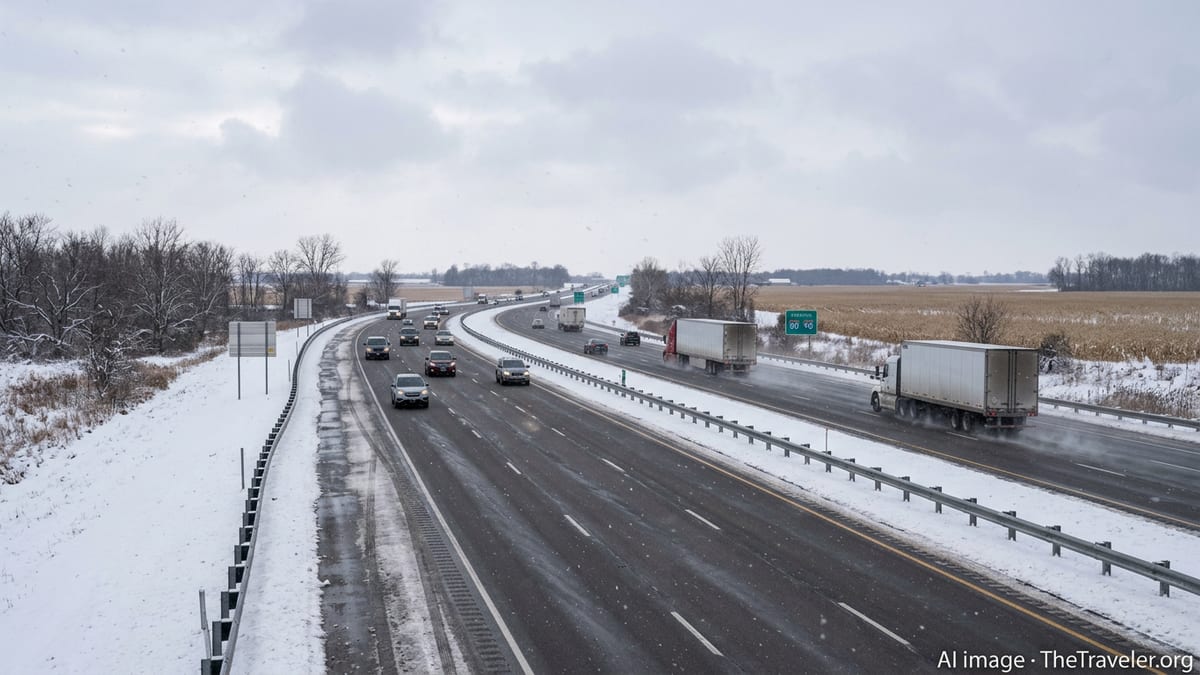
Understanding Indiana’s Road Network and Driving Culture
Indiana sits at the crossroads of the Midwest, and its highways reflect that role. Major interstates like I-65, I-69, I-70, I-74, and I-80/90 connect cities such as Indianapolis, Fort Wayne, South Bend, and Evansville with Chicago, Louisville, and points beyond. For visitors, that means plenty of high-speed, limited-access roads, relatively flat terrain, and heavy use by long-haul trucks. Driving here often feels efficient, but sudden weather changes and construction work zones can quickly slow traffic.
Urban driving is most intense around Indianapolis and the northwest corner of the state near Chicago. Indianapolis features a loop freeway (I-465) with multiple interchanges, collector lanes, and frequent lane changes near rush hour. Northwest Indiana includes dense truck traffic feeding into the Chicago Skyway and Illinois Tollway system. Outside those hubs, rural interstates and state highways are more relaxed but may have fewer services at night, especially in winter.
Indiana drivers tend to move with the flow of traffic, which can run slightly above posted limits, particularly on rural interstates. However, enforcement is active in construction zones and near urban areas. Winter conditions can catch even local drivers off guard; when the first significant snow or ice hits, crash reports often spike as people re-learn how to drive on slick pavement. As a visitor, resisting the urge to match aggressive speeds and instead focusing on cautious, defensive driving is the safest approach.
For those unfamiliar with the Midwest, one cultural adjustment is how quickly conditions change. A clear, dry afternoon on I-70 can become a low-visibility snow squall within an hour, especially downwind of Lake Michigan in northern counties. Learning to check road and weather conditions before starting a long drive is not just helpful; it is an essential habit in Indiana during late fall, winter, and early spring.
Toll Roads and Bridges: What Drivers Need to Know
Indiana’s most prominent toll facility is the Indiana Toll Road, which carries I-80/90 across the state’s northern edge from the Ohio border to the Illinois state line. The Toll Road is operated under a long-term lease and uses a combination of electronic tolling and staffed plazas. Passenger vehicles pay based on distance and number of axles, with higher rates for larger vehicles like RVs and trucks. As of 2026, toll rates have been updated periodically, and travelers should expect incremental increases over time rather than fixed, long-term prices.
Electronic tolling on the Indiana Toll Road relies on the E-ZPass network, which is interoperable with many transponders issued by other states. Drivers using E-ZPass or compatible devices such as I-Pass from Illinois typically benefit from lower rates and faster processing than paying cash at toll booths. If you already have a transponder from a neighboring state, you can generally use the dedicated electronic lanes on the Toll Road without additional registration. Cash customers should watch advance signage to move into the appropriate lanes well before reaching a plaza.
Beyond the main Toll Road, Indiana drivers encounter electronic tolling on a handful of bridges. In the northwest, the Cline Avenue Bridge in East Chicago operates with all-electronic toll collection, scanning transponders or license plates as vehicles pass under gantries. In the southeast, the RiverLink system covers three Ohio River bridges connecting southern Indiana with Louisville, Kentucky, using transponders and pay-by-mail billing. These systems do not require stopping at booths, but the failure to pay promptly after a trip can result in administrative fees.
One growing concern for drivers has been toll-related scams. Because legitimate toll operators occasionally contact account holders about low balances or unpaid tolls, scammers have begun sending text messages that appear to be official notices. The Indiana Toll Road operator and state authorities have repeatedly warned that unsolicited texts or emails with generic links demanding immediate payment are likely fraudulent. When in doubt, drivers should log in directly to the official tolling website or call customer service using a number found on a toll receipt or printed statement, rather than any number provided in a message.
How to Pay Tolls: Cash, E-ZPass, and Plate-Based Billing
For many visitors, paying tolls in Indiana is straightforward if you already use E-ZPass or a compatible transponder. Simply mount the device according to the instructions and follow signs for electronic or express toll lanes. Overhead readers will detect your transponder as you pass, and the toll amount will be deducted from your account. Check your home state’s tolling authority to confirm current compatibility, but in practice, most major Midwestern and East Coast transponders function seamlessly on the Indiana Toll Road and other regional facilities.
Drivers without a transponder still have options. On the Indiana Toll Road, some plazas maintain staffed cash lanes where you can take a ticket and pay upon exiting, or pay a flat rate in certain barrier sections. The key is to read roadside signs carefully and choose the correct lane early; trying to switch at the last second can be dangerous, especially in heavy truck traffic. Keep small bills and coins handy, since not all booths provide change for large bills and some may be attended by a single worker during off-peak hours.
On fully electronic toll bridges and some segments of toll highways, plate-based billing may be used when a transponder is not detected. Cameras capture your license plate, and a bill is mailed to the registered owner of the vehicle. Although this is convenient, it typically carries higher rates or service fees compared with using a transponder. Out-of-state visitors in rental cars should ask the rental company how tolls are handled in Indiana; some rental agencies add their own administrative fees on top of the toll, which can significantly increase costs.
For repeat travelers through northern Indiana or across the Ohio River, it may be worth opening an E-ZPass or RiverLink account directly, even if you live in another state. Doing so can reduce your long-term toll costs and make travel more predictable. Whatever method you choose, check your statements regularly and respond quickly to any legitimate notice of unpaid tolls. Small toll balances can grow over time when fees and penalties are added, especially if a notice goes to an old address or gets lost in the mail.
City and Small-Town Parking Rules Across Indiana
Parking rules in Indiana can vary significantly between large cities, college towns, and small communities, so reading signs carefully is critical. In downtown Indianapolis, metered parking is common near offices, entertainment districts, and major venues. Meters may have different hours of enforcement during weekdays, evenings, and weekends, and many are now payable via smartphone apps. Time limits are enforced, and expired meters can result in fines even if you are only a few minutes late, particularly around high-demand areas like Monument Circle, Mass Ave, or the arenas.
Residential neighborhoods in cities such as Indianapolis, Bloomington, South Bend, and Fort Wayne may use permit systems or block-by-block restrictions, especially near universities and hospitals. Signs might limit parking to two hours for non-permit holders during business hours or prohibit parking overnight on certain sides of the street. Enforcement tends to be most rigorous near campus districts, where student parking pressure is high and local authorities want to keep streets clear for residents and service vehicles.
Smaller towns and suburban communities often rely on a mix of on-street parking and municipal lots rather than garages. Many downtowns allow free parking for a specified period, such as two hours, with posted limits designed to encourage turnover for local businesses. Even when parking is free, overstaying the posted time can lead to a citation. Some towns still use chalking of tires or electronic license plate checks to enforce time limits, so it is unwise to assume that small-town parking rules are casual or rarely enforced.
Private parking lots add another layer of complexity. Shopping centers, apartment complexes, and hospital campuses may use towing to enforce rules against overnight parking or parking in restricted areas. Signs at lot entrances often outline conditions such as “customers only” or “permit required” and may provide the name of a towing company. Violations can result in your vehicle being removed at your expense, which can be both costly and time consuming. When in doubt, ask a property owner or lot attendant for permission before leaving a vehicle overnight.
Snow Emergencies, Parking Bans, and Travel Advisories
Indiana winters occasionally bring heavy snow and ice events that trigger formal travel advisories and parking restrictions. The state’s county-based travel advisory system uses color categories that typically range from cautionary to restrictive levels, with local emergency management agencies updating conditions as storms unfold. When advisories escalate, officials may ask drivers to limit trips to essential purposes such as work, medical appointments, or emergency needs. In the most severe situations, some counties restrict travel to emergency personnel only.
These travel advisories focus on safety rather than routine enforcement, but they are taken seriously. Employers, schools, and universities often align their operations with advisory levels, adjusting schedules or closing facilities when conditions deteriorate. For visitors, that means a planned day trip might suddenly become impractical or unsafe. Checking the statewide advisory map or local news before starting a drive during snow season can help you avoid being caught on the road when conditions worsen.
Snow emergencies also influence where you can park. Many city and town ordinances designate certain streets as snow routes or snow emergency routes, requiring vehicles to be moved during storms so plows can clear lanes properly. Parking bans might prohibit stopping on specific sides of the street when snow accumulations reach a threshold, or when a formal snow emergency is declared. In some communities, if one side of the street is normally a no-parking zone, rules temporarily shift during a snow emergency to keep at least one side clear for plows and emergency vehicles.
Failing to move a vehicle from a snow route can result in tickets and, in some cases, towing. Beyond the financial penalty, a parked car left in the way of a plow can create dangerous bottlenecks or block emergency responders. If you are staying in a rental or visiting friends in a residential area, ask about local snow rules before a storm hits. Knowing where to move your vehicle when snow is forecast can prevent unpleasant surprises and help keep streets safe for everyone.
Safer Winter Driving: Preparing for Ice, Snow, and Lake-Effect Squalls
Indiana’s winter driving challenges vary across the state. Northern counties along Lake Michigan are vulnerable to lake-effect snow that can create intense, localized squalls. Central and southern regions often see more episodes of freezing rain and mixed precipitation that turn highways into sheets of ice. Regardless of where you drive, preparation and a cautious mindset make the biggest difference in staying safe when temperatures drop.
The Indiana Department of Transportation emphasizes fundamentals: slow down, increase following distance, and give yourself extra time to reach your destination. Even with modern all-wheel-drive vehicles and advanced traction control systems, slick pavement drastically lengthens stopping distances. Many winter crashes occur because drivers rely too heavily on their vehicle’s capabilities and underestimate how quickly they can lose grip on black ice, bridges, overpasses, and shaded curves. Treat the posted speed limit as a maximum in ideal conditions, not a target in snow or freezing rain.
Before a winter trip, ensure your vehicle is ready. That means checking tire tread and pressure, topping off windshield washer fluid rated for low temperatures, and confirming that wipers, defrosters, and lights are working properly. Scrape all ice and snow from windows, mirrors, headlights, and taillights, not just a small patch on the windshield. Loose snow left on the roof or hood can blow onto your windshield or the vehicle behind you, reducing visibility and creating unnecessary hazards.
It is also wise to carry a basic winter kit, especially for long drives between cities. Items such as an ice scraper and snow brush, a small shovel, jumper cables, warm clothing or blankets, and a flashlight can be invaluable if you become stranded. A phone charger, some bottled water, and nonperishable snacks are simple additions that make waiting for help more comfortable. In rural areas or during major storms, response times may be longer than usual, so planning for self-sufficiency is part of responsible winter travel.
Using Indiana’s Tools and Local Knowledge to Plan Your Trip
Modern technology has made it easier than ever to assess conditions before you drive in Indiana. State transportation agencies provide online maps that display current road conditions, crashes, construction zones, and the approximate location of snowplows. While these tools are primarily aimed at residents and frequent commuters, they are equally valuable for visitors planning cross-state trips. Checking these resources a few minutes before departure can reveal hazards such as lane closures, ice-covered stretches, or heavy snow bands moving across your route.
Weather forecasts from local television stations, radio, and national services help you anticipate changing conditions. In winter, pay particular attention to forecast details like wind chill, snow totals, and the timing of mixed precipitation. A storm that starts as rain and switches quickly to snow can create especially treacherous conditions, as wet pavement freezes into ice beneath fresh accumulation. Because Indiana’s terrain is relatively flat, wind can easily blow snow back onto cleared roads, reducing visibility and creating drifting in open areas.
Local knowledge remains one of the best planning tools. If you are visiting friends or family, ask them how they adjust their driving habits during winter storms, where they prefer to park in snow season, and which routes are plowed or treated first. Residents usually know which overpasses freeze first, which rural roads drift shut, and where traffic backups are most common near cities. Their advice, combined with official advisories and mapping tools, can help you choose safer departure times and alternate routes.
Finally, build flexibility into your schedule, especially between November and March. The safest decision in Indiana’s harshest winter weather is often to delay or cancel a drive. Hotels, short-term rentals, and roadside services are accustomed to weather-related changes and often work with travelers who must alter plans for safety. Having a backup plan and being willing to stop early can turn a stressful, risky journey into a manageable delay.
The Takeaway
Driving in Indiana is generally straightforward, but the combination of toll roads, variable parking rules, and unpredictable winter weather rewards preparation. Understanding how the Indiana Toll Road and other tolled facilities operate will help you navigate electronic lanes, avoid surprises on your bill, and recognize potential scams. In cities and towns, reading parking signs carefully and respecting snow route rules prevent tickets, towing, and headaches when plows need to clear the streets.
Winter adds another layer of complexity, from county travel advisories to sudden snow squalls that transform visibility and traction in minutes. Slowing down, increasing following distance, and checking official travel tools before heading out can dramatically reduce your risk on icy highways. With a ready vehicle, a small winter kit, and flexible plans, you can cross Indiana safely in every season, whether you are passing through on the interstate or exploring its cities and small towns more slowly.
By combining basic knowledge of toll systems, local parking norms, and cold-weather driving habits, you can focus less on navigating rules and more on enjoying the journey. The Hoosier State’s highways, back roads, college towns, and lakefront communities are easier to appreciate when you feel confident behind the wheel, prepared for whatever the forecast and the road ahead may bring.
FAQ
Q1. Do I need an E-ZPass to drive the Indiana Toll Road?
While you do not need an E-ZPass to use the Indiana Toll Road, having an E-ZPass or compatible transponder usually provides lower toll rates and faster passage through electronic lanes. Without one, you can typically pay cash at staffed plazas on the Toll Road or use plate-based billing where it is available, but those options may cost more and take longer.
Q2. Are Indiana tolls cashless, or can I still pay with cash?
Indiana uses a mix of systems. Certain bridges and segments operate with all-electronic tolling, relying on transponders and license plate billing, while much of the Indiana Toll Road still offers staffed cash lanes at major plazas. Before your trip, verify which system your route uses so you can be prepared with a transponder, sufficient cash, or a plan to settle any plate-based toll invoices quickly.
Q3. How can I avoid toll scams while driving in Indiana?
Toll operators and state agencies warn that unsolicited texts or emails with generic payment links may be fraudulent, especially if they threaten urgent penalties. Instead of clicking any link, sign in to your toll account through a trusted bookmark or official app, or call the customer service number listed on your statement or toll receipt. If you do not recognize any recent toll use, contact the operator directly and report the suspicious message.
Q4. What should I know about parking in downtown Indianapolis?
Downtown Indianapolis relies heavily on metered street parking and garages, with enforcement varying by block and time of day. Meters often accept coins, cards, and mobile payments, and time limits are enforced, especially near offices, restaurants, and event venues. Because special rules may apply during stadium events and festivals, always read posted signs closely and consider using garages or lots if you plan to stay longer than a couple of hours.
Q5. How do snow emergencies affect parking in Indiana towns?
Many Indiana municipalities designate specific streets as snow routes or snow emergency routes, where parking is restricted during or after significant snowfalls so plows can clear lanes effectively. When a snow emergency is declared, you may be required to move your vehicle off certain streets or to a particular side of the road. Ignoring these rules can lead to tickets or towing, so it is important to check local announcements and signage whenever heavy snow is forecast.
Q6. What are the basic tips for driving on ice and snow in Indiana?
Key winter safety tips include slowing down, increasing following distance, and avoiding sudden steering, braking, or acceleration. Use lower speeds on bridges, overpasses, and shaded areas where black ice is common, and give snowplows plenty of room to work. Make sure your vehicle is winter-ready, clear all windows and lights of snow and ice, and keep an emergency kit with warm clothing, an ice scraper, and basic supplies in case you become delayed.
Q7. How do I check road and travel conditions before driving?
Indiana transportation and emergency management agencies provide online maps and phone services that report current road conditions, closures, and travel advisories by county. Local news outlets and weather services also give up-to-date information during storms. Before any significant drive in winter, especially in northern Indiana or at night, review these resources so you can plan alternate routes, adjust your departure time, or postpone travel if conditions are deteriorating.
Q8. Are rental cars automatically set up for Indiana tolls?
Rental car policies vary. Some companies equip vehicles with transponders that activate when you pass through electronic lanes, then add tolls and administrative fees to your bill. Others do not provide transponders and leave you responsible for paying tolls with cash or via plate-based billing. Before leaving the rental lot, ask how tolls work for your vehicle and what fees apply so you can decide whether to use the company’s system or adjust your route to minimize tolls.
Q9. Can I park overnight on Indiana city streets in winter?
Overnight street parking rules differ by city and even by neighborhood. Some areas allow it with no restrictions, others require permits, and certain streets prohibit overnight parking entirely or during snow events. In winter, many communities enforce additional bans on overnight parking along snow routes. Always read local signs and, if you are unsure, consult your host, hotel, or local authorities before leaving your car on the street overnight.
Q10. When is it safest to postpone driving in Indiana during winter?
It is wise to delay or avoid driving when forecasts call for heavy snow, significant ice, or strong winds that could create whiteout conditions, and when county travel advisories reach higher levels indicating hazardous roads. If visibility is low, roads are untreated or rapidly refreezing, or plows are struggling to keep up with a storm, postponing travel by several hours or until the next day can dramatically reduce your risk. Building flexibility into your schedule is one of the most effective winter safety strategies.