

Iowa is a state best understood through the windshield. From river-hugging highways and roller-coaster ridgelines to snow-dusted farm roads, the Hawkeye State rewards drivers who slow down, look around, and plan ahead for the seasons. Whether you are chasing fall color, following the Mississippi, or braving a January snow squall, thoughtful preparation turns an ordinary drive into an unforgettable Iowa road trip.
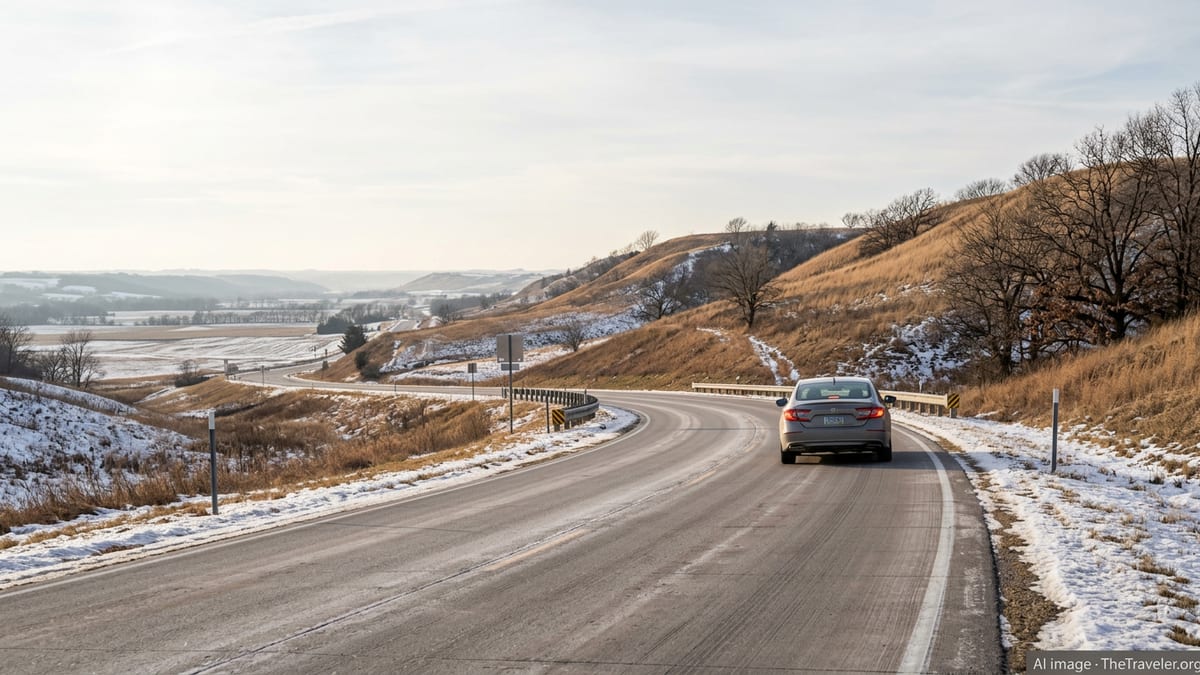
Iowa’s Scenic Byways at a Glance
Iowa’s network of national and state-designated scenic byways offers one of the most varied driving experiences in the Midwest. The system includes three national scenic byways and more than a dozen state byways that thread through bluff country, tallgrass prairie, river valleys, and historic small towns. Signposted routes make it easy to leave the interstate behind and settle into a slower, more rewarding pace.
The byways are designed as thematic journeys, each highlighting a different slice of Iowa’s natural and cultural story. Interpretive panels, visitor centers, small museums, and trailheads encourage you to pull off, stretch your legs, and explore beyond the car. Many routes are suitable for day trips, while others reward a weekend or longer, with plenty of lodging, campgrounds, and local diners along the way.
Because Iowa is an all-weather driving state, most scenic byways remain open year-round, with fall foliage, spring wildflowers, lush summer fields, and stark winter landscapes each offering their own appeal. Conditions can change quickly, especially near rivers and high ridges, so pairing a scenic byway map with real-time road reports is essential when planning a seasonal drive.
Before you go, think of Iowa’s byways less as single point-to-point roads and more as corridors dotted with short spurs, loops, and side trips. This mindset allows you to adapt on the fly: extending your day for a hiking stop, detouring into a historic downtown, or rerouting in winter if conditions deteriorate on higher or more exposed segments.
Following the Mississippi on the Great River Road
The Iowa section of the Great River Road National Scenic Byway traces roughly 300 miles along the west bank of the Mississippi River, connecting river towns from the Minnesota border to Missouri. It passes limestone bluffs in the northeast, industrial riverfronts in larger cities, and quiet bottomland forests and wildlife areas in the south. Drivers experience an ever-changing relationship with the river, from high overlook vistas to stretches where the road and the water feel almost side by side.
In far northeast Iowa, the route delivers some of the state’s most dramatic topography. North of Lansing and around McGregor and Marquette, roads climb to bluff-top state parks where you can look down on the Mississippi from hundreds of feet above. Towns like Guttenberg and Bellevue preserve stone storefronts and riverfront promenades that invite you to park the car and wander. This section of the Great River Road is particularly rewarding in autumn when hardwood forests along the bluffs ignite in shades of red and gold.
Farther south, the byway weaves through larger communities including Dubuque, Clinton, Davenport, Bettendorf, Muscatine, and Burlington. Here, the drive mixes scenic views with cultural stops such as museums, historic districts, breweries, public art, and riverside parks. Bridges and causeways offer repeated crossings of backwaters and side channels, giving drivers glimpses of barges, migratory birds, and working riverfronts.
Because the Great River Road passes through both urban and rural stretches, driving conditions can vary widely, especially in winter. River fog, lake-effect snow bands off open water, and freeze-thaw cycles on bluff-top curves all call for reduced speeds and attentive driving. When planning, identify safe pullouts, scenic overlooks, and river towns where you can wait out a passing squall or black ice advisory rather than pressing ahead on exposed segments.
Loess Hills and Western Skies: Big Views in Western Iowa
On Iowa’s western edge, the Loess Hills National Scenic Byway follows a narrow band of wind-deposited bluffs running roughly parallel to the Missouri River. This unique landform, which rises sharply above the flat river bottomlands, creates a drive that feels more like a mountain foothills road than classic farm country. Expect tight curves, sudden vistas, and frequent elevation changes as you wind along the ridge and dip back toward small towns below.
The core paved route of the Loess Hills byway runs for more than 200 miles, with additional signed loops and spurs that venture deeper into parks, wildlife areas, and preserves. Drivers can stop at scenic overlooks to survey a patchwork of prairie remnants, oak savannas, and cropland, or take short hikes on ridge-top trails. In late afternoon light, the steep loess faces glow in warm tones that photographers prize, especially in late summer and early fall.
Farther inland, the Western Skies Scenic Byway offers a different western Iowa experience. Instead of hugging a single landform, it strings together classic rural communities, Danish-American heritage towns, and rolling agricultural landscapes. Straight, quiet stretches alternate with gentle curves, making it a relaxed route ideal for travelers who want an easy drive with frequent opportunities to stop at small museums, local bakeries, and historic churches.
Both the Loess Hills and Western Skies routes are generally manageable in winter, but sections of ridge-top pavement and north-facing slopes can hold snow and ice longer than open lowlands. When snow is in the forecast, consider breaking your trip into shorter legs, using larger towns along the way as overnight bases. In clear weather, winter can be an especially beautiful time to drive these byways, as dustings of snow accentuate the contours of the hills and fields.
Classic Heartland Routes: Lincoln Highway and Beyond
Long-distance road trippers often meet Iowa via the historic Lincoln Highway Heritage Byway, which loosely follows one of America’s earliest transcontinental routes across the center of the state. Today the byway parallels modern U.S. highways while seeking out older alignments, small-town main streets, and landmarks such as early twentieth century bridges, vintage gas stations, and roadside art. It remains one of the most efficient ways to cross Iowa while still feeling like you are traveling rather than simply commuting.
Driving the Lincoln Highway Heritage Byway is about noticing the layered past along an active transportation corridor. Grain elevators and rail lines share space with historic courthouses, neon motel signs, and mom-and-pop cafes that have served generations of highway travelers. Many segments are never far from the interstate, which makes it easy to jump between faster and slower routes depending on your schedule and the weather.
Other state-designated byways round out the portfolio of classic Iowa routes. In the northeast, routes like the Driftless Area Scenic Byway and nearby corridors take you through a landscape carved by ancient rivers rather than glaciers, resulting in steep valleys, cold-water trout streams, and dense hardwood forests. In the south, areas linked by the Historic Hills Scenic Byway showcase oak woodlands, Amish farmsteads, and historic villages that feel far removed from the rush of interstate travel.
These byways are particularly well suited to layered itineraries. You might, for example, cross the state loosely along the Lincoln Highway, then dip north for a day in the Driftless Area or south for a loop through the Historic Hills before reconnecting with your east-west route. When planning, allow extra time for unexpected discoveries: a small-town festival, an antique store with an irresistible sign, or a gravel road that tempts you toward a distant church steeple.
Planning Your Iowa Road Trip Through the Seasons
Because Iowa’s climate spans humid summers, colorful autumns, snowy winters, and storm-prone springs, the same route can feel completely different at different times of year. Summer brings long daylight hours and typically dry pavement, but also more agricultural traffic, road construction zones, and the risk of severe thunderstorms. Spring and fall often offer the most comfortable temperatures, though spring can be wet and muddy, particularly along river routes.
Autumn remains a premier driving season, especially along bluff and forested corridors such as sections of the Great River Road and northeastern byways. Maples, oaks, and other hardwoods turn hillsides into a tapestry of color, while cooler air and lower sun angles create flattering light for photography. Because this is also harvest season, travelers should be prepared for slow-moving farm equipment on rural roads and occasional grain dust near elevators and fields.
Winter, however, is what truly defines Iowa driving for many residents and visitors. Snow, blowing snow, freezing drizzle, and sudden temperature drops can transform a pleasant drive into a serious test of judgment. The state transportation network is well-practiced at plowing and treating major highways, but even with efficient snow operations, conditions can change within minutes between open country, sheltered tree lines, river valleys, and urban stretches.
Whatever the season, flexible itineraries are your friend. Build in buffer time so you can wait out a thunderstorm in a small-town café, re-route around a flash flood warning in spring, or postpone a rural night drive if fog or black ice becomes a concern. Iowa rewards travelers who are willing to adjust plans rather than clinging to a rigid schedule in the face of changing weather and road conditions.
Winter Driving Realities in Iowa
From roughly November through March, winter conditions are a recurring fact of life on Iowa roads. Snowfalls range from light dustings that melt quickly to major storms that can close rural routes, reduce visibility, and coat interstates in packed snow or ice. In some winters, extended cold snaps keep snowpack in place for weeks, while in others, freeze-thaw cycles create repeated refreezing of meltwater overnight, especially on bridges, overpasses, and shaded curves.
Driving style that feels comfortable on dry pavement may be unsafe on snow and ice. Stopping distances can lengthen significantly, and vehicles equipped with all-wheel drive can accelerate more confidently than they can stop or turn. This mismatch often lures drivers into a false sense of security, particularly on high-speed corridors such as Interstate 80 and Interstate 35 that cut across exposed, windswept portions of the state.
Because many winter crashes involve speed that is inappropriate for the conditions, a core principle of Iowa winter driving is to slow down more than you think is necessary and increase following distance. Even a modest reduction in speed can dramatically increase your margin for error if you encounter black ice, hard-packed snow, or a sudden whiteout. Patience, not power, is the defining skill of safe winter travel in Iowa.
Visibility is another key factor. Blowing snow off open fields, plow spray on major highways, and fog or mist near rivers and lowlands can reduce sight lines without much warning. Good winter driving practice in Iowa includes using headlights during the day when conditions are poor, keeping the windshield and mirrors fully cleared of snow and frost, and being ready to pull off at a safe, well-lit exit or town if your ability to see lane markings or vehicles ahead begins to deteriorate.
Preparing Your Vehicle and Route for Winter Travel
Sound vehicle preparation can turn a stressful Iowa winter drive into a manageable one. Before the season, drivers are encouraged to check that tires have adequate tread, fluids are topped up with winter-appropriate blends, wiper blades are in good condition, and the battery is strong enough to handle cold-start demands. Inexpensive items like a good ice scraper, snow brush, and windshield washer fluid rated for low temperatures can make a big difference on a dark, snowy morning.
During the winter months, many Iowa drivers keep a basic cold-weather kit in the vehicle. Common items include warm clothing, gloves, a hat, a blanket, a flashlight, non-perishable snacks, water, jumper cables, and a small shovel. Sand or cat litter can provide extra traction if you become stuck in a slick parking area or roadside shoulder. For longer rural drives, especially at night or during active storms, an expanded kit with additional layers and hand warmers offers extra peace of mind.
Route planning is just as important as vehicle preparation. Before setting out, checking statewide road condition tools, local forecasts, and travel advisories helps you decide not only whether to go, but which roads to use. In many cases, major interstates and primary highways are cleared and treated first, while secondary roads, rural county routes, and hilly byway segments may remain snow-covered or partially treated for longer periods.
If conditions are marginal, consider adjusting your route to favor straighter, flatter corridors with frequent services such as fuel, lodging, and food. Avoid relying heavily on navigation apps that may suggest minor shortcuts on unplowed gravel or minimum-maintenance roads. In Iowa’s rural counties, those shortcuts can quickly become dead ends in deep snow or drifts, while the main highway a few miles away remains passable and patrolled.
Safe Winter Driving Techniques on Iowa Roads
Once you are on the road, safe winter driving in Iowa comes down to smooth, deliberate control. Gentle acceleration, light braking, and gradual steering inputs help maintain traction on snow and ice. Abrupt movements, such as hard braking into a curve or sudden lane changes to pass, increase the risk of skidding or losing control, especially on polished packed snow where traction can be extremely low.
Increasing your following distance is critical. On dry pavement, the typical recommendation is at least several seconds of following time behind the vehicle ahead. In winter, many Iowa safety campaigns encourage drivers to expand that gap substantially, giving themselves a generous buffer for unexpected slowdowns, spinouts, or vehicles merging from ramps. The extra space can also shield you from snow and salt spray that may obscure your windshield.
Cruise control that feels convenient in summer is often a liability in winter. When used on slick surfaces, it may continue to apply power at moments when you would instinctively ease off the accelerator, making it harder to sense changes in traction. Turning off cruise control whenever snow, slush, or ice is present allows you to respond more naturally to subtle cues like wheel slip or a light sideways drift as you cross icy patches.
Finally, know when not to drive. Even experienced Iowa motorists occasionally decide that conditions are too poor to justify a trip, especially during heavy snow, strong winds that create ground blizzards, or ice storms that glaze roads and power lines. Postponing a drive, checking into a roadside motel, or waiting for plows and salt trucks to get ahead of a storm is often the most sensible winter driving decision you can make in Iowa.
The Takeaway
Driving in Iowa is as much about understanding the rhythm of the seasons as it is about reading a map. Scenic byways like the Great River Road, Loess Hills, Western Skies, and the Lincoln Highway Heritage Byway unlock corners of the state that most interstate travelers never see. They reveal a landscape of surprising variety, from steep river bluffs and rolling prairies to historic main streets and quiet Amish lanes.
At the same time, Iowa’s winters demand respect. Snow, ice, wind, and rapidly changing conditions reward drivers who take preparation seriously, plan flexible routes, and err on the side of caution. When you combine that winter savvy with an eye for scenic detours and local experiences, an Iowa road trip shifts from a simple point A to point B journey to a richer narrative filled with unexpected views and encounters.
Whether you are tracing the Mississippi, climbing the loess ridges at sunset, or easing your way across a snow-dusted county road in January, the key is the same: slow down, look around, and let the road teach you something about the land it crosses. In Iowa, that lesson is one of resilience, subtle beauty, and the rewards that come to travelers who are willing to prepare well and travel with intention.
FAQ
Q1. Do Iowa’s scenic byways stay open during winter?
Most byways remain open year-round, but conditions can vary daily. Major segments are plowed and treated, while smaller side roads, overlooks, and high ridges may stay snow-covered or icy longer after storms. Always check current road reports and forecasts before committing to a winter byway drive.
Q2. Is the Great River Road in Iowa safe to drive in snow?
The Great River Road is maintained throughout winter, but sections near bluffs, bridges, and the river can be prone to fog, drifting snow, and icy patches. Reduce speed, increase following distance, and be prepared to pause in river towns if visibility or traction deteriorates.
Q3. What type of vehicle is best for winter driving in Iowa?
All-wheel or four-wheel drive can be helpful, but safe winter driving depends more on good tires, careful speed, and smooth inputs. Front-wheel drive vehicles with adequate tread perform well when driven cautiously. No drivetrain can overcome excessive speed or ice-glazed pavement.
Q4. How should I plan a winter road trip across Iowa on Interstate 80?
Build extra time into your schedule, monitor forecasts and statewide road condition reports, and favor daylight driving when possible. Plan fuel stops in larger towns, keep a winter kit in your vehicle, and be prepared to delay or shorten your trip if officials advise against travel.
Q5. Are gravel roads a good shortcut in winter?
Gravel and minimum-maintenance roads can become deeply rutted, drifted, or icy and are often among the last to be plowed. In winter, it is usually safer to stay on paved primary or secondary routes, even if they add a few miles to your trip.
Q6. What should I do if my car slides on ice in Iowa?
Stay calm, ease off the accelerator, and steer gently in the direction you want the front of the car to go. Avoid slamming on the brakes or making abrupt steering corrections. Once you regain control, slow down further and treat any similar-looking surfaces ahead with extra caution.
Q7. How early should I start checking weather and road conditions?
For winter trips, begin checking forecasts and official road condition tools at least a day ahead, then again just before departure. Conditions can change quickly with new storm tracks or overnight refreezing, so rely on the latest information, not a forecast you saw several days earlier.
Q8. Can I visit Iowa’s parks and overlooks along byways in winter?
Many parks, overlooks, and trailheads remain accessible, though some facilities or minor roads may close or receive limited maintenance. Expect snow-packed parking areas and unplowed side spurs after storms, and carry appropriate footwear and clothing if you plan to get out and explore.
Q9. What is the biggest mistake visitors make when driving in Iowa in winter?
A common mistake is underestimating how quickly conditions can change and driving too fast for the road surface. Visitors sometimes assume that a plowed highway is fully safe, only to encounter unexpected ice on bridges, shaded curves, or untreated ramps.
Q10. Is it realistic to combine scenic byways and winter travel in one trip?
Yes, many travelers successfully explore scenic byways in winter, especially during calm weather between storms. The key is flexibility: keep daily mileage modest, remain ready to adjust your route, and prioritize safety over completing every planned segment.