

More news on this day
Hundreds of passengers faced cancellations, diversions and long delays after a new drone attack prompted an unprecedented shutdown of airspace around Pulkovo Airport in St. Petersburg, intensifying concerns over how the Russia Ukraine conflict is reshaping regional and long haul travel patterns.
Get the latest news straight to your inbox!
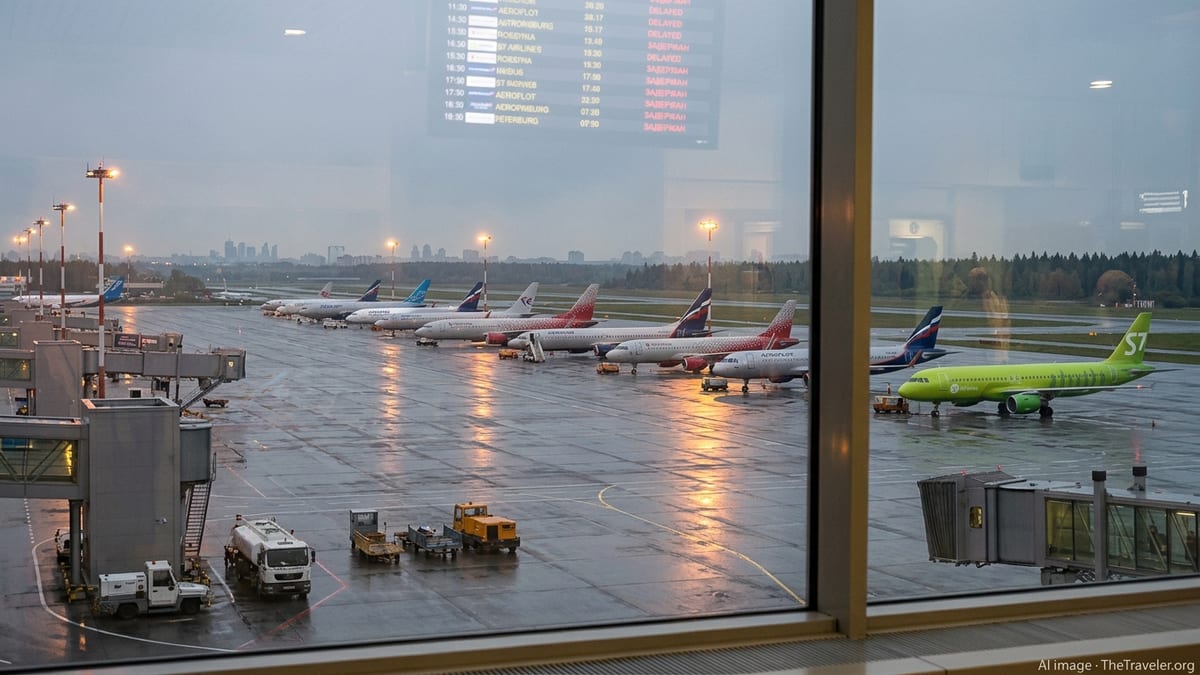
Unprecedented Airspace Closure Over St. Petersburg
Reports from Russian aviation trackers and independent outlets indicate that airspace around St. Petersburg was abruptly closed after drones were detected in the vicinity of Pulkovo, the city’s main international airport. Commercial traffic was halted as arriving aircraft were placed in holding patterns, diverted to alternate airports or forced to delay departure, leading to widespread disruption across domestic and international schedules.
Flight monitoring platforms showed clusters of aircraft circling near the city and over the Gulf of Finland as crews waited for clearance to land. On the ground, departures were paused, with some aircraft held at gates or on taxiways while the situation was assessed. The shutoff of Pulkovo’s airspace, rare even amid the conflict, effectively froze one of northwest Russia’s most important aviation hubs for a significant part of the day.
Publicly available data and social media posts from passengers describe more than one hundred flights canceled or delayed, with knock on effects continuing into subsequent rotations. Travelers connecting onward to destinations in the Caucasus, Central Asia, the Middle East and parts of Europe reported missed connections and unplanned overnight stays as airlines struggled to rebuild their schedules.
Ripple Effects Across Russia’s Already Strained Network
The latest incident adds to a pattern of conflict related interruptions that has repeatedly strained Russia’s internal aviation network. Earlier drone related disruptions at Moscow’s major airports and previous suspensions at Pulkovo have already created a fragile operating environment, in which any new closure quickly cascades across the system.
When Pulkovo halts operations, aircraft and crews are suddenly out of position for later flights, particularly on high demand domestic routes linking St. Petersburg with Moscow, Sochi, Kaliningrad, the Urals and Siberia. Airlines often respond by consolidating services, canceling lower priority rotations, or rerouting aircraft via alternative hubs to maintain at least partial connectivity.
The knock on impact extends to foreign carriers that still operate into Russian airports despite extensive sanctions. Regional and Middle Eastern airlines connecting St. Petersburg with Istanbul, Dubai and other transit hubs have to juggle their fleets and rebook passengers onward, adding pressure to already busy transfer banks and leading to longer layovers for international travelers.
Escalating Drone Activity and Aviation Risk
Since the full scale invasion of Ukraine began in 2022, drones have become a central feature of the conflict, and their growing reach deep into Russian territory has increasingly intersected with civilian aviation. Earlier episodes saw temporary suspensions at Pulkovo and major closures at Moscow airports when drone debris or intercept operations were reported near flight paths.
Publicly available timelines of the war show that previous drone incidents prompted several hour halts to operations in St. Petersburg, affecting dozens of arrivals and departures. The latest event appears to have been more disruptive, with a higher number of delayed and canceled flights and a wider airspace exclusion, reflecting both the intensity of current drone activity and heightened caution among aviation authorities.
Airlines are obliged to follow airspace restrictions, and each closure requires quick adjustments to routing, fuel planning and crew duty times. Even after the immediate threat passes and airspace is reopened, it can take many hours for traffic flows and airport operations to normalize, particularly when stand capacity, ground handling resources and immigration facilities are already operating near their limits.
Consequences for International Travelers and Long Haul Routes
Although most Western carriers stopped flying to Russia in the early months of the war, Pulkovo remains a key node in a patchwork of routes still linking Russia to the wider world. Connections via Istanbul, Dubai, Doha, Belgrade and a handful of other hubs continue to funnel Russian travelers to Asia, Africa and the Americas, while some foreign nationals and dual citizens also depend on these corridors.
An airspace shutdown in St. Petersburg therefore has an impact that extends far beyond Russia’s borders. Missed connections ripple into long haul services, and aircraft diverted from Pulkovo can arrive late into onward hubs, forcing schedule changes on flights bound for destinations as distant as Southeast Asia or Latin America. Travelers booked on complex itineraries that include Russian segments face particular uncertainty, with rebooking options limited by sanctions and capacity constraints.
The latest disruption also reinforces the challenges for tour operators and business travelers who still route through Russian airspace indirectly. Even when itineraries no longer include stops in Russia, large airspace closures in the region can increase congestion in nearby flight corridors, compel detours that lengthen flight times, and influence airline decisions on seasonal capacity deployment.
How the Conflict Continues to Reshape Global Air Routing
The new shutdown over St. Petersburg highlights how the Russia Ukraine conflict continues to reshape global aviation maps more than four years after the initial escalation. Early in the war, many carriers rerouted flights to avoid Russian and Ukrainian airspace altogether, adding hours to some Asia Europe journeys and increasing costs for airlines and passengers. Those structural changes remain in place, and fresh incidents such as the latest drone attack reinforce perceptions of persistent instability.
Published coverage on recent drone strikes within Russia points to a gradual expansion of affected regions, from front line areas to industrial sites and transport infrastructure deep in the interior. Each new episode introduces another variable into airline risk assessments, insurance calculations and decisions about whether to restore, maintain or withdraw capacity on marginal routes.
For travelers, the result is an environment where schedules involving Russia or its immediate neighborhood can change at short notice. Flexible tickets, robust travel insurance and willingness to accept alternative routings have become increasingly important for those whose journeys intersect with the region. As long as drones remain a prominent tool in the conflict, aviation analysts expect sporadic airspace closures and localized disruptions to remain a recurring feature of the global travel landscape.