

More news on this day
A fresh drone incident near St. Petersburg’s Pulkovo Airport has forced a rare, hours-long shutdown of local airspace, triggering hundreds of flight cancellations and delays and underscoring how the Russia Ukraine war continues to upend global travel networks.
Get the latest news straight to your inbox!
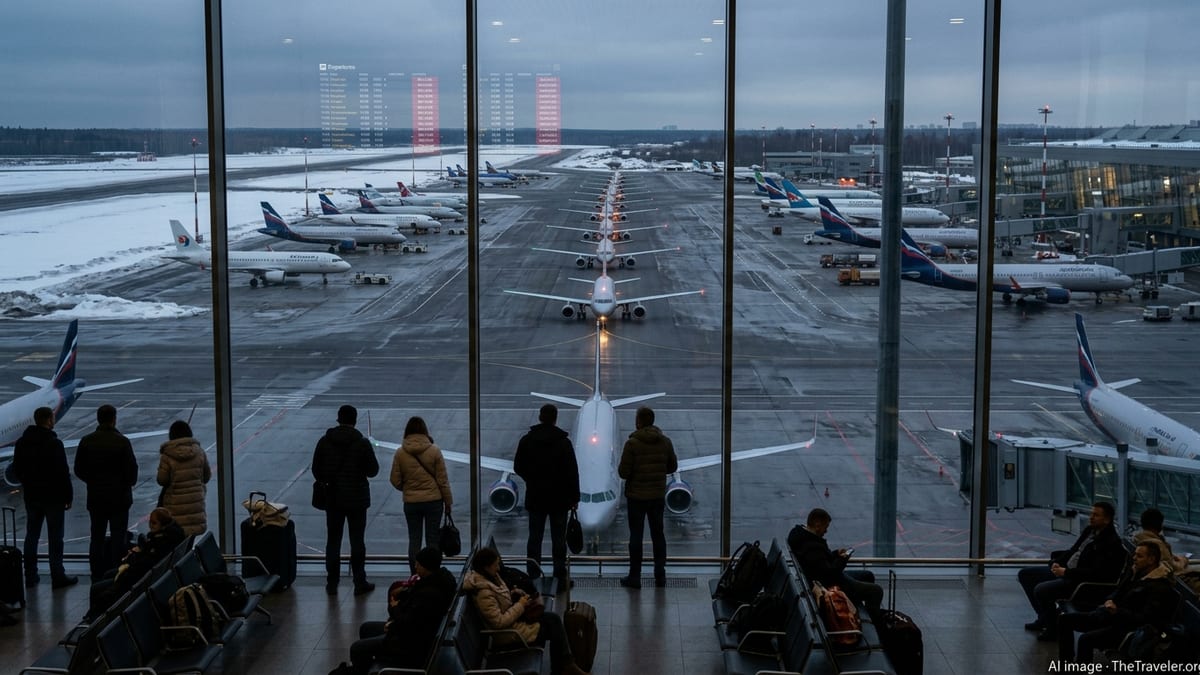
Unprecedented Airspace Closure Around St. Petersburg
Publicly available flight-tracking data and Russian-language media coverage show that air traffic around St. Petersburg contracted sharply after reports of a drone approach in the vicinity of Pulkovo, the city’s main international airport. Services were suspended as aircraft already en route diverted or were held in holding patterns, while departures from the airport were temporarily halted. Commentary on aviation tracking forums and social platforms described aircraft circling for extended periods before being rerouted to alternative airports.
Passenger accounts shared online describe over one hundred flights either canceled outright or subjected to long delays as the situation unfolded. Some aircraft reportedly remained on the ground with passengers onboard while airspace restrictions were assessed, while others were turned back to their origin points or diverted to airports elsewhere in Russia. For travelers, the effect was a sudden breakdown of the normal flow of traffic through one of the country’s key transport hubs.
The shutdown around Pulkovo is being described in specialist aviation outlets as unusually wide in scope for the St. Petersburg region, reflecting heightened concern over the risk that unmanned aerial vehicles pose to civilian aviation. While Russian airports have experienced intermittent suspensions since the start of the full-scale invasion of Ukraine, this latest incident stands out for the volume of flights affected in a concentrated window of time.
Escalating Pattern of Drone Disruptions in Russian Skies
The latest disruption fits into a broader pattern of drone-related interruptions to air travel across western Russia since early 2024. Published timelines of the conflict record several instances in which Ukrainian drone activity or air defense responses have forced temporary halts to operations at major airports, including earlier suspensions at Pulkovo following strikes on energy and industrial targets in the wider region. In some cases, airports have paused traffic for one to three hours while military and civil aviation services assessed airspace safety.
Russian and international news coverage has documented repeated episodes in which drone attacks on infrastructure in Leningrad and neighboring regions triggered diversions, delays or brief closures at St. Petersburg’s main airport. On multiple occasions, dozens of flights have been redirected or significantly delayed as air defenses respond to inbound drones, with debris risks and uncertainty about additional aircraft prompting conservative safety measures.
These incidents are part of a larger trend across Russia’s airspace. Major hubs around Moscow have also seen temporary suspensions after reported drone strikes or debris falls near transport infrastructure. Commentaries in defense and aviation analyses describe unmanned systems as a persistent, low-cost tool that complicates the operation of large, fixed sites such as airports, fuel depots and logistics terminals far from the front line.
Ripple Effects Across International and Connecting Routes
Although Russia’s airspace has been largely closed to many Western carriers since 2022, Pulkovo remains a critical node for domestic traffic and for travelers connecting between Russia, the Middle East, Central Asia and parts of Asia and Africa. According to airline timetables and booking-platform data, St. Petersburg continues to host a mix of Russian and foreign carriers that use the city both as a destination and as a transfer point.
The sudden interruption of operations in St. Petersburg therefore reverberates far beyond Russia’s borders. Flight-tracking snapshots from the period of the disruption show rerouted aircraft extending journey times and forcing unplanned fuel stops, while passengers on multi-leg itineraries risked missing onward connections in Istanbul, Dubai and other regional hubs. For some travelers, itinerary changes within Russia created additional complications linked to visa requirements, limited payment options and sanctions-related restrictions on rebooking.
Travel forums and social media posts in the hours after the shutdown describe passengers facing long queues at transfer desks, uncertainty over rebooking on already busy routes and confusion about luggage that had been checked through to final destinations. With ground staff and call centers dealing simultaneously with a wave of irregular operations, some travelers reported being offered rerouting days later or via circuitous paths that avoided the affected airspace altogether.
Safety Concerns and Operational Challenges for Airlines
Aviation safety specialists note that the main risk in these incidents is not deliberate targeting of civilian airliners but the proximity of drones and interception efforts to dense flight corridors. Publicly available commentary from pilots and air traffic controllers emphasizes the danger posed by fast-moving fragments from intercepted drones and air defense munitions in controlled airspace. Even small unmanned aircraft can cause catastrophic damage if they collide with a commercial jet, particularly at critical phases of flight near takeoff or landing.
As a result, airline operations teams tend to react conservatively once drone activity is reported near a major airport. Routes may be redrawn at short notice, approach paths altered and departure slots held back until the airspace picture is clearer. Each of these decisions carries financial costs for carriers, which must absorb fuel burn from extra holding, crew duty-time complications and compensation or accommodation obligations where local regulations apply.
Insurance and risk assessments for operating in Russian airspace have already tightened since 2022, and the latest incident around Pulkovo is likely to feed further caution. Some analysts writing in aviation trade publications suggest that repeated closures and reroutings could eventually reduce the number of foreign airlines willing to maintain direct links to Russian cities, further isolating the country’s air network and concentrating traffic on a smaller group of regional carriers.
What Travelers Should Expect in the Months Ahead
For international travelers, the Pulkovo shutdown reinforces the importance of accounting for geopolitical risk when planning journeys that intersect with Russian airspace. Travel advisories from Western governments have for some time highlighted the potential for sudden airspace restrictions, and recent events in Russia and elsewhere show how quickly conditions can change when drones are involved.
Booking data and anecdotal reports already indicate a gradual shift in passenger behavior, with some travelers favoring itineraries that avoid Russian territory even when overflight remains technically possible. Others are building in longer connection times and choosing flexible tickets that can more easily absorb last-minute changes prompted by security incidents or airspace closures.
Industry observers expect that airlines and route planners will continue to refine contingency plans as drone use expands in modern conflicts. The latest shutdown near Pulkovo illustrates how a relatively small unmanned aircraft, operating far from the front line, can disrupt the movements of thousands of people across multiple countries in a matter of hours, turning a local security incident into a global travel story.