

More news on this day
Two drones that authorities say were launched by Iran fell near Dubai International Airport on Wednesday, injuring four people but leaving flight operations at one of the world’s busiest hubs largely unaffected, as rising tensions across the Middle East raise fresh concerns over airspace safety and regional stability.
Get the latest news straight to your inbox!
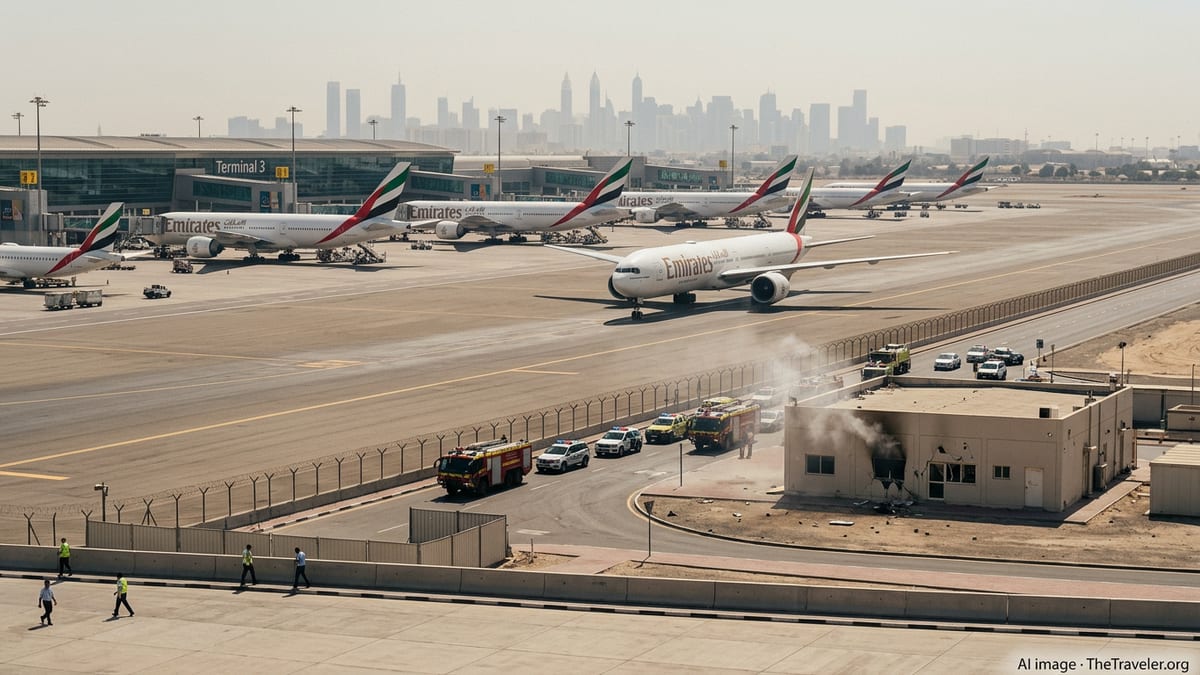
Incident Near Major Global Aviation Hub
Authorities in Dubai confirmed that two drones fell in the vicinity of Dubai International Airport on Wednesday, March 11, 2026, close to key access roads and service areas that support the airport’s passenger and cargo operations. Initial reports indicate there was no direct impact on runways or terminal buildings, allowing the airport to maintain normal flight movements even as emergency crews rushed to the scene.
Officials said the drones were part of a wider wave of Iranian launches targeting locations across the Gulf, but stressed that the immediate impact on Dubai’s core aviation infrastructure was limited. The government communication emphasized continuity of operations to reassure both residents and travelers who rely on Dubai as a key transit point linking Europe, Asia, Africa and the Americas.
Dubai International Airport has experienced several security-related interruptions in recent weeks linked to the broader regional crisis, including a brief suspension of flights on March 7 after debris from intercepted projectiles fell near the airport. Wednesday’s incident, however, marked the first time in the current escalation that falling drones in the immediate vicinity resulted in injuries on the ground.
Four People Injured as Debris Falls Nearby
According to a statement from the Dubai Media Office, four expatriate workers were injured when the drones fell and debris scattered across a mixed commercial and light-industrial zone near the airport perimeter. Two Ghanaian nationals and one Bangladeshi citizen suffered what authorities described as minor injuries, while an Indian national sustained moderate injuries.
Local hospitals reported treating patients for trauma consistent with blast pressure and falling fragments, including cuts, bruises and suspected fractures. Medical sources cited by regional outlets said all four individuals were conscious upon arrival and remained in stable condition after initial treatment, with one patient kept under observation for more serious orthopedic and chest injuries.
Emergency services, including fire crews and paramedics, cordoned off the impact sites within minutes, according to eyewitness accounts collected by regional media. Photos and video shared on social platforms, which authorities have not fully authenticated, appeared to show damaged vehicles and shattered windows in low-rise buildings adjacent to airport service roads, highlighting the proximity of the incident to everyday urban activity.
Air Traffic Kept Flowing to Avoid Wider Disruption
Despite the shock of another attack near a critical infrastructure node, Dubai’s aviation authorities moved quickly to underscore that air traffic at Dubai International Airport remained “operating as normal.” Airlines and ground handlers said that departures and arrivals continued according to schedule, with some flights placed into brief holding patterns while authorities assessed the situation before clearing aircraft to land.
Industry analysts noted that keeping the airport open was a crucial signal, both economically and symbolically, given Dubai’s role as a global connector and a key hub for tourism and trade. Recent days have already seen heightened anxiety among travelers due to intermittent suspensions and rerouting caused by missile and drone interceptions over the wider region, forcing airlines to adjust flight paths and contingency plans.
Airport operators, working closely with national air defense and security agencies, have refined emergency protocols since the latest round of Iranian strikes began in late February. Contingencies include pre-designated holding areas for aircraft, rapid runway inspections after nearby impacts, and coordinated communication to airlines and foreign regulators aimed at preventing a domino effect of cancellations and diversions across international networks.
Rising Tensions Put Gulf Airspace Under Pressure
The drone incident near Dubai International Airport unfolded against the backdrop of a rapidly intensifying confrontation between Iran, Israel and allied forces in the United States and Gulf states. Since late February, Iran has launched waves of missiles and drones toward targets in Israel, Jordan, Iraq and several Gulf countries hosting Western military assets, drawing retaliatory strikes and raising fears of a wider regional conflict.
Air defense systems across the United Arab Emirates and neighboring states have been on near-constant alert, intercepting large numbers of incoming projectiles at high altitude. While many interceptions have taken place away from densely populated zones, debris has occasionally fallen over urban areas and near critical infrastructure, including airports and energy facilities, prompting renewed questions about the risks to civilian life and commercial activity.
Security experts quoted in regional media say the attack pattern reflects an effort by Iran to demonstrate its capacity to threaten strategic hubs without necessarily aiming for catastrophic mass-casualty events that could trigger even more sweeping retaliation. Yet incidents like Wednesday’s drone falls near Dubai International Airport underline how even limited strikes and interceptions can create significant hazards in tightly packed urban environments.
Heightened Security and Reassurances for Travelers
Following the incident, travelers transiting through Dubai reported visibly tightened security on approach roads and within terminal areas, including increased patrols, vehicle checks and more frequent public announcements about safety procedures. Several embassies issued updated travel advisories noting the drone falls but stopped short of warning against travel to the emirate, instead advising citizens to monitor official information channels and allow extra time for airport formalities.
Dubai’s authorities reiterated that the country’s airspace remains under close surveillance and that defensive systems are actively engaged in mitigating threats. Civil aviation regulators have also been in contact with international partners to share risk assessments and operational updates, a key step to maintaining confidence among airlines that must constantly evaluate route safety for crew and passengers.
For Dubai’s tourism sector, the latest incident adds to a complex risk environment as the city moves deeper into its busy spring travel season. Hotel operators and tour companies contacted by regional outlets reported some inquiries and cancellations, but also noted that many visitors appear intent on continuing with planned trips, reassured by the limited physical damage and the authorities’ emphasis on rapid response and resilience.
As the broader Middle East confronts an uncertain security outlook, Dubai’s ability to keep its main airport functioning while managing the fallout from nearby drone strikes will be watched closely by travelers, airlines and rival hubs. Wednesday’s injuries, though relatively minor in the context of the wider conflict, serve as a stark reminder of how regional tensions can reach the edge of the runway in one of the world’s most important aviation gateways.