

More news on this day
Operations at St. Petersburg’s Pulkovo Airport were severely disrupted after a major drone incursion triggered a temporary closure of surrounding airspace, stranding passengers and forcing widespread delays and diversions across Russia’s northwest aviation network.
Get the latest news straight to your inbox!
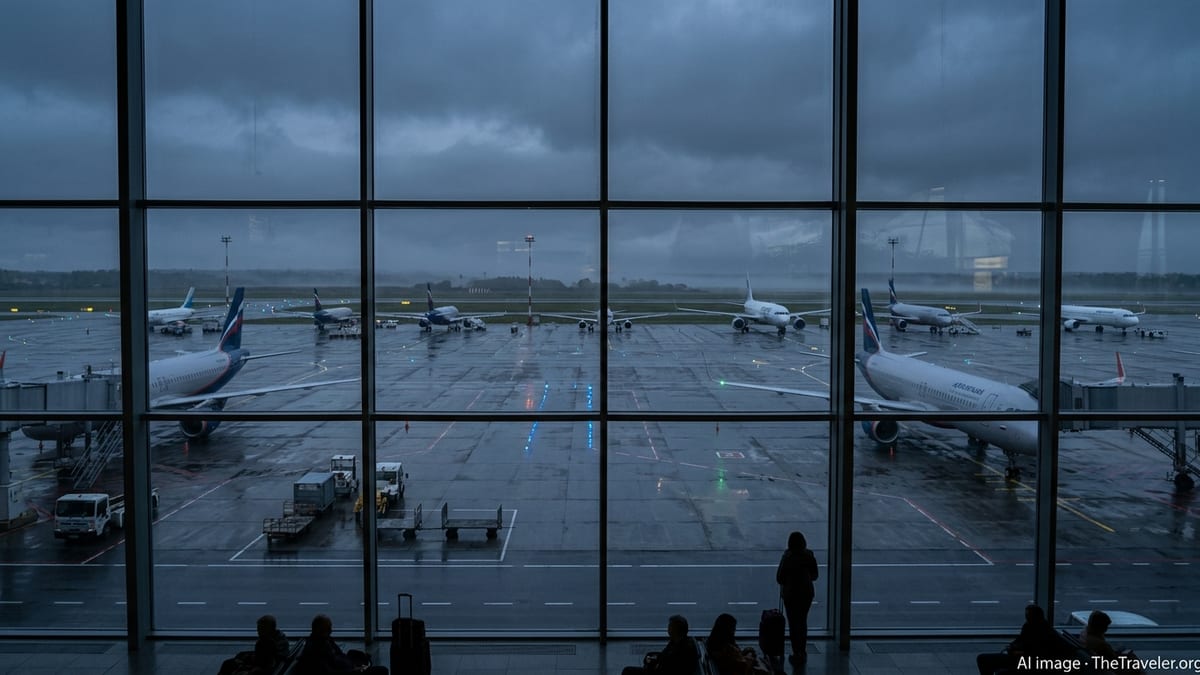
Airspace Closure Triggers Sudden Halt to Flights
Reports from Russian and international outlets indicate that air traffic around Pulkovo Airport was abruptly suspended after unmanned aerial vehicles were detected in the vicinity of St. Petersburg’s main international gateway. Airspace restrictions were imposed around the airport, leading to an immediate halt to takeoffs and landings while aviation and security agencies responded to the incursion.
Publicly available flight-tracking data showed an unusual pattern of holding stacks and diversions as inbound aircraft aborted approaches and were rerouted to alternate airfields. Departures scheduled from St. Petersburg were delayed or canceled as operators awaited confirmation that the airspace was clear of drone activity and safe for renewed operations.
The disruption at Pulkovo follows a broader pattern of drone-related interruptions to Russian air traffic documented since the escalation of the conflict in Ukraine. Previous incidents have seen temporary suspensions at airports serving Moscow, with St. Petersburg increasingly drawn into the growing contest between air defense measures and long-range unmanned systems.
Scale of Disruption for Passengers and Airlines
According to published coverage and flight data monitoring, the airspace closure led to dozens of delayed or canceled services at Pulkovo, with some aircraft left waiting on the tarmac for extended periods. Travelers reported prolonged waits on board stationary planes and in terminal departure areas as airlines repeatedly pushed back departure times.
Aircraft already en route to St. Petersburg were diverted to other airports in northwest Russia, adding further complexity to airline operations and crew scheduling. These diversions created a ripple effect across domestic and international networks, as aircraft and crews ended up in unexpected locations, complicating plans for subsequent rotations.
Ground handling at Pulkovo also came under strain as boarding procedures were paused and arriving passengers needed to be accommodated following diversions or missed connections. Similar drone-related closures elsewhere in Europe and Russia have demonstrated how even short-duration airspace restrictions can result in hours of operational recovery for airports and airlines.
Security Context and Rising Drone Threats
The disruption in St. Petersburg is the latest example of how small unmanned aircraft systems have become a significant factor in aviation risk assessments, especially in regions close to active conflict zones. Coverage of recent drone incidents across Russia highlights how low-flying, hard-to-detect systems can trigger precautionary shutdowns even when no physical damage is reported at airports.
Analysts note that long-range drones launched over considerable distances have periodically targeted infrastructure and military sites deep inside Russian territory. As defenses attempt to intercept these aircraft, temporary flight restrictions are increasingly used as a risk management tool to separate civil traffic from potential interception zones or debris paths.
Internationally, aviation regulators and air navigation service providers have responded to similar episodes with varying degrees of caution. In several high-profile cases, including recent closures linked to suspected drone activity over European and North American airports, flight operations were suspended for one to three hours while authorities assessed the threat and attempted to locate the unmanned aircraft.
Operational Recovery and Ongoing Travel Impacts
Publicly available information indicates that Pulkovo gradually resumed operations once the immediate drone threat was assessed to have passed and airspace restrictions were lifted. However, the airport’s return to normal traffic levels required a phased approach, with priority given to already diverted or significantly delayed flights.
Travelers with connections through St. Petersburg faced lingering disruption as missed onward flights and aircraft out of position cascaded through airline timetables. Some carriers rebooked passengers via Moscow and other regional hubs, while others opted to consolidate lightly loaded services or adjust schedules over subsequent days to restore rotations.
Travel industry observers note that such episodes can have a disproportionate impact on peak travel periods, when high load factors and tight turnaround times leave little margin for error. Even after the immediate security concern is resolved, queues at check-in, security, and rebooking desks can persist for hours, affecting both departing and arriving passengers.
Implications for Travelers and Regional Connectivity
For international and domestic travelers using Pulkovo, the incident is a further reminder of the volatility surrounding air travel in regions adjacent to ongoing military activity. Tourism professionals and corporate travel managers monitoring Russia-related itineraries are increasingly factoring in the risk of sudden airspace restrictions, advising clients to build additional time into connections and remain flexible with routing.
St. Petersburg is a key gateway for Russia’s northwest, supporting both business and leisure travel as well as cargo movements. Repeated drone-related disruptions have the potential to influence airline scheduling decisions, insurance considerations, and traveler perceptions of reliability on routes serving the city.
Industry analysts suggest that as long as long-range drone operations remain a feature of the broader regional conflict, airports like Pulkovo are likely to face episodic operational shocks. For travelers, the most practical responses remain close monitoring of airline communications, use of real-time flight-tracking tools, and preparation for last-minute changes when flying through airspace that has recently been affected by unmanned aircraft activity.