

More news on this day
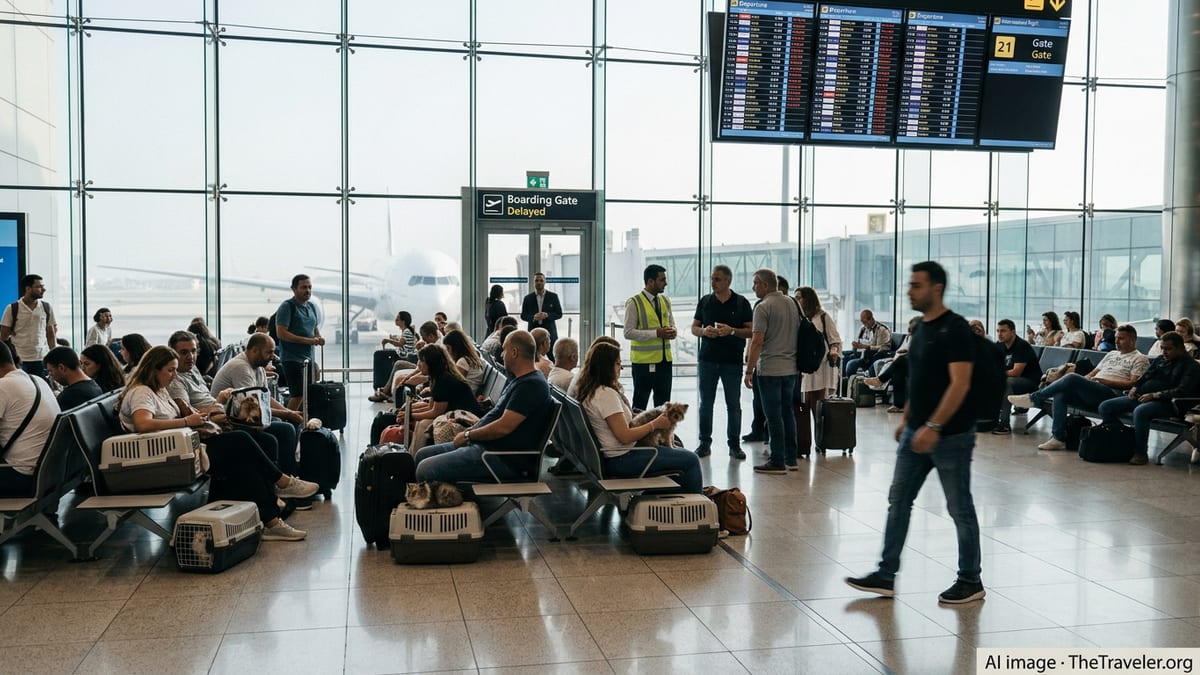
A special repatriation flight arranged to evacuate Greek nationals and their pets from the United Arab Emirates has been delayed following a suspected drone incident near a major UAE airport, adding fresh uncertainty for travelers already navigating a region-wide airspace crisis.
Get the latest news straight to your inbox!
Drone Disruption Adds New Setback for Stranded Greeks
Reports from regional and international media over the past week describe renewed missile and drone activity affecting airspace across the Gulf, with Dubai and Abu Dhabi among the hubs experiencing temporary suspensions and sharply reduced flight schedules. Within this volatile context, a specially organized repatriation flight for Greek citizens and their companion animals was postponed after an incident involving an unauthorized drone near the departure airport.
Publicly available coverage indicates that the latest disruption came just as Gulf airports were beginning to cautiously restart limited operations following earlier closures linked to the broader regional conflict. Authorities in the region have repeatedly tightened rules around drone use in recent years, but recent days have seen renewed concern after videos and eyewitness accounts circulated online showing drones or debris falling close to urban areas and airport facilities.
According to Greek and regional news reports, passengers booked on the special flight were informed that departure would be delayed while safety checks and airspace assessments were carried out. The aircraft had been expected to prioritize vulnerable travelers, including families, elderly passengers, and those seeking to leave with cats and dogs that cannot easily be accommodated on standard commercial services while schedules remain unstable.
Gulf Airspace Under Strain as Limited Flights Resume
In the days leading up to the delayed repatriation service, aviation bulletins and newspaper epapers from the region highlighted a patchwork resumption of flights from airports in the United Arab Emirates, Qatar, and Saudi Arabia. Many hubs are operating only a fraction of their normal capacity, giving precedence to repatriation and relief flights while regular commercial services remain curtailed or subject to last-minute changes.
Emirates, Etihad Airways, flydubai, and other carriers have been running reduced schedules under strict safety protocols, with airlines advising passengers to expect extended delays, diversions, and rebookings. Travel forums and social media posts from recent days describe passengers spending many extra hours in terminals or being rebooked multiple times as airlines juggle limited slots and intermittent airspace closures.
Drone-related disruptions have become a recurring concern for airports worldwide in recent years, prompting tighter regulations on recreational and commercial unmanned aircraft near sensitive sites. Industry incident summaries from 2024 and 2025 show that unauthorized drones near runways have repeatedly led to temporary halts in takeoffs and landings, sometimes cascading into multi-hour delays across airline networks. The latest incident in the UAE appears to follow a similar pattern, with an initial safety pause triggering knock-on effects for already fragile evacuation timetables.
Repatriation Effort Tailored for Passengers Traveling With Pets
The delayed operation is unusual among current evacuation efforts in that it was explicitly designed to accommodate both people and their pets. Guidance shared in expatriate and animal welfare communities in the UAE notes that many emergency or government-facilitated repatriation flights either prohibit pets entirely or restrict them to limited spaces in the cargo hold, leaving some owners facing a difficult choice between leaving the country and leaving their animals behind.
Recent online discussions between residents and relocation specialists describe a tightening of pet transport options from the UAE since regional tensions escalated, with some airlines temporarily limiting animal cargo bookings or prioritizing human passengers on scarce outbound seats. In response, groups of foreign nationals, including Greek citizens, have explored chartering special flights where pets can travel in-cabin or under controlled conditions that meet both airline safety rules and destination-country veterinary requirements.
For passengers on the delayed Greek repatriation flight, the drone incident has therefore disrupted not only personal travel plans but also carefully timed animal health paperwork, microchip checks, and fit-to-fly certificates. Many countries, including Greece, have strict entry rules for pets arriving from non-EU states, and any change in departure date can require revalidation of veterinary documents or new blood tests and parasite treatments.
Emotional Toll on Travelers Amid Safety Concerns
The postponement has added emotional strain for travelers who have spent days monitoring security updates and flight boards, often while juggling work, family, and housing decisions in the UAE. Personal testimonies circulating on social platforms from residents across Dubai, Abu Dhabi, and other emirates describe heightened anxiety following audible explosions, intercepted projectiles, or falling debris reported in recent incidents.
For many Greek nationals preparing to leave, the special flight represented a long-awaited exit route that allowed them to remain together with their pets, which are often treated as members of the family. The sudden delay, even if temporary, has reignited questions among passengers about how long airspace restrictions may last and whether further drone-related incidents could cause additional cancellations.
Mental health professionals often note that uncertainty and loss of control can be as distressing as the physical danger in conflict-adjacent situations. In the current case, passengers are confronting both: the perceived risk associated with drone activity near airports and the practical fear that their window for safe departure could narrow if security conditions deteriorate or if airlines once again suspend flights.
Next Steps for the Flight and Broader Travel Outlook
As of the latest publicly available information, the special repatriation service for Greeks and their pets is expected to depart once aviation authorities and operators are satisfied that the immediate risk to airport operations has subsided. Travel advisories from European governments generally continue to recommend that citizens follow official channels for repatriation and remain prepared for last-minute changes to departure times and routes.
Aviation analysts observing the situation say that Gulf airspace is likely to see a gradual normalization of traffic volumes only if there is a sustained reduction in missile and drone activity. Even then, backlogs of stranded passengers, aircraft repositioning, and crew duty-time limits may keep pressure on schedules for several days or weeks, particularly for long-haul services to Europe and North America.
For Greek nationals and other expatriates still in the UAE, the experience of this delayed pet-friendly repatriation flight highlights the value of early registration with consular services and careful coordination with airlines or charter providers. It also underlines how rapidly evolving security risks, including small but disruptive drone incidents, can complicate even well-planned evacuation efforts at some of the world’s busiest transit hubs.