

More news on this day
Travelers across Saudi Arabia, the United Arab Emirates, Jordan and key long-haul routes faced fresh disruption on March 16 after a drone strike ignited a fuel tank near Dubai International Airport, prompting Emirates to cancel dozens of flights and delay many more as smoke and safety checks rippled through one of the world’s busiest aviation hubs.
Get the latest news straight to your inbox!
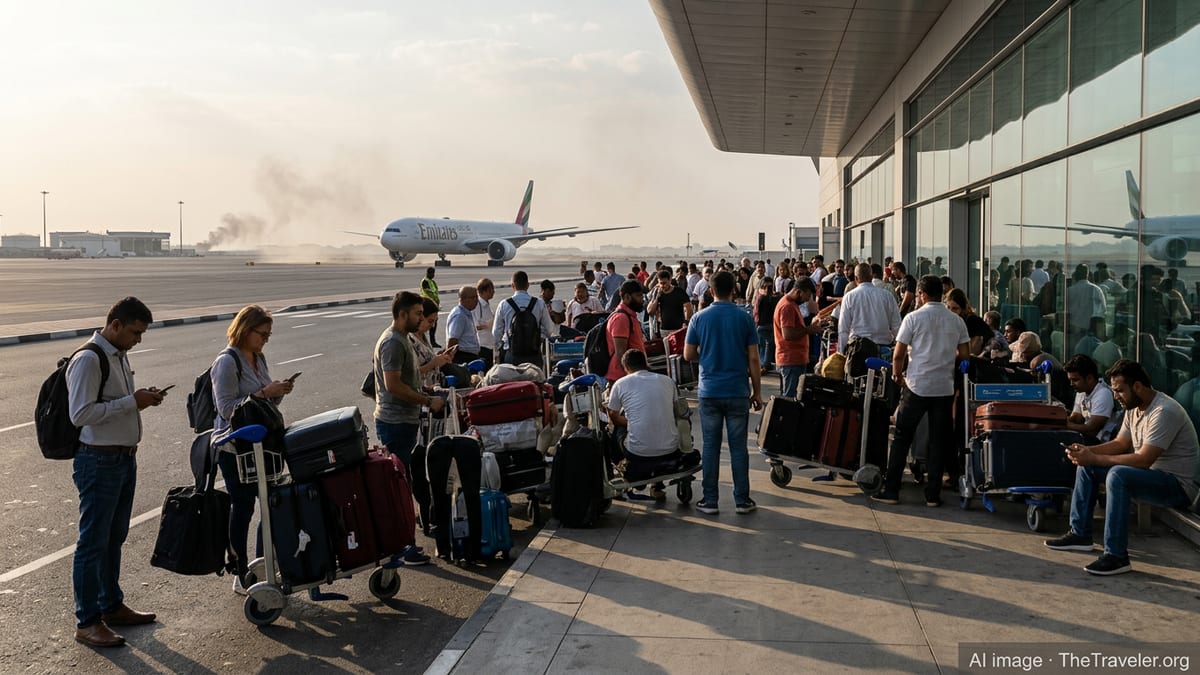
Emirates Cuts and Delays Flights After New Dubai Airport Disruption
Publicly available travel updates and passenger communications on March 16 indicate that Emirates canceled around 50 flights and delayed more than 70 departures and arrivals following a drone incident and resulting blaze near Dubai International Airport. The disruption affected morning and midday operations, with aircraft and crews out of position and ground handling constrained while authorities worked to contain the fire and assess infrastructure around the impacted fuel facility.
Dubai International, the primary base for Emirates and a major waypoint between Europe, Asia and Africa, temporarily suspended flights after the drone hit a fuel tank near the airport perimeter. Published coverage and social media posts from travelers show thick smoke rising close to the runways and report that services were halted for several hours before limited operations resumed. The temporary shutdown compounded an already fragile schedule after earlier strikes and near-miss incidents around the airport this month.
By early afternoon local time, Emirates’ online schedules showed a rolling pattern of cancellations, long delays and aircraft swaps. While some long-haul services were reinstated, many short- and medium-haul flights bore the brunt of the cuts as the airline attempted to prioritize heavily booked trunk routes and repatriation traffic. Travelers connecting through Dubai faced missed onward flights and unplanned overnight stays as the airline attempted to rebook passengers on later departures where capacity allowed.
Regional Ripple Effects in Saudi Arabia, the UAE and Jordan
The sudden capacity squeeze in Dubai quickly spilled over to neighboring countries. Flight-tracking data and passenger reports indicate that services linking Dubai with Saudi Arabian cities including Dammam and Riyadh, as well as Jordan’s capital Amman, experienced extensive delays and cancellations. Some aircraft scheduled to operate these routes were held on the ground in the UAE, while others diverted to alternative airports during the initial suspension window.
In Saudi Arabia, travelers at Dammam’s King Fahd International and Riyadh’s King Khalid International shared images of crowded departure halls and departure boards showing repeated “delayed” and “cancelled” notices next to Emirates flights and codeshare services. Publicly available airport information suggested that local departures were often ready to operate, but were awaiting inbound aircraft from Dubai that remained blocked or heavily delayed by the fuel-tank incident.
In Amman, Jordan, passengers connecting between Europe, the Gulf and Asia through Dubai reported being advised to expect “significant” onward delays even for flights that remained scheduled. The combination of disrupted aircraft rotations, crew duty limits and congestion in Dubai airspace meant that even routes not directly affected by the initial wave of cancellations saw knock-on delays throughout the day.
Long-Haul Destinations From Tokyo to Cairo Caught in the Backlog
The impact of the Dubai disruption reached far beyond the Gulf. Long-haul routes linking Dubai with cities such as Tokyo and Cairo, as well as key South Asian and European destinations, were drawn into the wider scheduling mess as Emirates attempted to re-balance its global network. Publicly available timetables and traveler accounts suggest that some eastbound flights from Dubai to Asia departed with substantial delays, while selected westbound rotations were cancelled outright or combined, leaving passengers reprotected onto later services.
In Japan, travelers due to fly from Tokyo to Dubai and beyond reported last-minute schedule changes and extended connection times. Some passengers described being rebooked onto alternative dates or rerouted via different hubs as airlines sought available seats in an already constrained regional market following weeks of tensions and intermittent airspace restrictions around the Gulf.
On routes to and from Cairo and other major cities in the Middle East and North Africa, disruptions varied by time of day. Early-morning departures that had left Dubai before the drone strike were largely unaffected, but later flights returning to the emirate encountered congestion, holding patterns and arrival delays. This, in turn, reduced the number of aircraft available to operate evening departures back to Africa, Europe and Asia, widening the circle of affected travelers well beyond the immediate conflict zone.
Drone Strike Deepens Safety Concerns Around Gulf Aviation Hubs
The latest incident comes amid a broader pattern of Iranian drone and missile activity targeting infrastructure in the United Arab Emirates and across the region since late February. Published analyses and official statements cited in global media describe the drone that hit a fuel tank near Dubai International on March 16 as part of a wider wave of strikes on Gulf energy and transport assets, including previous attacks that prompted temporary closures or capacity cuts at UAE airports.
Aviation analysts cited in international coverage note that Dubai International holds a uniquely exposed position as the world’s busiest airport for international passengers and the central node in Emirates’ hub-and-spoke model. Any closure, even for a few hours, rapidly cascades into days of operational challenges as aircraft and crews become misaligned, maintenance windows are missed and connecting banks unravel. The presence of a large fuel blaze in close proximity to runways and taxiways heightens concerns that future strikes could cause more serious damage to core airport infrastructure.
The attack also underscores the vulnerability of fuel storage and supply systems that keep high-volume hubs operating. While reports on March 16 suggested that the fire was contained without catastrophic damage, the incident prompted precautionary shutdowns and inspections that directly reduced the airport’s ability to process arriving and departing flights. Industry observers warn that repeated strikes of this type could pressure airlines to adjust schedules, reroute traffic through alternative hubs or temporarily suspend services if risks are deemed too high.
Passengers Face Cancellations, Backlogs and Difficult Choices
For passengers already traveling or preparing to depart on March 16, the immediate consequences were long queues, extended waits for information and uncertainty over when flights would resume. Publicly available airline advisories urged customers not to travel to the airport unless their flight status showed as operating, while some travelers reported receiving cancellation emails or text messages only after they had arrived at departure terminals across the region.
With Emirates canceling dozens of services and many others departing heavily delayed, hotel rooms around Dubai and in key transit cities such as Riyadh, Dammam and Amman quickly became scarce near airport districts. Travelers described being offered overnight accommodation and meal vouchers where local regulations or airline policies required, but others reported having to arrange their own lodging while waiting for seats on later flights.
In online forums and social media posts, some passengers with upcoming travel to or through Dubai in the coming days debated whether to reroute via other hubs or postpone trips entirely. Travel advisors and frequent flyers highlighted the likelihood of continued knock-on effects even after flights formally resume, citing the complexity of restoring a tightly banked hub schedule after a sudden multi-hour stoppage. For now, publicly available information suggests that anyone traveling through Dubai and neighboring Gulf airports should expect continued disruption, closely monitor flight status, and build in additional time and flexibility for their journeys.