

More news on this day
Fresh drone strikes on Russia’s logistics hubs at Tikhoretsk and the Black Sea port of Novorossiysk are sending new shockwaves through Europe’s already strained travel networks, prompting flight reroutings, rail timetable changes and maritime diversions that are being felt from the Baltics to the Mediterranean.
Get the latest news straight to your inbox!
Escalating Strikes Deep Inside Russia Jolt Regional Stability
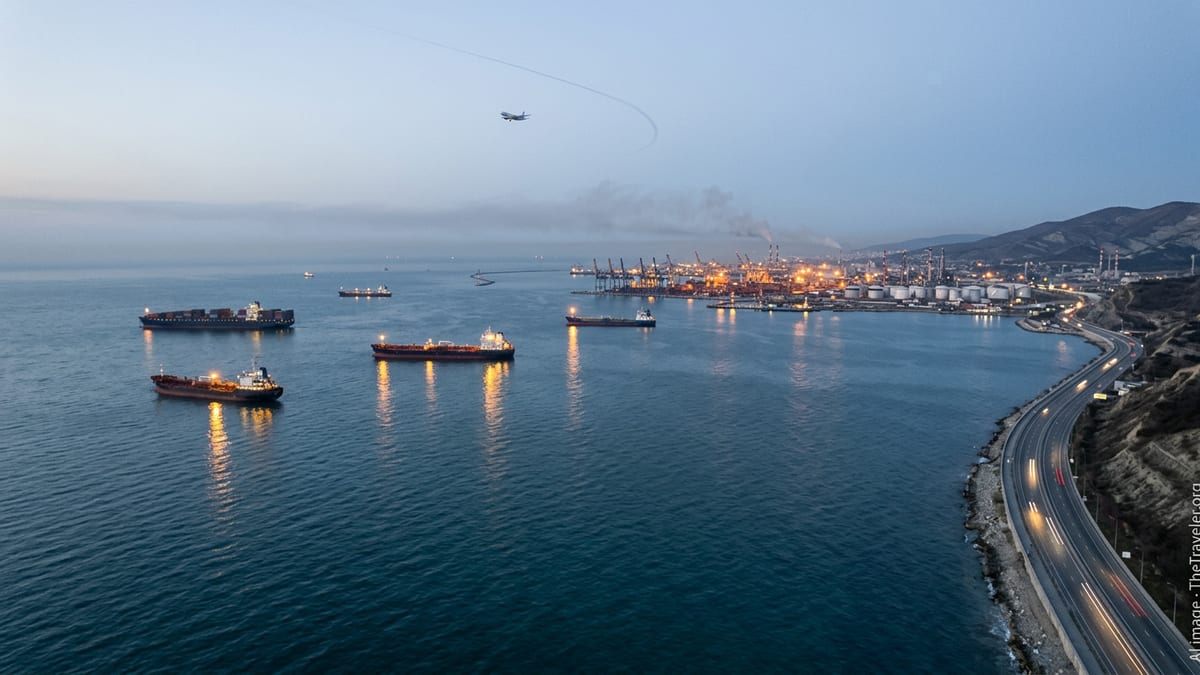
The latest wave of Ukrainian drone and missile attacks has pushed the war’s front line far beyond occupied Ukrainian territory into Russia’s own hinterland. Targeting Tikhoretsk, an important rail junction in Krasnodar Krai, and Novorossiysk, home to one of Russia’s largest Black Sea oil and grain ports, the strikes are part of an intensified campaign to disrupt Russian military logistics and export revenues.
Footage verified by independent analysts in early March shows large fires and secondary explosions at storage tanks and military facilities around Novorossiysk, along with reports of damage to air defense systems and naval assets. Russian regional authorities have confirmed blazes at fuel terminals and temporary port shutdowns as emergency services worked to contain the impact.
While Moscow insists that crude and product loadings are gradually resuming, traders and shipping specialists say the perception of heightened risk in Russia’s south is forcing carriers and insurers to reassess exposure. That reassessment is now spilling over into civilian travel, particularly air routes that rely on the Black Sea corridor and rail journeys connecting Eastern Europe and the Caucasus.
The strikes follow months of Ukrainian operations against targets deep inside Russia, from air bases to fuel depots, but the scale and concentration around Novorossiysk have raised concerns in neighboring countries including Turkey, Georgia and Azerbaijan, where ports and airspace are tightly intertwined with Black Sea shipping lanes.
Airlines Reroute as Airspace Warnings Spread Across the Region
In response to the latest attacks, aviation safety agencies in Europe have updated notices to air missions that flag southern Russian airspace, including sectors over Krasnodar Krai and the eastern Black Sea, as areas of elevated risk. Several major European and Middle Eastern carriers have quietly redrawn flight plans to avoid proximity to the affected zones, lengthening some journeys between Western Europe, the Caucasus and Central Asia.
Operators serving routes to Turkey, Georgia, Armenia, Kazakhstan and Azerbaijan report adding extra fuel buffers and building in longer block times as they weave around restricted or high‑risk areas. While most schedule changes are measured in minutes rather than hours, the cumulative effect has begun to unsettle already tight European hub operations, especially at peak morning and evening waves.
At the same time, Russia has intermittently imposed temporary flight restrictions over parts of its south in the wake of strikes, grounding or rerouting domestic flights between cities such as Sochi, Krasnodar and Rostov-on-Don. These disruptions are feeding through to international connections that rely on Russian carriers to feed traffic into Turkish, Belarusian and Central Asian networks.
Travel agents in Germany, Poland and the Baltic states say they are fielding a surge in queries from passengers booked to transit via hubs in Istanbul, Tbilisi and Baku, concerned about potential spillover. For now, most airlines are continuing operations but advising travelers to monitor departure times closely and allow extra time for connections.
Rail and Road Links Through Ukraine and Belarus Face New Strains
The reverberations are not limited to the skies. Tikhoretsk sits near key rail corridors that help move fuel, grain and military equipment between central Russia, occupied parts of Ukraine and Black Sea ports. Damage to infrastructure and heightened security measures after the latest strikes have forced Russian Railways to reroute some freight and adjust timetables, which in turn is affecting cross‑border flows.
Passenger rail between the European Union and Eastern partners had already been severely curtailed since the full‑scale invasion of Ukraine in 2022, with most international services through Ukrainian territory suspended. Remaining connections via Belarus and Russia have become increasingly fragile as sanctions, mobilization measures and periodic border closures complicate operations.
Travelers who still rely on overland routes to reach Ukraine, Belarus, Russia or onward to Kazakhstan and the South Caucasus describe more frequent checks, longer waits at border crossings and sudden timetable changes. Coach operators running services between Poland, the Baltic states and Ukraine report that detours to avoid military infrastructure and newly restricted areas can add several hours to overnight journeys.
Logistics companies warn that further strikes on junctions similar to Tikhoretsk could deepen bottlenecks across a swathe of Eastern Europe, squeezing capacity for both freight and the few remaining international passenger links in and out of the region.
Black Sea Shipping Disruption Ripples Into European Holiday Plans
Novorossiysk is a linchpin of Black Sea shipping, handling large volumes of crude, oil products, grain and containerized cargo. Drone attacks that ignite fuel storage and threaten naval assets have an immediate impact on commercial operators’ risk calculations, with knock‑on effects for ferry lines and cruise itineraries that share the same waters.
In recent days, ship‑tracking data has shown tankers and bulk carriers diverting to alternative ports or adjusting arrival times to avoid periods of heightened alert. While passenger ferries linking Russia with Turkey and Georgia represent a small share of overall traffic, uncertainty around port operations and coastal security is prompting some operators to trim frequencies or consolidate sailings.
European cruise companies, already cautious about itineraries involving Russian ports since 2022, are once again reviewing routes that pass close to Russia’s Black Sea coastline. Industry executives say contingency plans include replacing calls in the eastern Black Sea with extra time in popular destinations in Turkey, Greece and Bulgaria, or reassigning ships to the eastern Mediterranean during periods of acute tension.
The changes are beginning to filter through to travelers, particularly those who booked early‑season sailings or complex multi‑stop trips combining city stays in Istanbul, Batumi or Tbilisi with cruises. Tour operators report an uptick in requests to rebook or switch to itineraries in the western Mediterranean, the Canary Islands or northern Europe.
What Travelers to and Within Europe Should Expect Now
For most visitors heading to classic European city breaks or beach holidays, the immediate safety risk from the latest strikes remains low. However, the cumulative impact of disruptions across air, rail and sea networks means that travelers are more likely to encounter delays, rebookings or indirect routes, especially if their plans involve Eastern Europe, Turkey, Georgia, Belarus, Kazakhstan or Azerbaijan.
Industry analysts expect airlines and rail operators to maintain a cautious stance as long as strikes on critical infrastructure such as Tikhoretsk and Novorossiysk continue. That translates into conservative scheduling, increased fuel reserves and a readiness to divert or cancel services at short notice if security conditions deteriorate.
Travel planners advise building extra flexibility into itineraries for the coming weeks, including longer connection times, fully refundable tickets where possible and up‑to‑date travel insurance that covers disruption related to conflict. Passengers are also urged to keep contact details current with airlines and tour operators so that schedule changes can be communicated promptly.
With European regulators and neighboring states closely monitoring the evolving security picture, further adjustments to routes and capacity are likely if hostilities deepen or expand. For now, the strikes on Tikhoretsk and Novorossiysk serve as a stark reminder that the war’s shifting geography can quickly reshape how people and goods move across an interconnected continent.