

More news on this day
Thousands of holidaymakers and business travellers across the UK and Europe are facing sudden disruption after a drone threat over Cyprus forced the evacuation of Paphos airport and prompted airlines including Emirates, British Airways, Ryanair and easyJet to cancel or reroute dozens of flights.
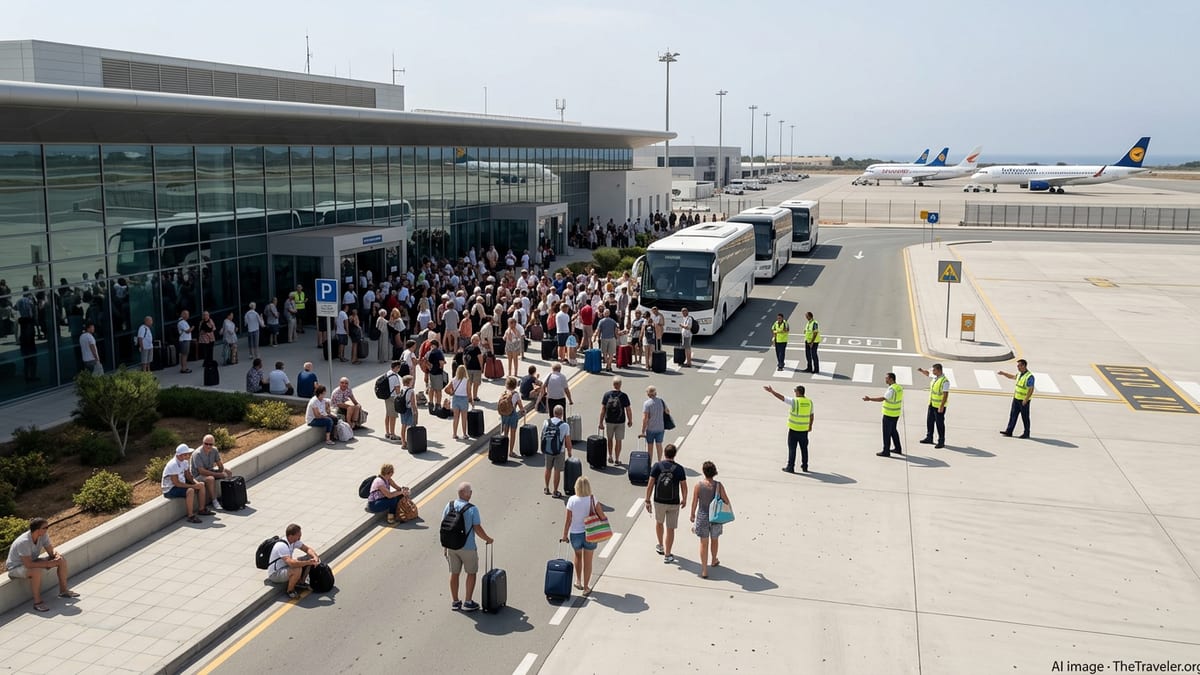
Drone Alert Triggers Airport Evacuation and Flight Groundings
Paphos International Airport was evacuated on Monday 2 March after an unidentified drone was detected in restricted airspace, just hours after a suspected Iranian-made drone struck the nearby RAF Akrotiri base on the south coast of Cyprus. Passengers and staff were ordered to leave the terminal shortly after lunchtime as airport operations were temporarily suspended while security teams assessed the threat.
Hermes Airports, which operates both Larnaca and Paphos, confirmed that more than 60 flights to and from Cyprus have been cancelled this week in connection with the drone incidents and the wider regional crisis. At least 42 services to Larnaca and 18 to Paphos have been scrapped or heavily delayed, affecting departures and arrivals from major UK and European hubs.
The evacuation added a new flashpoint to what was already an intensely volatile situation in the Eastern Mediterranean. RAF Akrotiri, which is used by the UK for operations in the Middle East, reported only minimal damage and no casualties from the suspected strike, but force-protection measures were raised to the highest levels and surrounding communities were advised to stay indoors.
Cypriot authorities stressed that the country itself is not a party to the hostilities, even as the island increasingly feels the knock-on effects of the escalating conflict between Western allies and Iran and its proxies. Police and civil defence units have stepped up patrols around airports, ports and key infrastructure, and local schools near the bases have been closed as a precaution.
How Major Airlines Are Responding
Airlines serving Cyprus have moved quickly to adjust schedules in response to the evolving security picture. EasyJet has suspended all flights between the United Kingdom and Cyprus until at least Thursday, cancelling services linking London Gatwick and Manchester with both Larnaca and Paphos. The carrier said affected customers have been notified and offered rebooking options, refunds, and hotel accommodation and meals where required.
British Airways has cancelled a number of flights to Larnaca, adjusting its Heathrow schedule while it monitors official security guidance. The airline said safety remains its overriding priority and that it is contacting customers directly with rebooking choices on alternative dates or routes where possible. Most of its remaining Cyprus services are operating on revised timings and routings designed to avoid sensitive airspace.
Ryanair, which operates a dense network of low cost services into both of Cyprus’s main airports from the UK, Ireland and continental Europe, has also cut frequencies and cancelled selected rotations in the wake of the drone scare and the temporary shutdown at Paphos. The airline is prioritising aircraft and crew on routes less exposed to the Eastern Mediterranean conflict zone, leading to last minute schedule changes for some passengers.
Beyond airlines directly flying to Cyprus, full or partial closure of airspace across parts of the Middle East has hit long haul links that normally overfly the region. Emirates, based in Dubai, has cancelled or rerouted a large number of services to and from Europe, including flights that typically carry UK and EU passengers onward to Asia, Africa and Australia. With Dubai International facing restrictions and diversions, travellers who would usually connect seamlessly through the Gulf hub to Cyprus are having to rebook or seek alternative routings via mainland Europe.
What UK and European Travellers Need to Know Now
For travellers in the UK and across Europe, the immediate impact is a wave of cancellations, delays and missed connections involving flights to Cyprus and beyond. Many passengers who were due to fly from airports such as London Gatwick, Heathrow, Manchester, Berlin and Vienna have received short notice messages informing them that their Cyprus-bound services have been scrapped or pushed back, often with limited alternative capacity in the short term.
The UK Foreign, Commonwealth and Development Office has updated its travel advice to highlight a heightened risk of regional tension, but it has not advised against travel to Cyprus. That means package holidays are generally continuing where flights operate, and mainstream travel insurance policies remain valid. However, officials warn that further disruption is possible at short notice and urge travellers to monitor local announcements and airline updates carefully.
Travel experts say that while the security situation is serious, most flights to and from Cyprus are still operating, particularly those not directly linked to the UK. Larnaca is handling a reduced but steady schedule of European services, and Paphos has reopened after Monday’s evacuation. The main constraint for many British travellers is the decision by specific carriers to pause or thin out their UK routes while they review security procedures and airspace risks.
Passengers currently on the island may find their return journeys brought forward, pushed back or rerouted through alternative European hubs. Those with flexible tickets are being encouraged to consider earlier or later dates, or to accept flights to a different UK or EU airport than originally booked in order to secure a seat home.
Your Rights if Your Flight Is Cancelled
Under UK and EU air passenger rules, travellers whose flights are cancelled at short notice are generally entitled to a choice between a refund of the unused portion of their ticket or rebooking at the earliest opportunity. In many cases, airlines are also required to provide care, including meals and hotel accommodation when passengers are stranded overnight, regardless of the cause of the disruption.
Because the current wave of cancellations is tied to security concerns and an external conflict, cash compensation payments for inconvenience are unlikely to be granted, as airlines can argue that the situation constitutes extraordinary circumstances beyond their control. However, that does not remove the obligation to provide a new flight or a full refund when a service is cancelled altogether.
Travel insurance may cover additional out of pocket costs such as extra hotel nights, new onward tickets, or missed pre-paid arrangements, depending on the policy wording. Travellers are being advised to keep all receipts and to contact their insurers before making major changes, particularly if they are considering abandoning a trip entirely.
Those who booked package holidays through tour operators benefit from extra protection. If flights are cancelled and the holiday cannot go ahead, the operator should offer a full refund or a suitable alternative, in line with package travel regulations. Tour companies are also responsible for arranging repatriation flights for customers already in Cyprus if scheduled services dry up.
Practical Steps for Anyone Due to Travel to Cyprus
For people with upcoming trips to Cyprus from the UK or elsewhere in Europe, the most important step is to check the status of flights before setting out for the airport. Airlines are updating schedules repeatedly throughout the day as they respond to new security assessments, so a flight that appeared confirmed yesterday may have changed overnight.
Travellers should ensure their airline or tour operator has up to date contact details, including a mobile number and email address, so that disruption alerts arrive promptly. Using airlines’ apps or online flight trackers allows passengers to follow real time changes, rebook seats and request refunds without joining lengthy call centre queues.
It is also sensible to build more slack into onward travel plans. Those connecting from Cyprus to cruises, weddings or business events elsewhere in Europe should plan for possible delays and consider refundable or flexible bookings where feasible. If travel is not essential in the coming days, some may choose to postpone until airlines restore normal schedules and the regional security picture becomes clearer.
On the ground in Cyprus, visitors are being urged to follow any instructions from Cypriot authorities and, where relevant, guidance from the British Sovereign Base Areas administration. While daily life in resorts and cities remains largely normal, the events around Paphos airport and RAF Akrotiri underline how quickly the situation can change, and why close attention to official updates is now an essential part of any trip to the island.