

More news on this day
Drone threats and reported long range attacks targeting the Moscow region in April 2026 have triggered repeated airport shutdowns, delays and diversions, underscoring how unmanned aircraft have become a persistent risk factor for air travel around the Russian capital.
Get the latest news straight to your inbox!
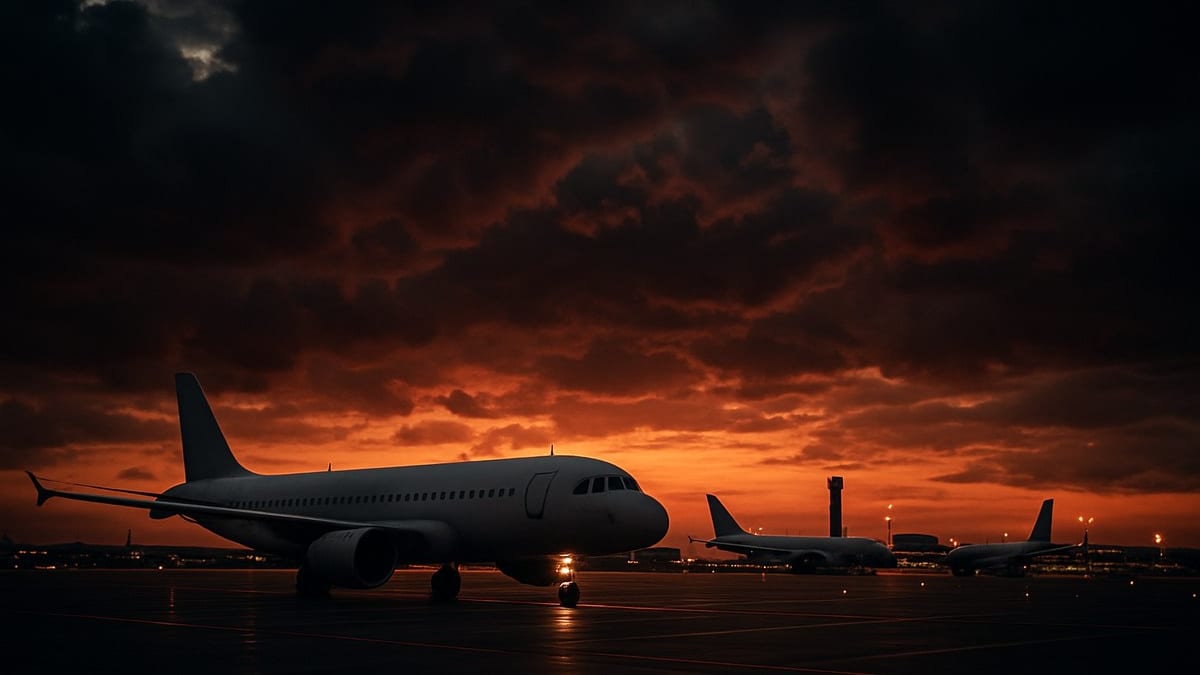
Wave of Drone Alerts Hits Moscow Airspace
April 2026 has seen a renewed pattern of drone related disruptions over the Moscow region, with Russian aviation authorities repeatedly imposing temporary restrictions on flights as air defense systems respond to suspected incursions. Publicly available information indicates that drone activity has been reported on several dates since the start of the month, affecting both the city and surrounding regions.
Reports compiled by international and regional media describe unmanned aerial vehicles approaching targets in and around Moscow, prompting civil aviation regulators to close or restrict sections of airspace while air defenses attempt to intercept the aircraft. In some cases, debris from downed drones has been documented on the ground, reinforcing official claims that aerial threats have come close enough to pose potential risks to populated areas and flight paths.
The April incidents build on a broader trend that has unfolded over the past two years as long range drones have been deployed deeper into Russian territory. While previous episodes often caused brief interruptions, the latest wave has produced extended shutdowns at multiple airports on the same day, magnifying the impact on passengers and flight operations.
Travel industry observers note that even when drones are intercepted before reaching key infrastructure, the mere possibility of debris in approach or departure corridors is enough to force controllers to halt movements until the situation is fully assessed.
Airports Suspend Operations as Safety Precaution
The most dramatic disruption in April occurred on April 9, when the Russian Federal Air Transport Agency announced that operations at Vnukovo, Domodedovo and Zhukovsky airports were suspended following reports of a drone threat in the wider Moscow region. According to published coverage, departures and arrivals were halted for a period while airspace around the capital was reviewed for potential hazards.
Earlier in the month, timelines of the conflict show that drone activity led to at least one suspension of flights from Domodedovo after unmanned aircraft were reported heading toward the capital. Although some closures lasted less than an hour, others extended well into the night, backing up departures and forcing aircraft already en route to divert to alternative airports.
Moscow’s airport network functions as a critical hub for both domestic and international travel, so any combined suspension has immediate knock on effects. With Vnukovo, Domodedovo and Zhukovsky all limiting operations at the same time, carriers have faced mounting pressure to adjust schedules, reassign aircraft and reposition crews.
Even Sheremetyevo, historically less affected in some previous drone episodes, has appeared in April reporting as subject to heightened caution, illustrating how quickly operational conditions can change once a potential threat is detected.
Passenger Disruption and Network Wide Ripple Effects
Travelers passing through Moscow in April have encountered mounting uncertainty, as flights are delayed or rerouted on short notice during drone alerts. Airline status boards have shown clusters of departures listed as “delayed,” “boarding later,” or “awaiting information” while airspace restrictions remain in place. For passengers on connecting itineraries, this has meant missed onward flights and extended overnight stays.
When several airports suspend operations simultaneously, aircraft already in the air are often redirected to regional hubs or other major Russian cities. Published reports from previous large scale drone barrages suggest that such diversions can leave thousands of passengers temporarily stranded far from their original destinations while airlines arrange new connections and accommodation. The emerging pattern in April indicates similar challenges, though precise passenger counts are not always disclosed in official updates.
Airlines serving Moscow have attempted to manage the disruption by holding aircraft at origin airports until conditions stabilize, rerouting long haul services to less affected hubs, and consolidating flights once restrictions are lifted. However, this reactive approach cannot fully shield travelers from delays when closures occur without much advance warning.
For travelers planning future trips through Moscow, April’s events highlight the importance of allowing longer connection times, maintaining flexible hotel and ticket conditions, and closely monitoring carrier alerts on days when regional tensions or military activity appear to be intensifying.
Escalating Pattern from 2025 to 2026
The April 2026 disruptions are the latest in a series of drone related aviation incidents that have periodically affected Moscow’s airports since 2023, with clear escalation through 2024 and 2025. In earlier cases, single airports such as Vnukovo or Domodedovo temporarily suspended flights while others in the region continued operating. By mid 2025, coverage by regional and international outlets was documenting larger operations in which all four of Moscow’s main airports were restricted at once.
On several occasions in 2025, Ukrainian drone attacks described as among the largest since the start of the full scale conflict prompted Russia’s civil aviation regulators to suspend arrivals and departures across the Moscow region, as well as at airports in nearby cities such as Nizhny Novgorod. Those events stranded tens of thousands of passengers and disrupted hundreds of flights in a single night, establishing a precedent for the kind of system wide disruption now recurring in 2026.
Chronologies of the war indicate that attacks involving a dozen or more drones have become more frequent, reaching deeper into Russian airspace and targeting a mix of infrastructure and industrial facilities. Each new wave has tended to widen the geographic scope of aviation restrictions, as air defenses respond not only around Moscow itself but also across several neighboring regions.
Against this background, aviation analysts view the April 2026 closures less as isolated incidents and more as part of an evolving security environment in which civilian air travel near the conflict zone is increasingly vulnerable to rapid, short notice interruptions.
Safety Protocols and Outlook for Travelers
The recurring shutdowns highlight the central role of safety protocols that prioritize keeping aircraft away from potential debris or interception zones. Russian aviation authorities frequently describe restrictions as precautionary measures intended to prevent any overlap between civil traffic and active air defense operations, even when no damage to airport infrastructure is ultimately reported.
For the global travel community, Moscow’s experience illustrates how the spread of long range drones is reshaping risk calculations for airlines, airports and passengers. Flight planners now have to factor in the possibility that an otherwise routine night of operations can be interrupted by airspace closures far from the front line, with consequences that ripple through schedules for days afterward.
Travelers with upcoming itineraries to or through Moscow in 2026 may wish to monitor news from multiple outlets on days when drone activity is reported elsewhere in Russia, since previous episodes suggest that attacks hundreds of kilometers away can still trigger heightened alert levels in the capital. Flexible tickets, robust travel insurance and contingency plans for missed connections have become increasingly valuable tools for mitigating the impact of sudden closures.
As April 2026 unfolds, the pattern of drone related disruptions at Moscow’s airports underlines a broader shift in how modern conflicts intersect with civilian mobility. For now, reports indicate that aviation authorities and airlines are continuing to adapt in real time, but travelers transiting the Russian capital face an environment where flight plans can change with little warning.