

More news on this day
Cyprus moved swiftly to evacuate Paphos International Airport and surrounding communities on March 2 after a suspected hostile drone entered restricted airspace, underscoring how the island’s role as a travel hub is colliding with fast-escalating regional security tensions.
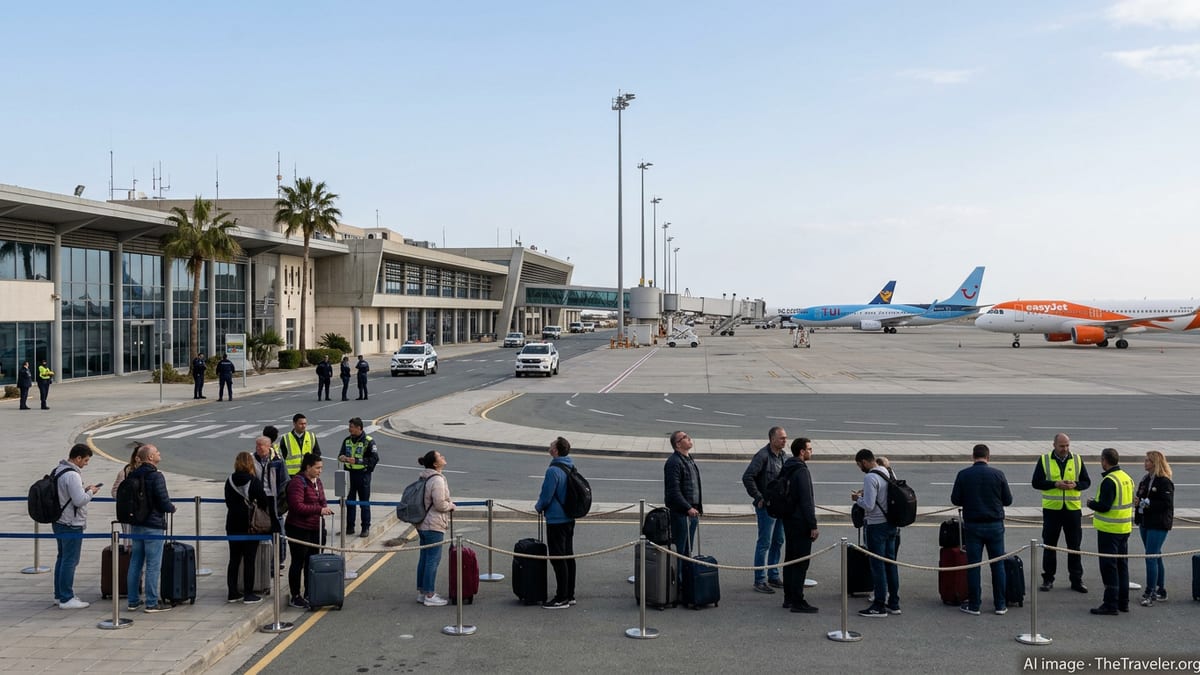
Swift Evacuation as Suspicious Drone Triggers Airport Alert
Shortly after midday on March 2, authorities ordered the immediate evacuation of Paphos International Airport, directing hundreds of passengers and staff out of the terminal buildings and into outdoor assembly points and car parks. Airspace above the airport was temporarily closed while security forces investigated reports of an unidentified unmanned aerial vehicle in the area.
Airport operator Hermes Airports confirmed that operations were paused as a precaution while state agencies assessed whether the suspicious object was headed toward the civilian airport or the adjacent Andreas Papandreou air base. Witnesses described sirens sounding and public address announcements instructing people to leave their checkpoints, retail outlets and boarding gates without delay.
The incident came amid heightened sensitivity to aerial threats, with authorities treating any unidentified drone in the vicinity of critical infrastructure as a potential danger to both aviation safety and national security. Within hours, staff were instructed to return to their posts and flight schedules began to resume, even as wider security measures remained in force in nearby communities.
Communities Sheltering in Place Near Paphos
The security scare rippled quickly beyond the perimeter fence of Paphos Airport. Villages including Timi, Mandria, Acheleia and Anarita, which sit beneath key approach paths and close to military installations, were placed on high alert. Local councils reviewed evacuation and shelter plans while residents received instructions to remain indoors and avoid unnecessary movement.
Authorities later shifted from full evacuation planning to a shelter in place posture for several communities, asking people to stay inside, keep away from windows and follow official updates. Schools and childcare facilities near the area implemented emergency protocols, with local officials working to keep families informed as the situation evolved.
Across the wider Paphos and Limassol districts, some archaeological sites and tourist attractions temporarily closed as a preventive measure. The closure of popular destinations such as ancient ruins and coastal castles underlined how far beyond the airport fence the drone threat reverberated on a day usually dominated by routine holiday traffic.
Link to Drone Strike on RAF Akrotiri Raises Regional Fears
The Paphos evacuation unfolded only hours after a confirmed drone strike on RAF Akrotiri, the large British air base on Cyprus’s southern coast, which supports operations across the Middle East. An Iranian made one way attack drone struck the base’s runway around midnight, causing limited damage but no casualties, before further drones heading toward the area were intercepted by Cypriot and allied air defences.
That earlier incident pushed force protection at the base to its highest level, triggered air raid sirens and led to precautionary evacuations of non essential personnel and families. With Akrotiri located roughly an hour’s drive from Paphos, reports that additional unmanned aircraft might be in Cypriot airspace raised immediate concerns that civilian infrastructure could be caught up in any follow on attacks.
Officials have not publicly confirmed the origin of the drones involved in the Paphos alert, but security analysts in the region have pointed to militant groups aligned with Iran as likely actors, following wider Iranian and proxy retaliation against Western and Israeli targets. For Cyprus, which hosts both sovereign British bases and a dense network of tourism infrastructure, the incidents illustrate its exposure to conflicts unfolding far beyond its shores.
Travel Disruption and Mounting Anxiety for Holidaymakers
The security scares have already rippled through Europe’s holiday market. Airlines including easyJet and other carriers halted or curtailed flights to Cyprus in the immediate aftermath of the Akrotiri strike and the Paphos evacuation, citing a precautionary approach as military tensions across the region escalated. Dozens of services were cancelled or rescheduled, affecting both Paphos and Larnaca airports and leaving travellers scrambling for information.
On the ground in Paphos, passengers described leaving check in queues and departure lounges with luggage in hand as they were guided outside. Many waited for hours under winter sun in parking areas while aircraft movements were halted and airport staff awaited clearance to re enter secure areas. Some travellers reported difficulty rebooking seats or finding accommodation as hotels and tour operators rushed to adjust to the unfolding disruption.
Despite the dramatic images of evacuated terminals, authorities in both Nicosia and major European capitals have so far stopped short of advising against all travel to Cyprus, framing the measures as targeted and precautionary. However, the combination of airspace closures, intermittent flight cancellations and visible military activity has injected a rare sense of unease into one of Europe’s most reliable short haul sun destinations.
Cyprus Tightens Security While Appealing for Calm
Cypriot officials repeatedly stressed that Monday’s airport evacuation and associated community alerts were taken out of an abundance of caution rather than in response to confirmed strikes near civilian areas. Government spokespeople said hostile aerial targets had been detected and neutralised in a timely manner, and urged residents and visitors to follow instructions without giving in to panic.
The United States Embassy in Nicosia issued a security alert warning of a possible drone threat to the Paphos region and advising citizens to stay alert, avoid non essential movements near potential targets and seek shelter if sirens or explosions were reported. Similar guidance was relayed by other diplomatic missions, underscoring the international attention focused on Cyprus’s security posture.
At the same time, authorities highlighted that Cyprus has invested in contingency planning for drone incidents, including no fly zones around airports and anti drone coordination between civil and military agencies. A recent large scale drill at Larnaca Airport tested responses to an unmanned aircraft entering restricted airspace, a scenario that has now become a real world challenge on the island’s western coast.
For now, operations at Paphos have resumed and nearby communities are slowly emerging from shelter orders, but officials acknowledge that the security environment remains fluid. With regional conflicts showing little sign of abating, Cyprus finds itself walking a delicate line between safeguarding its strategic infrastructure and preserving the sense of safety that underpins its vital tourism industry.