

More news on this day
Dubai and Abu Dhabi airports began restoring a limited number of international flights on March 2 and 3 after a 48-hour shutdown triggered by escalating conflict between the United States, Israel and Iran, offering stranded travelers a narrow window out of the region even as broader airspace closures and security fears persist.
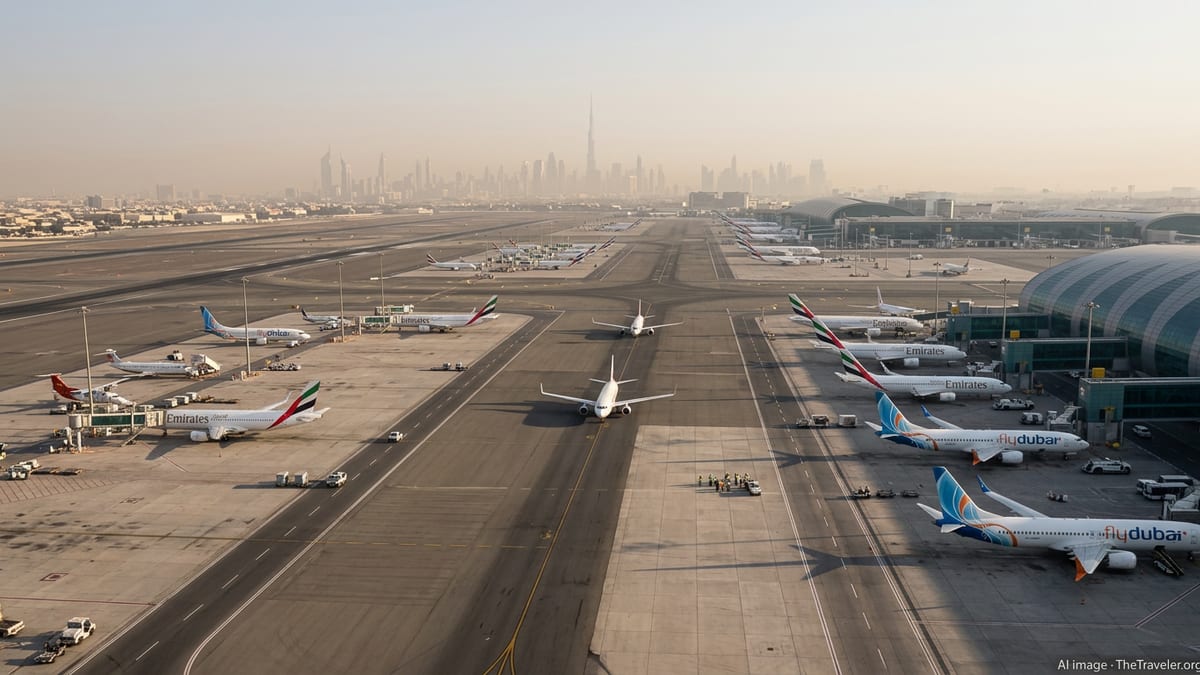
Careful Reopening After Sudden Regional Shutdown
Authorities in the United Arab Emirates confirmed that Dubai International and Dubai World Central airports had moved from a complete halt in operations to a tightly controlled restart, with only a fraction of normal traffic allowed to operate. The partial reopening followed what aviation analysts describe as one of the sharpest, most geographically broad disruptions to Gulf air travel in recent years, after Iranian strikes prompted widespread airspace closures across the Middle East.
Dubai Airports said a limited resumption of flights began on the evening of March 2, with services ramping up cautiously into March 3. In Abu Dhabi, airport operators reported that operations had also “partially resumed,” focusing on essential movements and flights cleared under stringent safety criteria. Officials stressed that the measures remained precautionary and subject to rapid change depending on the security outlook.
The restoration of some services marked a turning point for the UAE, whose aviation sector is a critical pillar of the national economy. Dubai’s main hub is routinely ranked among the world’s busiest for international traffic, and even a 48-hour pause reverberated across airline networks from Europe and Asia to North America and Africa.
Emirates, Etihad and Flydubai Prioritise Stranded Passengers
Flag carrier Emirates began operating a small number of flights late on March 2 and into March 3, concentrating on passengers whose earlier journeys had been cancelled during the shutdown. The airline has maintained a blanket suspension of most scheduled services but is now running select repatriation and connecting flights, while continuing to advise customers not to travel to the airport unless they have received specific confirmation of a rebooked seat.
Abu Dhabi-based Etihad Airways has followed a similarly cautious path, restarting limited repositioning, cargo and repatriation services in coordination with UAE civil aviation authorities. Etihad said each flight requires individual safety and operational approvals, underscoring the volatility of airspace conditions over parts of the Gulf and wider Middle East. The carrier is urging passengers to monitor updates closely and to avoid unnecessary trips to the airport.
Low-cost airline Flydubai has also resumed a narrow set of flights, primarily from Dubai International and Dubai World Central, after suspending its network over the weekend. While some departures are now operating, the carrier continues to suspend routes into the most heavily affected areas and has warned customers that schedules can change at short notice.
Global Carriers Extend Cancellations and Reroute Traffic
The reopening of UAE hubs has not yet translated into a full restoration of global connectivity. Several major European and Asian airlines have extended suspensions on services to Dubai and other Gulf destinations into later this week, citing security assessments and insurance considerations. Some long-haul carriers are rerouting flights to avoid contested airspace altogether, adding hours to journey times and straining crew and aircraft rotations.
Industry data indicates that more than ten thousand flights across the Middle East have been cancelled or rerouted since the conflict escalated at the end of February, with Dubai and Abu Dhabi at the centre of the disruption. Airlines from India, Europe and North America have cut services to the UAE and neighboring states, or shifted to one-off special flights dedicated to evacuating nationals and permanent residents.
Aviation analysts say that the staggered resumption of services from Dubai and Abu Dhabi is likely to create an uneven recovery, with some long-haul connections restored quickly while point-to-point routes to high-risk destinations remain grounded. That patchwork approach could persist for days as military operations and diplomatic efforts continue to reshape regional risk calculations.
Passengers Face Long Delays, Uncertainty and Scarce Seats
For travelers, the modest return of flights has brought relief but also deep frustration. Airport terminals in Dubai and Abu Dhabi remain crowded with passengers who have already endured days of cancellations and rebookings. Airlines are prioritising those with earlier travel dates, often leaving customers with newer bookings or more complex itineraries waiting for available seats.
With aircraft and crew scattered away from their usual bases, carriers are struggling to restore normal patterns of service. Airfares on the few available routes out of the region have risen sharply, especially on flights connecting to Europe and South Asia. Travel agents report intense demand for any seats that can get passengers closer to home, even if it means circuitous routings via secondary hubs in Africa or Southeast Asia.
Foreign governments are also stepping in to help. The United States and several European countries have announced charter operations or coordinated departures aboard commercial aircraft from the UAE, Saudi Arabia and Jordan, focusing on citizens and residents who had been transiting through Dubai and Abu Dhabi when the conflict flared. Consular officials are urging travelers to stay registered with embassies and to accept the first viable exit option offered, as conditions could deteriorate again.
Tourism and Transit Economy Braces for Ongoing Shock
The shock to travel flows is already being felt beyond the airport perimeter. Dubai’s hotels, tour operators and retail businesses, heavily dependent on international arrivals and transit passengers, are reporting abrupt drops in occupancy and forward bookings. Industry executives say that even a short conflict can cast a long shadow over traveler confidence, particularly among families and first-time visitors who perceive the wider region as a single risk zone.
Analysts caution that while the UAE’s aviation sector has shown resilience during previous crises, from the pandemic to regional tensions, the current conflict’s direct impact on Gulf airspace gives it a distinct and potentially longer-lasting character. If overflight restrictions continue or expand, airlines may permanently reconfigure route networks, reducing the centrality of Gulf hubs for some traffic flows.
For now, tourism boards and airport authorities in Dubai and Abu Dhabi are focusing on practical messaging: encouraging only ticketed passengers with confirmed departures to come to the terminals, promising flexible rebooking and refund policies, and highlighting the robust security and emergency planning underpinning any decision to operate flights. How quickly travelers return in significant numbers will depend not only on airline timetables, but on whether the conflict shows signs of stabilising in the days ahead.