

More news on this day
Dubai International Airport, one of the world’s busiest aviation hubs, is struggling to restore normal operations after sweeping airspace closures linked to the escalating conflict involving Iran, Israel and U.S. forces triggered mass flight cancellations, long delays and overnight airport stays for tens of thousands of passengers in recent days.
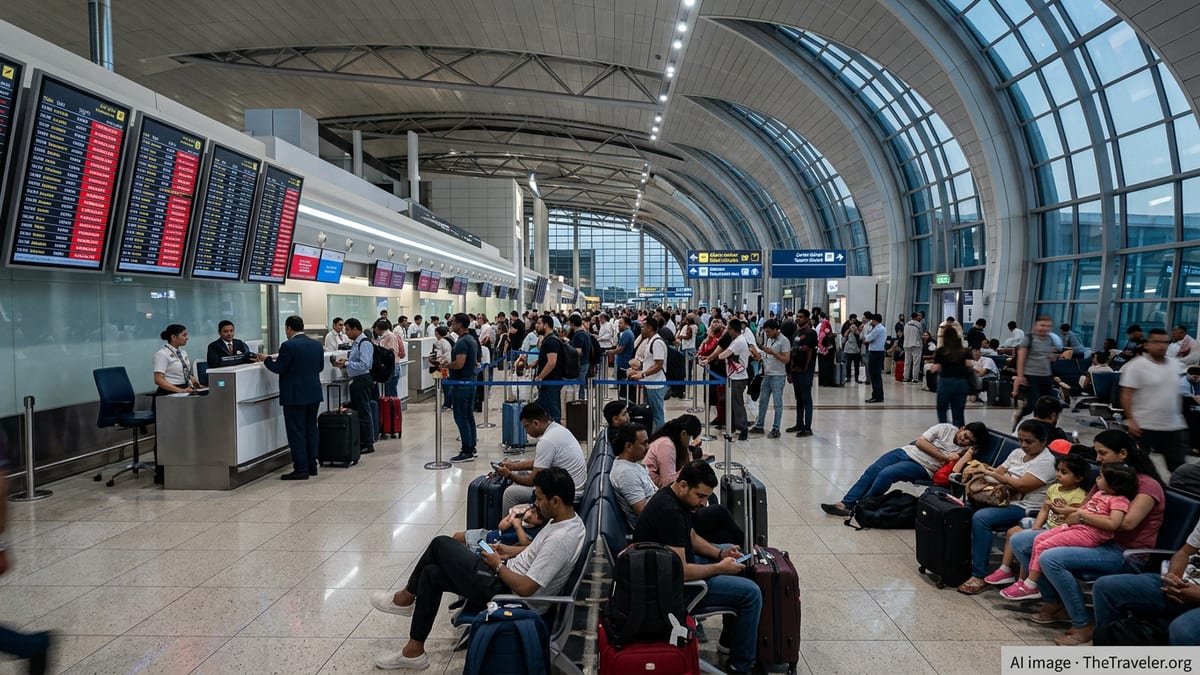
Regional Conflict Cascades Through a Global Hub
The latest round of strikes and counterstrikes across the Middle East has rippled rapidly through commercial aviation, with Dubai International Airport at the epicenter of the disruption. Beginning on February 28, authorities in multiple countries closed or restricted their airspace, forcing airlines to cancel or divert services and temporarily halt operations at major Gulf hubs, including Dubai’s main airport and Dubai World Central.
Dubai Airports confirmed that both facilities initially halted all movements as regional skies shut, turning terminals into makeshift waiting areas for stranded transit passengers who could no longer connect onward to Europe, Asia, Africa or the Americas. The airport, which typically handles hundreds of thousands of passengers daily, suddenly became a holding point for travelers sleeping in departure halls and relying on airline vouchers for food and hotel rooms.
While precise tallies shift by the hour, aviation data and government briefings indicate that well over 180 flights connected to Dubai alone have been cancelled or severely delayed since the first closures, part of a broader wave of more than ten thousand flight cancellations across the Gulf region. The result has been a cascading impact on global networks, as aircraft and crews are left out of position and long haul rotations are torn up at short notice.
The conflict’s timing at the start of a busy spring travel season has heightened the shock. Many passengers were mid-journey on multi leg itineraries when the airspace closures came into effect, leaving them marooned in Dubai with little clarity on when normal services would resume.
Limited Services Resume but Backlogs Remain Massive
After several days of near total shutdown, Dubai International has begun operating a small number of carefully controlled departures and arrivals in coordination with aviation authorities and selected airline partners. Dubai Airports and the main carriers have stressed that these are not full commercial schedules but targeted operations aimed at moving stranded travelers and repositioning aircraft.
Emirates, the largest operator at Dubai International, has mounted limited repatriation and relief services while keeping its regular scheduled flights formally suspended until late on March 4. Etihad and Flydubai have followed similar patterns, restoring only a narrow set of flights to key destinations while maintaining widespread cancellations on most routes that would normally feed through Dubai.
Even with these cautious restarts, airport officials acknowledge that the backlog is enormous. Industry trackers estimate that thousands of passengers remain stuck in and around Dubai’s terminals, with further waves of disruption likely as airlines work through rebookings and aircraft routing changes. Each relief flight is heavily oversubscribed, with priority typically given to those whose original departures were cancelled earliest.
Authorities have repeatedly urged travelers not to head to Dubai International or Dubai World Central unless they have been directly contacted by an airline with a confirmed new departure time. Crowded terminals, limited available seats and dynamic security assessments mean that showing up without a reservation all but guarantees further frustration and long waits.
Stranded Passengers Face Stress, Confusion and Sky High Costs
For those caught in the disruption, the experience has ranged from uncomfortable to financially punishing. Passengers describe long queues at service desks, jammed customer service hotlines and mobile apps that struggle to keep pace with rolling schedule changes. Many have been provided with hotel accommodation and meal vouchers by airlines and airport authorities, but capacity has been stretched by the sheer volume of people needing a bed.
Travelers with flexible work arrangements have hunkered down in Dubai, using hotel lobbies and airport lounges as makeshift offices while they wait for updates. Others with pressing commitments, from medical appointments to family events, have scrambled to piece together complex alternative routings that avoid closed airspace, often at significant personal cost.
The sudden scarcity of commercial seats out of the Gulf has also triggered a surge in demand for private aviation. Brokers report that some travelers stranded in Dubai have been willing to pay six figure sums for last minute charters via secondary airports in neighboring countries that retain limited connectivity. These workarounds, while feasible for a wealthy minority, underline the broader desperation of passengers keen to leave a conflict affected region whose skies remain heavily restricted.
Insurance considerations add yet another layer of complexity. Many standard travel policies treat war related closures as excluded events, leaving passengers uncertain about their rights to reimbursement for extra nights, alternative tickets or missed connections. Consumer advocates are urging travelers to keep all receipts and written airline communications to support later claims where possible.
Airlines and Governments Coordinate Emergency Response
Behind the scenes, airlines operating through Dubai are running extensive crisis operations rooms, juggling aircraft availability, crew duty limits and changing risk assessments. Flight planners are redrawing routes to skirt closed airspace where possible, lengthening some journeys by hours and adding fuel stops that place further pressure on already strained schedules.
Governments have stepped in to support repatriation efforts for their citizens stranded at Dubai International and other Gulf hubs. Several countries, including India, have announced special relief flights designed specifically to bring home nationals who were caught in transit when the conflict escalated. These operations are being carefully sequenced with airport authorities to avoid overloading limited runway slots and ground handling resources.
Diplomatic channels are also being used to negotiate humanitarian corridors and clarify which flight categories may be permitted to operate even as broader restrictions remain in place. Cargo services, medical evacuations and essential repatriation flights are being prioritized, while tourism and discretionary travel largely remain on hold.
Aviation analysts say the situation around Dubai demonstrates how quickly geopolitical tensions can overload a tightly interconnected global air system. With major regional hubs unable to function at anything close to full capacity, ripple effects are reaching far beyond the Middle East, affecting schedules, fares and aircraft availability on routes connecting Europe, Asia, Africa and Oceania.
What Travelers Through Dubai Need to Know Now
For passengers scheduled to travel via Dubai in the coming days, the overriding message from airlines and airport authorities is to avoid making assumptions and to stay closely attuned to official updates. Tickets that appear confirmed can still be subject to last minute changes as airspace permissions and security assessments evolve.
Travelers are being advised to monitor airline apps and messaging channels, confirm that their contact details are up to date, and refrain from going to the airport until they have a clear, written departure time. Those with non essential trips are encouraged to consider deferring their travel, as scarce seats are needed to clear the backlog of stranded passengers and to support formal repatriation efforts.
For journeys that must go ahead, experts recommend building in generous connection times, expecting potential overnight stops and packing essential medications, chargers and a change of clothes in cabin baggage in case of unplanned layovers. Travelers should also review the fine print of their travel insurance and card protections to understand what war related disruptions may or may not cover.
How long Dubai International Airport will remain constrained depends largely on developments far beyond its runways. Until regional airspace closures are eased and airlines regain confidence in the security picture, the world’s reliance on Dubai as a seamless crossroads between continents will remain under severe strain, and passengers will need to plan for ongoing uncertainty in the skies.