

More news on this day
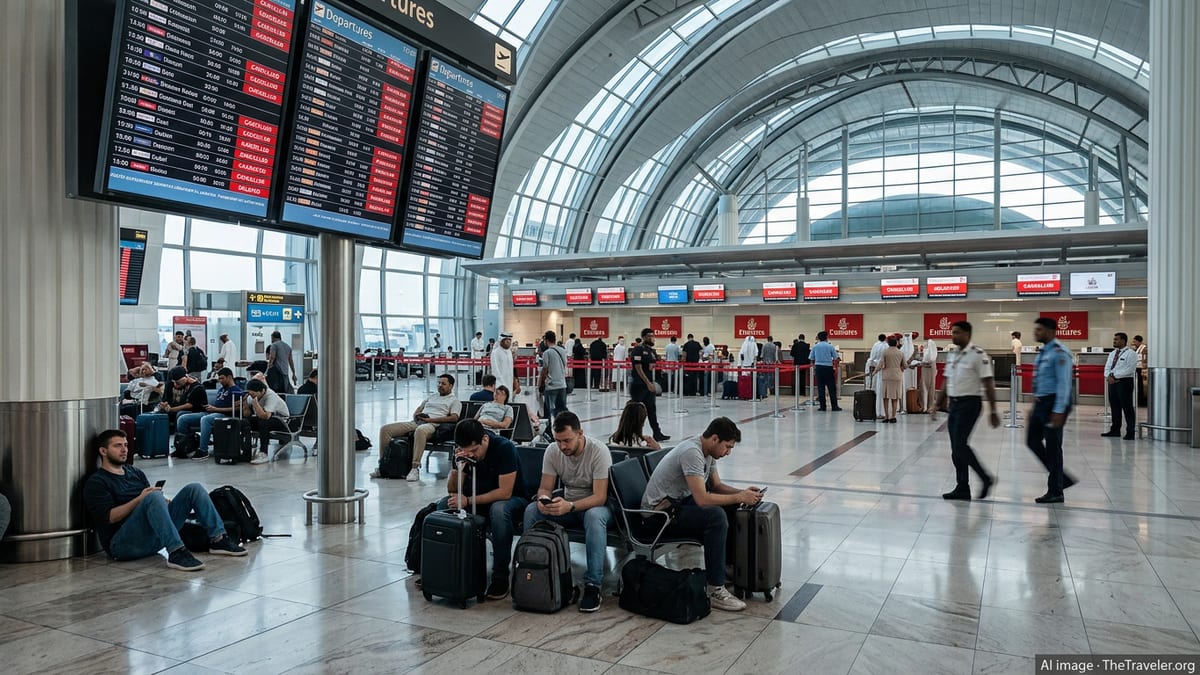
Dubai International Airport has moved back into a restricted operating mode after a fresh suspension of flights on March 7, 2026, as regional tensions linked to the widening US-Israel-Iran conflict continue to rattle one of the world’s busiest aviation hubs and strand passengers across multiple continents.
How the Latest Suspension Unfolded
The latest disruption follows a week of turmoil that began on February 28, when coordinated US and Israeli strikes on Iran triggered a cascade of retaliatory attacks and prompted several Middle Eastern states, including the United Arab Emirates, to close portions of their airspace. Dubai International Airport and the emirate’s second hub at Al Maktoum International effectively came to a standstill as authorities ordered airlines to halt departures and arrivals.
Limited services had gradually resumed from the evening of March 2, under tight restrictions set by the UAE’s civil aviation regulator. Airlines, led by Emirates and flydubai, began operating a reduced schedule using specific corridors deemed safe, prioritizing long-haul flights and repatriation services. Passengers were warned not to travel to the airport unless they had explicit confirmation that their flight was operating.
On March 7, however, a new wave of Iranian drone and missile activity across the Gulf, including reported strikes in the vicinity of Dubai, prompted another sharp cutback in movements. While the airport has not returned to a complete closure, many services have been suspended or rerouted at short notice, and operators describe the situation as “highly dynamic” with flight lists updated hour by hour.
Airport officials say safety assessments are ongoing in coordination with national security authorities and foreign regulators. They caution that even flights which appear scheduled may be delayed, diverted or cancelled if the risk picture changes, particularly on routes crossing contested airspace over parts of Iran, Iraq and neighboring states.
What It Means if You Have a Flight Through Dubai
For travelers with tickets to, from or via Dubai in early and mid‑March, the flight suspension translates into significant uncertainty. Major carriers serving the hub, including Emirates, flydubai, Etihad, as well as European and Asian airlines, have published waivers allowing passengers to rebook without penalties, but availability is limited and alternative routings can involve substantial detours.
Passengers currently outside the UAE are being advised not to start their journeys toward Dubai unless their airline has reconfirmed the flight within a short window of departure. Many long-haul itineraries that would normally rely on Dubai as a connecting point are being rerouted through alternative hubs in Europe or South and Southeast Asia, adding hours to travel times and, in some cases, requiring an overnight stay.
Those already in Dubai face a different challenge: while some outbound flights are operating, they may be concentrated on specific destinations that airlines prioritize for evacuation or critical connectivity. Individual governments have begun coordinating special services to extract their citizens from the region, using the limited slots available at Dubai and Abu Dhabi, but these are typically booked quickly and often reserved for those who had already been due to travel.
Travelers transiting with separate tickets, or those without through-checked baggage, are particularly vulnerable to disruption. Airlines are stressing that they cannot always interline or assume responsibility for journeys booked across multiple carriers at this time, making comprehensive travel insurance and close communication with booking agents more important than ever.
Regional Tensions and Airspace Safety Concerns
The disruption in Dubai cannot be understood in isolation. The airport sits at the heart of a dense web of east–west routes that typically crisscross the skies over Iran, Iraq and the wider Gulf. As the conflict has escalated, authorities in several countries have closed or severely restricted their airspace, forcing airlines to redesign flight paths around potential flashpoints.
European and US aviation safety bodies have issued strong advisories against flying over large swathes of the region, citing the risk of misidentification and the presence of sophisticated air defense systems on high alert. These notices, coupled with domestic security assessments in the UAE, have led carriers either to suspend flights entirely on certain corridors or to operate only a narrow selection of services using approved routings and altitudes.
Dubai’s own vulnerability has been highlighted by incidents in which debris from intercepted drones reportedly landed near key infrastructure, including transport and tourism sites. While officials emphasize that damage at the airport has so far been limited and quickly contained, every new incident prompts a fresh recalibration of risk and, in some cases, new rounds of temporary suspensions to allow inspections and military activity.
The result is a pattern of rolling disruptions rather than a single, clearly defined shutdown. Travelers are seeing schedules that appear to stabilize for a day or two, only to be upended again when regional dynamics shift, a missile test is detected, or a retaliatory strike occurs near critical air corridors.
How Airlines and Authorities Are Managing the Crisis
Emirates, the dominant carrier at Dubai International, is operating a skeleton network designed to maintain some long-haul connectivity while respecting government-imposed constraints. The airline has repeatedly urged passengers not to go to the airport without direct confirmation of their flight status and has extended fee-free rebooking policies for affected travelers across multiple continents.
Other carriers, including regional low-cost airlines and major flag carriers from Europe and Asia, have either suspended their Dubai operations outright for several days or shifted to an emergency schedule focused on repatriation and cargo. Many have issued travel alerts specifying that normal commercial operations will not resume until at least mid‑March, subject to further security evaluations.
On the regulatory side, the UAE’s General Civil Aviation Authority has issued a series of safety decisions and notices that temporarily restrict certain types of air activity, including unmanned aircraft systems and light sport aviation, as it seeks to deconflict civilian traffic from military operations. Air traffic controllers across the Gulf are coordinating corridors that keep commercial flights away from known hotspots while still enabling evacuation movements and essential freight.
International organizations are monitoring the situation closely, with insurers, airline alliances and global booking systems feeding real-time data back to travel agents and corporate travel managers. Industry analysts note that because Dubai is such a central hub for Africa–Asia and Europe–Asia traffic, any prolonged disruption risks rippling through global timetables for weeks, even after a more stable ceasefire or airspace reopening is achieved.
Practical Advice for Travelers Caught in the Disruption
For passengers already on the ground in Dubai or transiting through the region, the most important step is to stay in direct contact with the operating airline via official apps, call centers or airport service desks. Schedules are being updated frequently, and automatic notifications may not always reflect last-minute decisions taken in response to security events.
Experts recommend allowing far more time than usual for any airport transfer or check-in process, as additional security screenings and airspace coordination often translate into delayed boarding and longer queues. Travelers should also be prepared for sudden gate changes, equipment swaps and, in the worst case, overnight stays if their flight is postponed beyond local curfew windows or new restrictions are announced.
Those who have not yet departed from their home country are being urged to explore alternatives that bypass the Gulf entirely, particularly if their trip is non‑essential. Rerouting via northern or southern corridors, even at additional cost or with extra connections, may offer a more predictable experience until regional tensions ease and airlines regain confidence in sustaining regular Dubai schedules.
Ultimately, the situation at Dubai International Airport in March 2026 remains fluid. While authorities and airlines are working to restore connectivity as conditions allow, travelers should plan for ongoing volatility, closely monitor official updates and build flexibility into their itineraries as the Middle East’s security landscape continues to evolve.