

More news on this day
Dubai International Airport has begun a cautious resumption of limited flight operations following a nationwide airspace shutdown triggered by escalating regional conflict, but authorities have issued a strict travel advisory warning passengers to stay away from terminals unless they have been directly notified by their airline with a confirmed departure time.
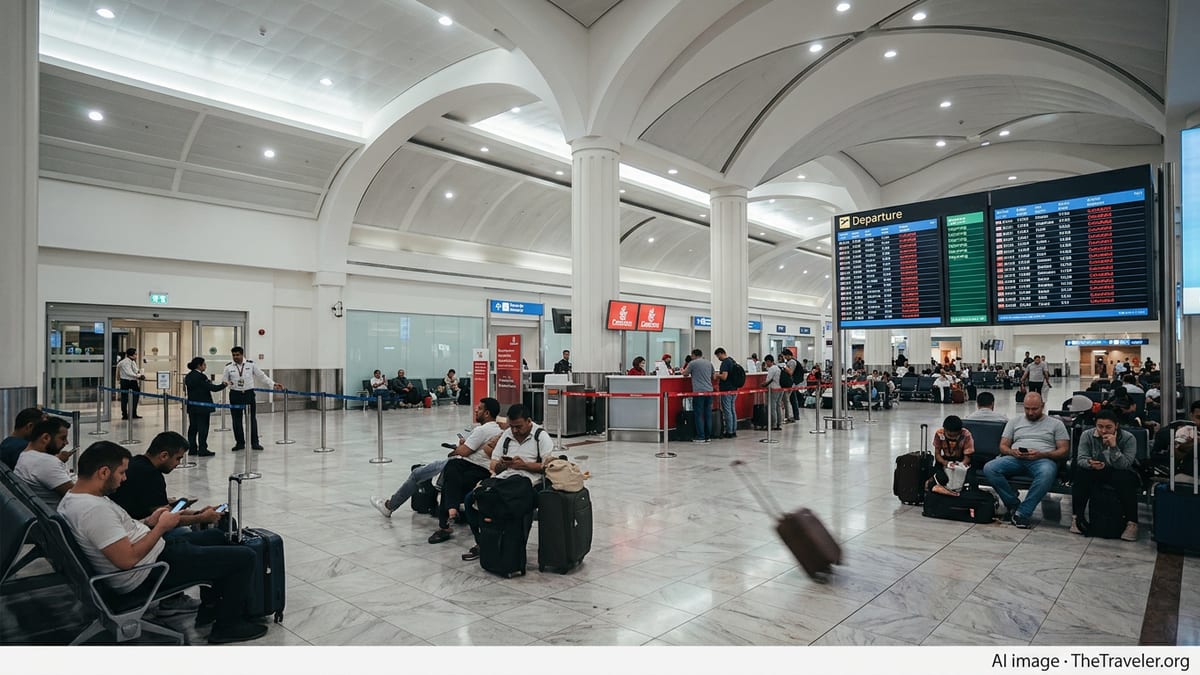
Airspace Crisis Forces Dramatic Slowdown at Gulf Hub
The United Arab Emirates closed large sections of its airspace over the weekend after Iranian missile and drone strikes across the region, prompting an unprecedented suspension of commercial flights through key Gulf hubs. Dubai International Airport, one of the world’s busiest for international traffic, was forced to halt most movements as carriers diverted or cancelled services across the Middle East.
On Monday evening, March 2, Dubai Airports confirmed that a strictly limited number of flights would resume from Dubai International (DXB) and Dubai World Central – Al Maktoum International (DWC). The carefully phased restart is designed to move stranded passengers out of the country while aviation authorities continue to assess security conditions and route safety.
The disruption has rippled across global networks, with airlines in Europe, Asia and India still working through large backlogs of passengers whose journeys were interrupted by the sudden closure. Industry data indicates that more than a third of flights scheduled to the wider Middle East in recent days have been cancelled, underlining the scale of the ongoing crisis.
Even as departure boards at DXB show the first pockets of green for confirmed flights, airport officials stress that operations remain far from normal, with the vast majority of scheduled services still suspended or awaiting regulatory clearance.
Passengers Told to Stay Home Without Airline Confirmation
In unusually blunt language, Dubai Airports and the UAE’s General Civil Aviation Authority have urged travellers not to proceed to any airport in the country unless they have been contacted directly by their airline with a confirmed departure time. Authorities warn that unconfirmed arrivals could overwhelm limited terminal capacity and strain security and customer service teams already working at full stretch.
Access to terminals at Dubai and Abu Dhabi has been tightened, with security staff instructed to turn away anyone who cannot present valid documentation for an imminent departure. Officials say the measure is necessary to prevent scenes of overcrowding that could complicate both safety protocols and the delicate process of rebuilding the schedule.
Airlines are prioritising passengers whose flights were cancelled earliest in the shutdown, with rebooking handled centrally through their own systems. Travellers are being told to rely only on official airline channels and not to travel on the basis of speculation, generic media reports or third‑party booking platform messages.
Call centres and digital platforms remain under heavy pressure, and carriers acknowledge that some passengers may experience delays in receiving updates. Nevertheless, the message from both airlines and authorities is consistent: do not go to the airport unless you have a specific flight number and departure time that has been reconfirmed after the shutdown.
Emirates, Etihad and Flydubai Lead Phased Return
Flag carrier Emirates has begun operating a limited number of flights from Dubai, focusing initially on high‑demand routes and customers stranded in transit when the airspace closure came into effect. The airline has said that travellers whose itineraries are being restored will be contacted directly and rebooked automatically where possible, with walk‑in rebooking at airport counters largely suspended for now.
In Abu Dhabi, Etihad Airways has also resumed select services, while cautioning that most scheduled flights remain cancelled as it works through safety approvals and air traffic control constraints. A small number of long‑haul departures to Europe and Asia have taken off since Monday afternoon, but the carrier continues to describe its operation as severely curtailed.
Low‑cost carrier Flydubai is concentrating on limited outbound services to key markets, including cities in Russia and South Asia, as well as carefully controlled inbound flights to repatriate travellers. Other regional airlines, such as Air Arabia and various foreign carriers, are coordinating with UAE authorities on special services and relief flights intended to clear the most urgent backlogs.
Aviation analysts note that the restart phase could last several days, with schedules remaining highly fluid as military activity, insurance requirements and route availability evolve. Airlines are building in extra buffer times, longer routings around closed airspace and contingency crew planning, all of which constrain how quickly full timetables can be restored.
Thousands of Tourists Stranded as Hotels Fill Up
The sudden shutdown of UAE airspace stranded tens of thousands of visitors across Dubai, Abu Dhabi and other Emirates at the height of the region’s busy travel period. Many had been passing through DXB on long‑haul connections between Europe, Asia, Africa and Australasia, leaving them unexpectedly grounded far from home.
Local authorities, working with airlines and tourism bodies, have arranged hotel accommodation and meals for large numbers of affected travellers, particularly those on through‑tickets with Gulf carriers. Officials say that more than twenty thousand passengers are currently being housed in hotels, with many more staying in private rentals or with friends and family as they await new departure times.
The pressure on the hospitality sector has been intense, with major hotel groups reporting near‑full occupancy in key districts close to the airports. Tour operators and travel agents are fielding continuous calls from clients seeking clarity on insurance coverage, refund policies and the cost of extending stays while they wait for flights to resume.
For many visitors, the experience has turned what began as a short stopover or week‑long holiday into an open‑ended stay in the UAE. While some have expressed appreciation for the support offered by airlines and hotels, frustration is mounting among those who have yet to receive concrete information on when they can leave.
What Travellers Should Do Now
Travel experts advise that passengers booked to fly into or out of the UAE in the coming days should treat all itineraries as subject to change until regional airspace restrictions ease further. Anyone scheduled to travel should monitor their airline’s mobile app, official website or verified social media channels for real‑time updates, rather than relying on fixed printed tickets issued before the crisis.
Prospective travellers who have not yet departed for the UAE are being urged to consider postponing non‑essential trips or seeking alternative routings that avoid affected hubs. Many international airlines have introduced temporary waivers allowing changes or cancellations without standard penalties for journeys touching the Gulf during this period of disruption.
Those already in the Emirates are encouraged to remain at their current accommodation and avoid repeatedly going to the airport in the hope of securing a seat. Officials stress that only passengers with confirmed, reconfirmed departure times will be processed through check‑in and security, and that loitering in terminal areas without a boarding pass could lead to additional delays and congestion for everyone.
With the regional security situation still developing, both aviation authorities and airlines are describing the outlook as highly dynamic. Travellers are being told to prepare for further schedule adjustments, extended journey times on rerouted flights and the possibility of short‑notice cancellations, even as the first wave of confirmed departures begins to lift off from Dubai International Airport once again.