

More news on this day
Dubai International Airport has begun a cautious restart of flight operations after a 48-hour shutdown triggered by the widening US-Israel conflict with Iran, issuing a strict advisory that only passengers with confirmed departures and direct airline notifications should attempt to travel to the airport.
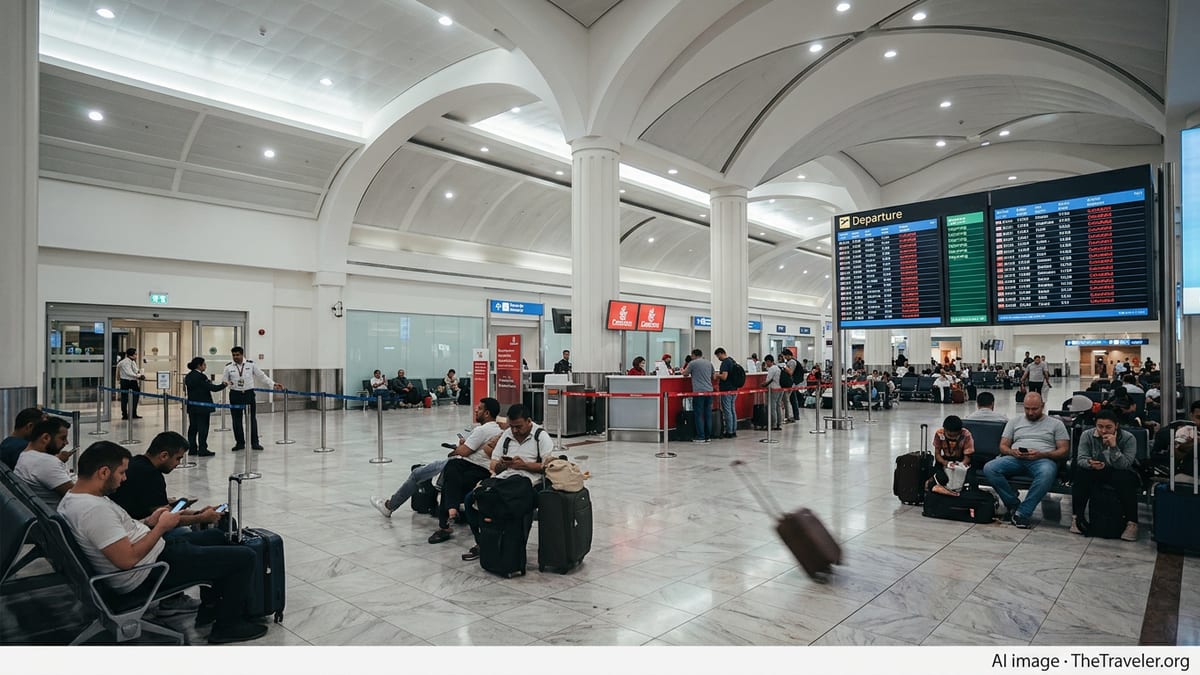
DXB Moves From Shutdown to Tightly Controlled Reopening
Dubai Airports confirmed that a limited resumption of services began on the evening of March 2, following a complete halt to commercial traffic imposed on February 28 as the United Arab Emirates closed its airspace during a wave of Iranian missile and drone attacks across the Gulf. Authorities said only a small number of flights are currently operating from Dubai International Airport and Dubai World Central, and that airport access is being carefully restricted.
The phased reopening comes as operators race to clear a backlog of stranded travelers while maintaining heightened security and safety protocols. Terminal activity remains significantly below normal levels, with empty check in areas and quiet departure halls contrasting sharply with scenes of congestion and confusion reported over the weekend, when thousands of passengers were caught in transit as airspace closures took effect.
Officials stressed that the situation remains highly fluid, with scheduled services subject to late changes or cancellation in response to evolving security assessments. Aviation and government agencies continue to coordinate on a rolling basis, reviewing each additional service before allowing it to operate.
Authorities Warn: Do Not Go to the Airport Without Confirmation
In one of the strongest public advisories issued by Dubai Airports in recent years, travelers have been told explicitly to stay away from both Dubai International and Dubai World Central unless their airline has contacted them with a confirmed departure time. Airport staff have begun turning away passengers who arrive without proof of a confirmed booking on one of the limited services now operating.
Dubai Airports and the UAE General Civil Aviation Authority have repeated that message across local media and official channels, urging residents and visitors to rely solely on direct airline communication for updates. The advisory is designed to prevent overcrowding in terminals while security checks are intensified and aircraft movements remain severely restricted.
Airlines are using text messages, emails and app notifications to reach affected customers. Officials have cautioned that travelers who attempt to reach the airport without such confirmation are likely to face long waits, possible denial of entry to the terminal, and no guarantee of assistance on the day.
Ground transport operators have also reported a noticeable reduction in airport trips since the advisory came into force, reflecting a broader shift in public behavior as residents heed warnings to avoid unnecessary travel across the city while the crisis continues.
Emirates, Flydubai and Other Carriers Prioritise Stranded Passengers
Dubai based carrier Emirates has begun operating a limited number of flights from the evening of March 2, focusing first on customers whose original departures were scheduled earlier in the disruption. The airline has said that passengers who are successfully rebooked on these services will be contacted directly, and that all other regular flights remain suspended until further notice.
Low cost airline Flydubai has also restarted a small selection of services from Dubai International, including routes aimed at repatriating travelers to key destinations. Like Emirates, it is instructing customers to update their contact details and monitor flight status closely before setting out for the airport.
Across the wider UAE, Etihad Airways and other national carriers are operating only exceptional flights, including repositioning, cargo and repatriation services approved on a case by case basis. Many standard commercial services in and out of the country remain cancelled as the regional air traffic picture shifts from hour to hour.
Travel industry analysts say capacity is likely to remain constrained for several days even under optimistic scenarios, with airlines facing the complex task of repositioning aircraft and crew while responding to changing overflight permissions in neighboring countries.
Regional Conflict Drives Ongoing Travel Disruption
The disruption at Dubai International is part of a wider aviation shock affecting much of the Middle East after a series of strikes between the United States, Israel and Iran prompted multiple governments to close or restrict their airspace. Iran, Iraq, Israel and Jordan have imposed complete closures, while other Gulf states have introduced partial restrictions, forcing airlines to reroute or suspend services.
For Dubai, one of the world’s busiest aviation hubs, the crisis has highlighted the vulnerability of long haul networks that depend on stable overflight corridors across the region. Analysts estimate that thousands of flights have been cancelled or diverted since the weekend, displacing well over a million passengers across Europe, Asia, Africa and Australasia.
Travel experts warn that the ripple effects will extend far beyond the Gulf, as aircraft and crew end up out of position and airlines struggle to rebuild schedules. Some carriers have introduced temporary surcharges or higher fares on the limited number of routes still operating, while others are negotiating with regulators for additional capacity on alternative paths that avoid closed airspace.
Governments including the United States, United Kingdom, Germany and Australia are meanwhile working to assist citizens stranded in transit hubs such as Dubai, Abu Dhabi and Doha, coordinating with airlines on special flights where security conditions allow.
What Travellers Through Dubai Should Do Now
For passengers with future itineraries through Dubai, the key message from authorities and airlines is to wait for direct communication rather than heading to the airport in the hope of securing a seat. Those with bookings in the coming days are being advised to monitor airline apps and official channels frequently, as rebooking efforts ramp up once additional flights receive clearance.
Travel agents and corporate travel managers are reporting heavy demand for alternative routings that bypass the Gulf entirely, particularly for time sensitive business trips and essential travel. However, with many neighboring countries also limiting airspace, options remain limited and often more expensive.
Industry observers suggest that leisure travelers with flexible plans should consider postponing trips that require connections through Dubai until there is clear evidence of normal operations returning. Airlines are widely offering fee waivers, vouchers or free date changes on affected tickets, though policies vary by carrier and fare type.
For now, Dubai International Airport is operating in a controlled, reduced capacity mode that prioritises safety and essential movements over volume. The pace at which that can change will depend on both the regional security situation and the ability of airlines and regulators to gradually restore confidence in one of the world’s most important aviation crossroads.