

More news on this day
Dubai International Airport has temporarily suspended flights after a new drone attack ignited a fuel tank fire near the busy global hub, intensifying concerns over aviation safety and travel disruption as the Middle East conflict escalates.
Get the latest news straight to your inbox!
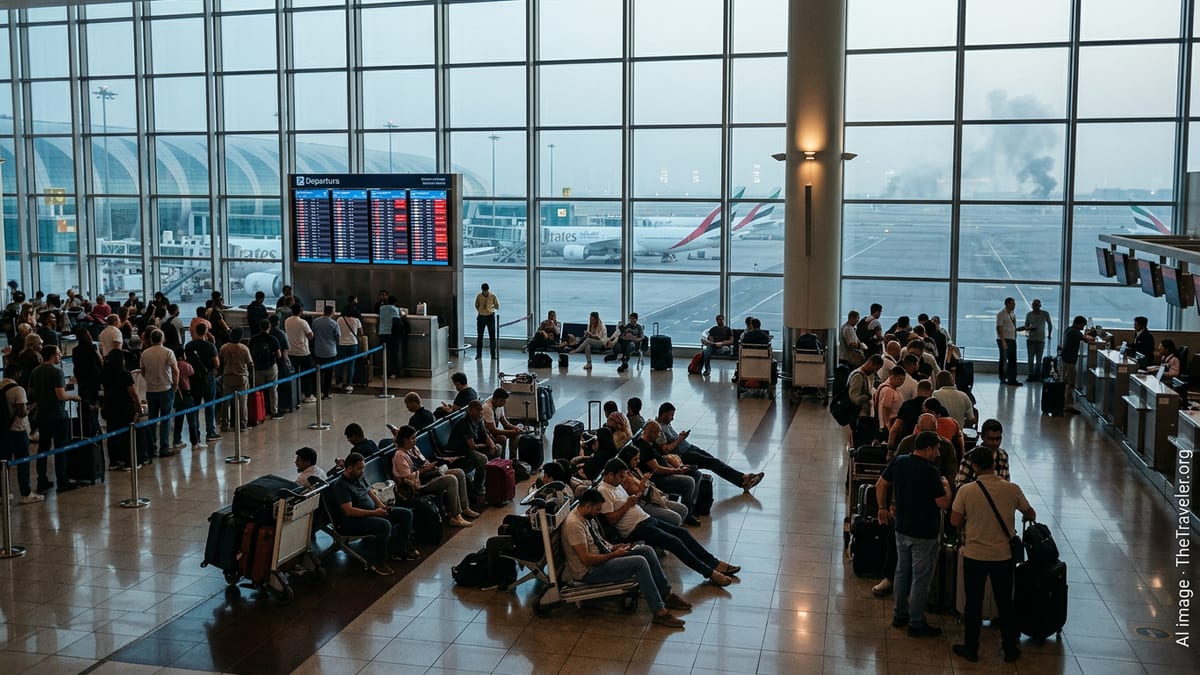
What Happened at Dubai International Airport Today
Reports from international news agencies and local outlets indicate that on March 16, 2026, a drone struck a fuel facility in the vicinity of Dubai International Airport, triggering a fire and prompting a temporary shutdown of flight operations. Early details suggest the blaze was contained without immediate reports of mass casualties, but the incident has underscored the vulnerability of one of the world’s busiest aviation hubs to the regional conflict.
The strike follows a series of missile and drone attacks linked to the ongoing Iran war that have targeted infrastructure across the United Arab Emirates in recent weeks. Previous incidents earlier in March had already forced short-term suspensions and diversions at Dubai International Airport, as well as at other airports in the Gulf, but the latest hit appears to be among the most disruptive yet for passenger traffic.
Airport authorities and emergency services responded to the fuel tank fire as smoke was reported rising from the airport area, with images circulating on social media showing plumes visible from several neighborhoods. Publicly available information points to heightened security procedures on the ground, including additional screening, controlled access to terminal areas, and rerouting of airport traffic while damage assessments are carried out.
While some prior shutdowns linked to incoming threats or interception debris lasted only a few hours, the fresh attack has raised questions over how quickly Dubai’s main gateway can resume anything close to normal operations if the regional security picture continues to deteriorate.
Emirates’ Hub Disrupted and Flight Schedules Overturned
Emirates, the largest carrier operating out of Dubai International Airport and heavily reliant on its role as a connecting super-hub, has been forced to make rapid adjustments. Publicly available statements and travel advisories show that the airline has suspended flights to and from Dubai for at least part of the day, with wording such as “suspended until further notice” used in relation to operations during the latest wave of attacks.
In recent days, Emirates had been attempting to run a reduced schedule through limited airspace corridors, following earlier closures and interceptions near the airport. The new drone impact and subsequent fire have led to fresh cancellations and diversions, with some long-haul flights turning back over the region and others being rerouted to alternative hubs in neighboring countries.
The disruption is particularly acute for passengers relying on Dubai as a transit point between Europe, Asia, Africa, and Australasia. With much of the airline’s network built on tight connections, even a brief closure can cascade into missed onward flights, aircraft out of position, and crew scheduling challenges that persist for several days.
Travel industry advisories suggest that passengers booked on Emirates should closely monitor their flight status, expect last-minute changes, and be prepared for rebooking on alternative routes or different departure days. Those with nonessential travel are being encouraged by some corporate travel managers and risk consultants to postpone journeys through Dubai until the security situation becomes more predictable.
Broader Middle East Airspace Restrictions and Safety Concerns
The attack on Dubai International Airport comes against a backdrop of widespread airspace restrictions across the Middle East, imposed as Iranian missile and drone launches have targeted multiple Gulf states since late February 2026. Aviation risk bulletins and travel security reports describe a patchwork of closures and temporary bans affecting Iran, Iraq, Syria, parts of the Gulf, and segments of airspace used for overflying routes between Europe and Asia.
Advisories issued this month highlight that some corridors remain open but are subject to sudden operational changes as new threats emerge. Several countries have restricted overflights near sensitive military and energy infrastructure, and airlines have been adjusting routings to avoid areas where interception debris or stray projectiles have been reported falling.
For travelers, the main concern is the balance between operational continuity and safety. While commercial aviation is designed to operate with substantial safety margins and airlines typically avoid known conflict zones, the proximity of recent interceptions and debris impacts to major airports has put additional scrutiny on whether flights should continue in and out of certain hubs. Analysts note that the reputational risk for carriers and destinations is significant if an aircraft were to be damaged in an attack, which may drive more conservative decisions in the days ahead.
Some risk consultants and travel management firms are now advising clients to treat the entire Gulf airspace as high-risk, especially for nonessential travel. Their guidance emphasizes contingency planning, flexible tickets, and readiness to reroute via more distant hubs in Europe or South Asia, even at the cost of longer flight times and higher fares.
Impact on Passengers: Delays, Diversions, and Overnight Strands
For individual travelers, the immediate impact of the Dubai airport closure is being felt in crowded terminals, lengthy queues at rebooking desks, and unexpected overnight stays. Social media posts and forum discussions from passengers over recent weeks have described diversions to airports in Oman and Saudi Arabia, as well as extended ground holds at origin airports while airlines assess whether it is safe and permitted to land in Dubai.
Travelers currently in transit through Dubai or planning to depart in the next few days should anticipate a higher likelihood of cancellations and missed connections. Published guidance from travel advisory organizations recommends that passengers carry essential medications, chargers, and a change of clothes in their hand luggage, in case checked bags are delayed or overnight accommodation is required at short notice.
Insurance coverage is another critical consideration. Some comprehensive travel insurance policies may cover trip interruption, additional accommodation costs, or rebooking fees when disruptions are linked to conflict-related airspace closures. However, other policies exclude acts of war or classified conflict events, meaning travelers could be left to absorb the costs themselves. Passengers are being urged in public guidance to review their policy wording carefully and to contact insurers before making major changes to their itineraries.
Those with flexible travel plans are increasingly choosing to avoid itineraries that transit the Gulf altogether, at least in the short term. Alternative routings through hubs in Europe, East Africa, or South Asia are seeing higher demand, with some carriers already reporting fuller loads on indirect routes that bypass the most heavily affected airspace.
What Travelers Should Do Next
With the security situation evolving rapidly, the most consistent recommendation across travel advisories is to remain informed and flexible. Airlines operating to and from Dubai are updating schedules frequently, sometimes multiple times per day, as new risk assessments are made and as airspace authorities revise restrictions. Passengers are advised to check their flight status directly through airline channels rather than relying solely on third-party booking platforms or generic flight trackers.
For those who must travel, planning additional buffer time into itineraries, avoiding same-day onward connections, and opting for refundable or changeable fares can help reduce stress and financial exposure. Corporate travelers are being encouraged to coordinate with their employers’ security and travel teams, which may have access to specialist risk intelligence and can assist with emergency rerouting if conditions worsen.
Prospective visitors, including leisure travelers with plans to use Dubai as a stopover or holiday destination, may wish to postpone or reroute their trips until there is clearer evidence that drone and missile activity in the region has diminished. Publicly available analysis suggests that further attacks or interceptions cannot be ruled out while the broader conflict continues, meaning that episodes of sudden disruption at major airports may remain a possibility.
Travelers already in the United Arab Emirates who do not have urgent reasons to leave are being encouraged by some international advisories to stay alert to official announcements, register with their consular services where relevant, and avoid nonessential movements around critical infrastructure such as airports, ports, and energy facilities. As the situation develops, Dubai’s role as a global aviation crossroads is likely to remain under pressure, and passengers will need to weigh convenience against a shifting landscape of risk.