

More news on this day
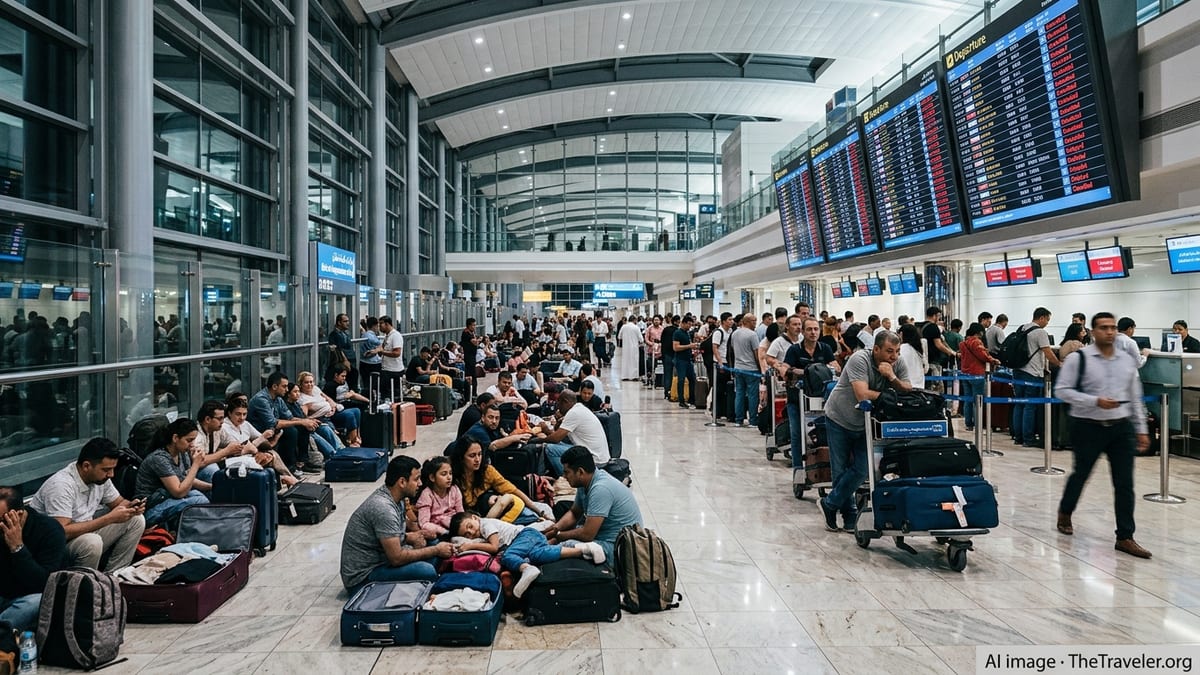
Hundreds of travelers have been left stranded at Dubai International Airport after a wave of more than 30 flight cancellations disrupted one of the world’s busiest air hubs, as airlines continue to grapple with ongoing regional airspace restrictions and operational challenges.
Get the latest news straight to your inbox!
What Triggered the Latest Disruptions at Dubai International
Dubai International Airport has been operating under significant strain since late February 2026, when regional airspace closures and retaliatory strikes linked to the wider conflict involving Iran, Israel, and the United States triggered an unprecedented shutdown across Gulf aviation hubs. Publicly available aviation data and news coverage indicate that Dubai, Abu Dhabi, Doha, and several other airports have all faced waves of suspensions, diversions, and rolling cancellations over the past few weeks, affecting both passenger and cargo services.
According to published summaries of the crisis, operations at Dubai International were cut to a fraction of normal capacity in early March, with thousands of flights across the wider region impacted. This disruption has continued to ripple through scheduled services, leaving airlines regularly adjusting timetables as airspace availability and safety assessments evolve day by day.
In the most recent episode, reports from flight tracking platforms and traveler accounts point to more than 30 flights to and from Dubai International being cancelled over a short window, stranding hundreds of passengers in terminals and nearby hotels. The cancellations have involved a mix of long haul and regional routes, complicating onward journeys for transit passengers in particular.
These latest cancellations follow earlier days when nearly all scheduled flights out of the United Arab Emirates were grounded. While limited operations later resumed and are gradually expanding, the system remains fragile, meaning that even small operational shocks or route changes can cascade into last minute cancellations for passengers.
How Airlines Are Responding
Major carriers using Dubai as a hub, particularly Emirates and flydubai, have been operating a reduced schedule, focusing on select trunk routes and a growing number of repatriation or recovery flights. Published airline notices and widely shared travel advisories emphasize that schedules remain subject to rapid change and that only travelers with confirmed, active bookings should go to the airport.
Some airlines have announced temporary suspensions of services to certain Gulf destinations or have shifted capacity to alternative airports that are less affected by airspace constraints. Publicly available airline updates describe rolling timetable revisions, with some flights reinstated at short notice while others are removed from schedules hours before departure, adding to confusion for passengers trying to leave or transit through Dubai.
At the same time, there has been a visible effort by carriers to clear backlogs through additional services when conditions allow, including one-off recovery flights and expanded lists of repatriation departures on specific days. Travel industry analysis notes that these flights often prioritize passengers who were already ticketed and stranded during the initial shutdown period, leaving fewer open seats for newly disrupted travelers.
Despite these efforts, anecdotal reports from recent days suggest that some stranded passengers are being quoted high walk up fares to secure alternative routes, particularly on remaining long haul services with limited inventory. This has contributed to a sense of frustration among travelers who feel caught between safety driven operational decisions and the commercial realities of constrained capacity.
What Stranded Passengers Are Experiencing on the Ground
Scenes described in recent media coverage and traveler posts from Dubai show crowded terminal areas, long customer service queues, and passengers camping out on benches or floors while they wait for rebooking options. With so many travelers affected since the end of February, hotel capacity in and around Dubai International has been under pressure, and some passengers have reported difficulty finding reasonably priced accommodation at short notice.
For transit passengers whose connecting flights were cancelled mid journey, the situation has been particularly challenging. Many arrived in Dubai expecting short layovers only to discover that onward segments had been removed from the schedule. Public accounts describe confusion over who is responsible for rebooking when itineraries involve multiple airlines or codeshares operating under different policies during the disruption.
There are also practical issues for those stranded longer than expected, including expiring visas, increased travel insurance questions, and the need to manage medications, work obligations, or family responsibilities from afar. Travel industry guidance circulating in recent days encourages affected passengers to keep all documentation of delays and expenses, as these records may later be relevant for insurance or compensation claims where applicable.
At the same time, some coverage has highlighted community responses within Dubai, with residents and local businesses stepping in informally to help travelers who suddenly found themselves without lodging or transport. These stories underline the human impact of what can otherwise appear as abstract statistics about cancelled flights and disrupted airspace.
Key Advice for Travelers Flying Via Dubai Now
For anyone scheduled to travel through Dubai in the coming days, publicly available advisories from airlines, airports, and travel organizations converge on several consistent messages. First, passengers are urged not to go to the airport unless they have a confirmed booking on a flight that is currently showing as operating on the airline’s official channels. Walk up rebooking at the terminal has been described as very limited and time consuming during peak disruption periods.
Second, travelers are encouraged to monitor their booking status frequently in the 24 to 48 hours before departure. Schedules are changing as airspace conditions and operational plans are updated, so a flight showing as active one day may still be retimed or cancelled later. Checking both the airline’s own channels and flight tracking tools can provide a clearer picture of real time operations.
Third, reports indicate that passengers who were in transit or whose journeys were interrupted mid route are generally being prioritized for the earliest available seats on recovery flights. Those yet to start their trips may find it easier to work with their airline or travel agent to postpone travel dates, reroute via less affected hubs, or request refunds in line with the applicable fare rules or conflict related waivers.
Finally, travel experts commenting on the situation emphasize the value of flexibility. Holding alternative routing ideas, being prepared for long layovers, and packing essentials in cabin baggage can all make an unplanned delay more manageable if further cancellations occur.
What to Watch in the Coming Days
The outlook for Dubai International Airport and the broader Gulf aviation network in late March 2026 remains closely tied to regional security dynamics and the pace at which airspace restrictions can be safely eased. Aviation industry commentary suggests that even when headline tensions begin to subside, it may take time for airlines to fully restore their pre crisis schedules and clear accumulated passenger backlogs.
Observers note that the hub and spoke model that has powered Dubai’s growth as a global transit gateway also makes it especially sensitive to disruptions affecting multiple neighboring airspaces. Route planners are having to adjust flight paths and timings to avoid closed areas, which can raise operating costs and reduce available capacity on certain long haul corridors between Europe, Asia, Africa, and the Americas.
For travelers, this means that flight options via Dubai may remain more limited and less predictable than usual in the short term. Prospective passengers are being advised by travel planners to allow extra buffer time for critical trips, consider flexible tickets where possible, and pay close attention to the latest operational updates from their chosen airline.
While the latest wave of more than 30 cancellations at Dubai International underscores how fragile the current situation remains, gradual increases in the number of operating flights in recent days suggest that the airport is slowly moving toward a more stable pattern of service. Until full normality returns, however, anyone planning to pass through the hub should treat schedules as subject to change and prepare accordingly.