

More news on this day
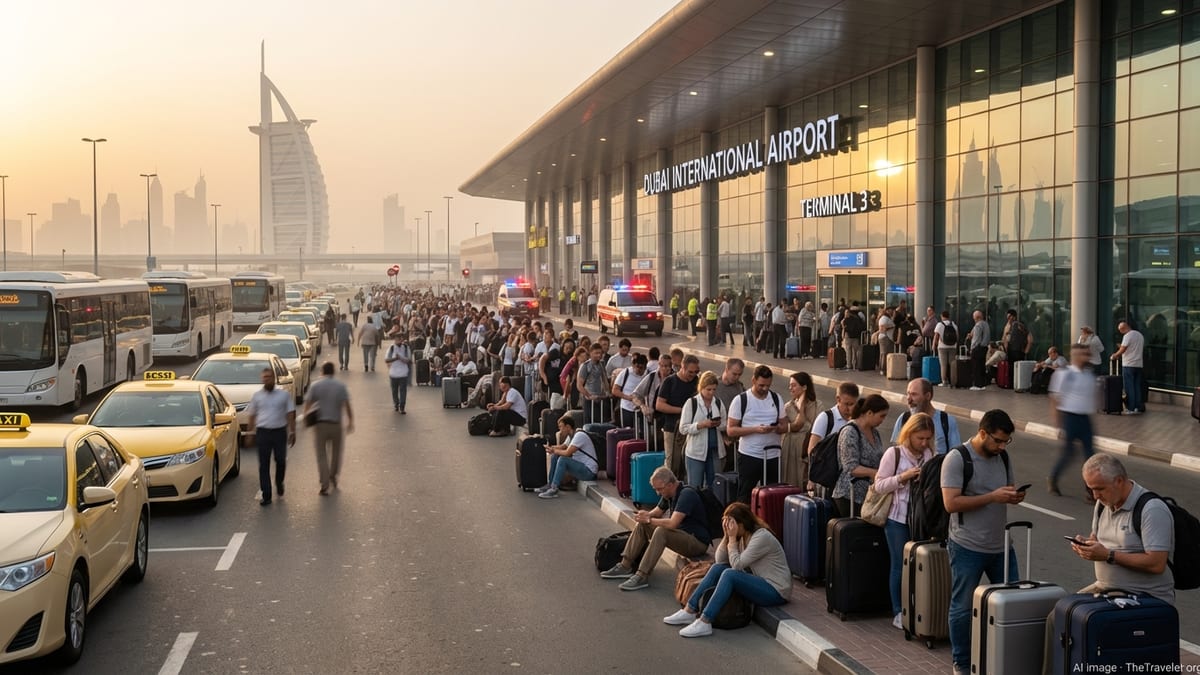
Dubai’s airspace remained closed on Sunday after regional strikes linked to the escalating US-Israel-Iran conflict forced the shutdown of the emirate’s airports, damaged the iconic Burj Al Arab hotel and left thousands of travelers stranded across the United Arab Emirates.
Airspace Closure Halts One of the World’s Busiest Hubs
All commercial flight operations at Dubai International Airport and Dubai World Central Al Maktoum International remained suspended until further notice on Sunday, as authorities grappled with the fallout from Iranian missile and drone strikes that have rattled the wider Gulf region. The sudden halt has frozen movements at what is normally the world’s busiest international hub, disrupting long-haul connections linking Europe, Asia, Africa and Oceania.
The United Arab Emirates’ General Civil Aviation Authority said more than 20,000 passengers had already been directly affected by cancellations and diversions since the first wave of attacks late last week, with analysts warning the number could rise sharply if closures extend over coming days. Airlines have warned of rolling delays, complex re-routings and sharply longer flight times as carriers attempt to skirt closed skies across the Middle East.
Dubai’s airport operator confirmed that parts of a concourse at Dubai International sustained damage in an incident tied to the strikes, although officials described the structural impact as limited and said emergency teams had quickly contained the situation. Authorities have urged residents and visitors not to travel to either airport and to monitor airline updates, as terminals operate in a strictly controlled, emergency-only mode.
Emirates, flydubai and other UAE-based carriers have temporarily suspended scheduled operations to and from Dubai, prioritizing safety assessments and coordination with regulators over any phased restart. Major international airlines in Europe, Asia and North America have also scrubbed Dubai services or routed flights far south and west of the Gulf, creating pressure on alternative hubs and air traffic corridors.
Burj Al Arab and Key Dubai Landmarks Suffer Missile Damage
Among the most striking symbols of the attacks was visible damage to the sail-shaped Burj Al Arab, one of Dubai’s most recognizable landmarks and a flagship for its luxury tourism industry. Regional media and local reports cited impacts and fire in the vicinity of the offshore hotel, part of a wider pattern of strikes that also hit areas near Palm Jumeirah, Jebel Ali Port and residential districts.
Initial images and eyewitness accounts described smoke plumes rising near the Burj Al Arab and emergency vehicles converging on the surrounding coastal roads. While full details on the extent of the structural damage and any casualties at the property remain limited, the incident has heightened global concern about the vulnerability of high-profile tourism assets across the Gulf’s marquee destinations.
Authorities in the UAE have not yet given a detailed assessment of how long restoration and safety inspections at the Burj Al Arab and other affected sites could take, but hotel operators and travel advisors anticipate a near-term impact on bookings, particularly from high-spending leisure and business travelers. Luxury hospitality brands across Dubai have begun fielding waves of cancellation and postponement requests as travelers reassess trips in light of the security situation.
Tourism analysts note that the strikes on such a globally recognized icon carry both immediate and symbolic weight. Dubai has long marketed itself as a secure, stable oasis for upscale travel, regional conferences and major events; images of damage to the Burj Al Arab and airport infrastructure cut against that narrative and may weigh on sentiment even after airspace restrictions ease.
Scenes of Chaos and Uncertainty for Stranded Travelers
Inside Dubai’s terminals, the human toll of the shutdown has been stark. Passengers caught mid-journey described crowded departure halls, limited seating and long queues at airline counters and information desks as staff struggled to rebook thousands on a shrinking number of viable routes. Many reported difficulty accessing food, bottled water and charging points amid rolling security alerts.
Families en route between Africa, Asia and Europe found themselves suddenly marooned in Dubai, with onward connections canceled and only sketchy information about when flights might resume. Some travelers spoke of sleeping on terminal floors overnight, while others scrambled to secure hotel rooms in a city where demand for emergency accommodation surged as the disruption unfolded.
The UAE’s civil aviation authorities said the state would cover accommodation and basic sustenance costs for passengers stranded in the country due to the closures, and that temporary lodging, meals and beverages had already been arranged for tens of thousands of affected travelers. Airport teams and local tourism bodies have set up additional help desks and information points to direct passengers to hotels and shuttle services.
Foreign embassies in the UAE and neighboring states issued advisories urging their citizens to avoid non-essential travel, remain vigilant and register contact details with consular services. Several missions circulated emergency hotlines for those stuck at Dubai and Abu Dhabi airports, reflecting growing concern over the potential length and geographic spread of the airspace shutdowns.
Regional Tensions Ripple Across Airlines and Global Routes
The UAE’s decision to close its airspace came amid a broader regional clampdown, with Iran, Iraq, Israel, Qatar, Kuwait, Bahrain and parts of Jordan and Syria also restricting or shutting flight paths after the latest cycle of attacks. The cascading closures have created a patchwork of no-fly zones that complicates route planning not only for Gulf carriers but also for airlines based in India, Europe and North America.
Industry trackers reported thousands of flights canceled or diverted since Saturday, with global carriers such as Air India, Lufthansa, British Airways, Turkish Airlines and several US operators either halting services into affected airspace or plotting substantial detours. The resulting flight-time increases are expected to drive up fuel burn and operating costs, particularly on long-haul routes that traditionally rely on Dubai, Abu Dhabi and Doha as key transfer points.
Aviation analysts warned that if airspace avoidance persists, airlines could face sustained pressure on margins and network planning, with ripple effects on ticket prices over the coming weeks. Some carriers have begun issuing travel waivers, allowing passengers to rebook or seek refunds without penalty, but warned that re-accommodating everyone quickly would be impossible while major hubs remain offline.
Logistics and cargo flows through the Gulf are also under strain, with freight operators reporting delays and restricted capacity as they navigate the evolving security map. Forwarders say time-sensitive shipments, including pharmaceuticals and high-value electronics, may need to be rerouted via alternative hubs in Europe or East Africa, potentially disrupting supply chains far beyond the Middle East.
Travel Advisories, Insurance Hurdles and What Passengers Should Expect
As the situation unfolds, governments have moved to update travel advisories for the UAE and the wider Gulf, with several warning against all but essential trips to Dubai and other major cities until security conditions stabilize. Tour operators and corporate travel managers are urgently reviewing itineraries, pausing new bookings into the region and working to extract staff already on the ground.
Travel insurers are closely scrutinizing policy language around war, terrorism and civil unrest, which can limit coverage for cancellations or changes prompted by armed conflict. Industry experts advise passengers to read the fine print on existing policies and to contact insurers before making independent changes to itineraries, as some providers may offer flexibility in light of the extraordinary circumstances, while others may decline claims outright.
For travelers currently booked to transit through Dubai in the coming days, airlines are urging customers to monitor official channels, avoid heading to the airport without a confirmed, operating flight and consider accepting alternative routings where feasible. Those with flexible plans are being encouraged to defer non-essential travel to the region until there is clearer guidance on when UAE airspace might reopen.
While Dubai’s aviation and tourism sectors have shown resilience after previous shocks, industry figures caution that the combination of direct infrastructure damage, regional airspace closures and high-profile images of disruption could prolong the recovery timeline. Much now hinges on whether the current bout of hostilities eases quickly or hardens into a longer period of heightened security risk across key Middle Eastern corridors.