

More news on this day
Dubai’s abrupt suspension of flight operations and a partial closure of UAE airspace have unleashed one of the most disruptive aviation events in recent memory, stranding tens of thousands of travelers worldwide and upending key routes between Europe, Asia and Australasia.
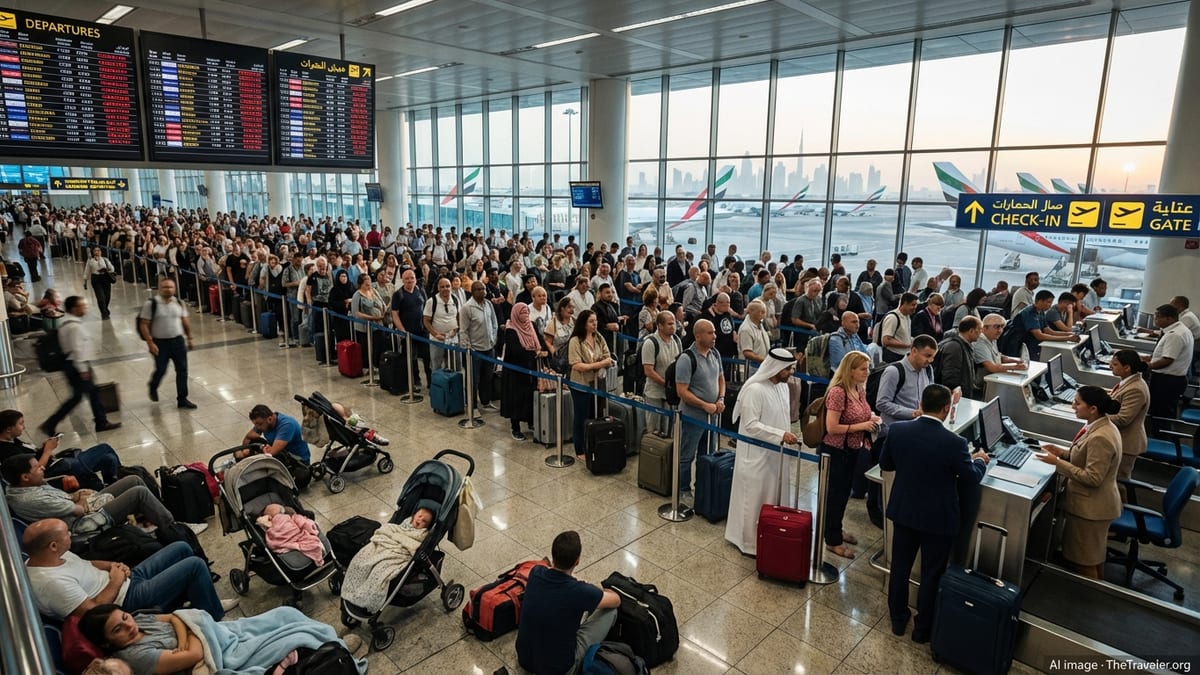
Regional Security Crisis Empties Skies Over the Gulf
The shutdown began on February 28, 2026, when the UAE’s General Civil Aviation Authority ordered a temporary, partial closure of national airspace following US and Israeli strikes on Iran and subsequent missile activity across the region. As a result, Dubai International Airport and Al Maktoum International Airport suspended all flight operations until further notice, effectively closing one of the world’s busiest long-haul hubs overnight.
Airspace restrictions have not been limited to the UAE. Neighboring states including Qatar, Bahrain, Kuwait, Iraq and Iran have also imposed full or partial closures, creating a broad corridor of no-go zones for civilian aircraft across much of the Gulf. Aviation trackers show normally dense flight paths over Iran, Iraq and the southern Gulf now largely empty as airlines reroute or cancel services.
Regulators have reinforced the severity of the situation. Europe’s aviation safety authorities have issued a conflict-zone bulletin warning of a high risk to civil aviation across parts of the Middle East, prompting additional diversions even by carriers that do not normally land in the region but rely on its airspace for overflights between continents.
Industry analysts say the impact will reverberate well beyond the Gulf if closures persist, increasing flying times, squeezing aircraft availability and raising operating costs on some of the world’s most important intercontinental corridors.
Emirates, Etihad and Global Airlines Forced to Ground and Divert
Home carrier Emirates has temporarily suspended all operations to and from Dubai, removing the backbone of its global network from service at its main hub. Low-cost airline flydubai has also halted departures and arrivals, with both carriers advising passengers not to travel to the airport and to monitor airline channels for rebooking and refund options.
Elsewhere in the UAE, Etihad Airways has announced widespread disruption at Zayed International Airport in Abu Dhabi, with outbound flights paused for much of Sunday, March 1, and a rolling series of cancellations affecting inbound services. Other UAE-based airlines, including Air Arabia, are reporting cancellations or delays from bases in Sharjah and Ras Al Khaimah.
International carriers are reacting in waves. Major European, Asian and North American airlines have canceled or rerouted flights to Dubai, Abu Dhabi, Doha and other Gulf gateways, while also avoiding closed airspace in Iran and Iraq. Some long-haul services are operating with significant detours via Saudi Arabian or alternative routes, lengthening flight times and creating tight or missed connections for passengers further down the line.
Global data providers report thousands of cancellations and many more delays across the wider region since the airspace closures were announced, with the Middle East’s role as a connecting bridge between continents amplifying the effect on travelers who never intended to stop in the Gulf.
What Travelers Heading to the UAE Must Do Right Now
For anyone with imminent travel to or through Dubai, Abu Dhabi or other UAE airports, the single most important step is to avoid heading to the airport until a confirmed new departure time is issued. Operators of Dubai’s airports have explicitly urged passengers not to travel to terminals during the suspension period, as terminals are already congested with stranded travelers awaiting new arrangements.
Instead, passengers should use airline apps, official websites, or call centers to check the real-time status of their booking. Emirates, Etihad and other major carriers are generally offering free rebooking within a defined travel window or full refunds for affected flights, but changes must often be processed through the original booking channel. Travelers who booked via online agencies or tour operators should contact those intermediaries first, as airlines may not be able to alter such tickets directly.
Those already in the UAE or in transit should keep boarding passes, receipts and any documentation for meals or accommodation, as authorities and airlines in the country have pledged support for passengers facing prolonged delays. Hotels near airports are heavily booked, but many stranded travelers are being accommodated or reprotected on later departures as capacity becomes available.
Given the volatile security backdrop, industry experts advise building maximum flexibility into any travel plans involving the Gulf over the coming days: avoiding tightly timed connections, being prepared for last-minute schedule changes, and ensuring that mobile phones are set up to receive airline notifications and local alerts.
Managing Future Bookings, Reroutes and Insurance Claims
Travelers with journeys scheduled over the next one to two weeks that rely on Dubai or Abu Dhabi as transit points face difficult decisions. Many airlines have introduced travel waivers that allow customers to change routings or travel dates without standard change fees, particularly for tickets touching closed or high-risk airspace. Where possible, passengers may wish to reroute via alternative hubs in Europe or Asia that do not depend on Gulf overflights.
However, shifting itineraries can be complex. Some carriers are limiting free changes to the same cabin and fare class, and seats on alternative routes are filling quickly as demand spikes. Travelers should act early, remain patient with long call-center queues, and document all communications in case later disputes arise over eligibility for refunds or compensation.
Comprehensive travel insurance with coverage for security-related disruptions and airspace closures can provide an additional safety net, but coverage terms vary widely. Policies purchased after official travel advisories or conflict-zone bulletins were issued may exclude the current events, and many standard products treat war and civil unrest as exclusions. Policyholders should review wording carefully and seek written confirmation from insurers before assuming claims will be honored.
For business travelers, relocation of meetings to virtual platforms or neutral third-country locations may be necessary until flight schedules and airspace access stabilize. Tour operators and group organizers are similarly reworking itineraries and may offer credits or alternative destinations rather than immediate refunds, depending on local consumer-protection rules.
How Long Will the Disruption Last and What Comes Next
Authorities in the UAE and across the Gulf have emphasized that current airspace restrictions are intended as precautionary security measures and are being reviewed continuously as the regional situation evolves. However, with military tensions still high and nearby airspaces either fully or partially closed, aviation planners caution that a rapid return to normality is unlikely.
Even once Dubai and other key airports formally reopen to regular traffic, airlines will need time to reposition aircraft and crews, clear backlogs of stranded passengers and rebuild complex global schedules. The first days after reopening may bring heavy crowding in terminals, lengthy queues at check-in and security, and rolling knock-on delays as operations ramp up.
In the medium term, carriers are expected to adjust flight paths and timetables to reduce exposure to conflict-affected corridors, which could mean slightly longer journeys and altered departure times on some routes connecting Europe, Africa and Asia. Regulatory guidance from safety authorities will play a central role in determining which airspace is considered acceptable for civilian overflights.
For now, travelers to the UAE and those whose itineraries depend on Gulf hubs should closely monitor official statements from local authorities and airlines, keep plans as flexible as possible, and be prepared for further short-notice changes as one of the world’s most important aviation regions navigates an unprecedented shutdown.