

More news on this day
One month into the US–Israel–Iran war, air travel across Dubai and the wider Middle East remains heavily disrupted, with reduced schedules, extended suspensions and complex rerouting still affecting hundreds of thousands of passengers.
Get the latest news straight to your inbox!
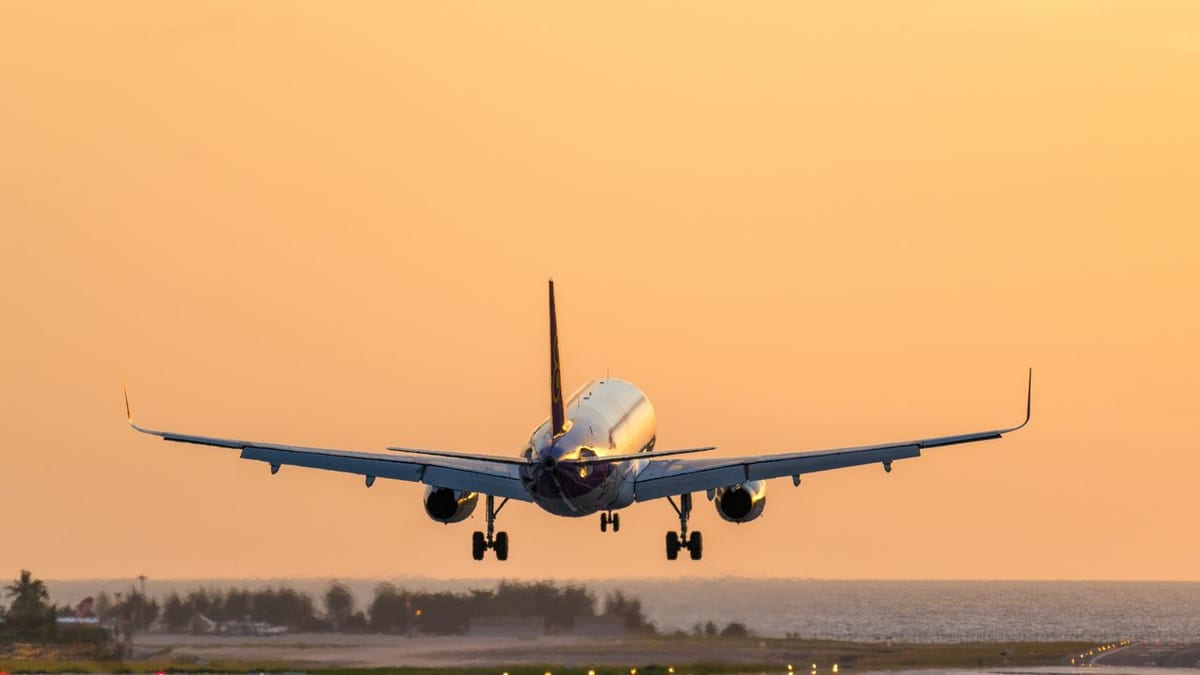
Dubai’s hub role under strain as capacity partially rebounds
Dubai International Airport has moved from a near standstill in early March to a more stable but still reduced operation, as airlines gradually rebuild schedules around ongoing airspace closures. Industry trackers indicate that combined Emirates and Flydubai operations from Dubai are holding at roughly 60 percent of pre war capacity, a level that has changed little since mid March.
Recent schedule data shows Emirates running at around 70 percent of its former frequencies from Dubai, while Flydubai is operating closer to 40 percent. Together they are mounting just over 200 departures per day, compared with more than 350 before the conflict. Airlines are prioritizing high demand trunk routes to Europe, South Asia and key African cities, while more marginal destinations remain suspended or reduced.
Dubai authorities continue to restrict access for some foreign carriers and certain nationalities as part of wider security measures, which limits the ability of overseas airlines to restore their previous presence at the hub. For travelers, this translates into fewer options, tighter connection windows and a greater reliance on rebooking tools as schedules adjust day by day.
Domestic conditions within the United Arab Emirates also affect the picture. Reports indicate that the country has barred most Iranian travelers from entering or transiting, and has temporarily closed longstanding Iranian community institutions in Dubai, narrowing one of the city’s key origin and destination markets at a time of already fragile demand.
Regional airspace closures reshape routes and timetables
The conflict has triggered sweeping restrictions on civil aviation routes across the Middle East, forcing airlines to redraw flight paths that for years have crossed Iranian and Gulf airspace. Travel advisories and aviation notices highlight a patchwork of closures affecting Iran, large parts of the Persian Gulf, Israel and neighboring states, as well as intermittent limitations in Jordan, Iraq and Syria.
On 3 April, Iraq extended the closure of its airspace to all incoming, departing and overflying aircraft for a further week, reinforcing the loss of a key north–south corridor between Europe and the Gulf. Operators have responded by sending services on longer detours over Turkey, the Caucasus and the eastern Mediterranean, adding flight time and fuel costs and sometimes requiring unscheduled refueling stops.
The impact reaches far beyond point to point routes in the region. Analysts note that the primary corridor linking Europe and North America with South and Southeast Asia has been severely disrupted. With Iranian, Iraqi and parts of Gulf airspace unavailable, carriers are funneling traffic through narrower lanes, leading to congestion in some neighboring flight information regions and limiting the number of additional services that can be added.
These detours have also contributed to a sharp rise in airline operating costs. Industry estimates suggest that jet fuel prices have jumped significantly since the conflict began, with some assessments pointing to a doubling within a month. That in turn is feeding through to higher fares, particularly on long haul itineraries that must avoid closed skies.
Extended suspensions from regional and international carriers
While Gulf super connectors attempt to maintain a skeleton network, many regional and international airlines continue to suspend or curtail services into Dubai and other key Middle Eastern airports. A number of European and Asian carriers have pushed back their tentative restart dates several times as safety assessments evolve and airspace restrictions are renewed.
In Central Asia, Kazakhstan’s Air Astana has announced that its suspension of flights to Dubai will remain in place until at least the end of April, citing the ongoing conflict and associated risks. The airline is offering refunds and free rebooking options for affected passengers, including the possibility to reroute via alternative hubs within its network through the end of June.
Consumer rights organizations and travel compensation platforms report that airlines across the region and beyond are still extending suspensions into April on routes touching conflict affected airspace. Gulf Air has shifted a limited operation from Bahrain to Dammam, while some European carriers have halted services to Dubai, Riyadh, Tel Aviv and Beirut for varying periods, pending security reviews.
Data compiled by consultancy and advisory firms points to tens of thousands of cancelled flights since late February, alongside sustained cuts in scheduled capacity. One analysis estimates that Middle East airline capacity fell by more than half in March compared with the previous year, contributing to a small but notable contraction in global seat supply.
Passenger experience: rerouting, longer journeys and higher fares
For travelers using Dubai and other Gulf hubs, the most immediate effects are longer journeys, fewer nonstop options and persistent uncertainty around departure times. Publicly available analysis from aviation trackers suggests that many itineraries now involve additional stops in Europe or Turkey, particularly for passengers moving between North America or Europe and South or Southeast Asia.
Travelers report facing three broad scenarios when booking through the region’s hubs. In some cases, tickets are automatically rebooked onto longer routings that avoid closed airspace but keep the same origin and destination. In others, airlines offer full refunds when routes are suspended for an extended period. A third group of passengers discovers that a carrier has halted a particular route entirely, forcing them to make new arrangements at often higher last minute prices.
Travel advisory services emphasise that schedules remain fluid and that short notice changes are likely, especially on departures transiting conflict adjacent corridors. Passengers are being urged to monitor airline apps closely, reconfirm flights before leaving for the airport and allow extra time for security checks and potential terminal congestion, particularly at Dubai International, Doha’s Hamad International and Abu Dhabi’s Zayed International airports.
Pricing dynamics are also shifting quickly. Industry briefings indicate that some airlines without extensive fuel hedging have introduced or increased surcharges on long haul tickets, with observers warning that surcharges for May could reach record levels if fuel markets remain tight. Business and premium leisure travelers, who rely heavily on Gulf hubs, are expected to bear much of this additional cost.
Tourism and economic fallout for Dubai and Gulf states
Beyond the immediate operational challenges, the war’s aviation impact is feeding into a wider economic shock for Dubai and its neighbors. The emirate’s tourism sector, which depends heavily on air connectivity and short haul visitors from across the region, is experiencing steep declines in arrivals as flight options shrink and travel warnings multiply.
Regional business coverage suggests that hotel occupancy in Dubai has fallen sharply, with some estimates pointing to a 70 to 80 percent drop in visitor numbers compared with normal seasonal levels. Hospitality operators are reported to be cutting staff, closing outlets and renegotiating rents in an effort to survive, while retail and entertainment venues that rely on tourist footfall also face reduced revenues.
Financial analysts caution that a prolonged conflict could put pressure on banking systems and real estate markets across the Gulf, as lower tourism receipts and higher risk perceptions deter investment. Ratings agencies have sketched scenarios in which an intensification of the war might trigger substantial capital outflows from regional banks, underlining how closely aviation, trade and financial flows are linked.
For now, Dubai and other Gulf cities are seeking to project a sense of controlled normality, keeping core services running even as missiles, drones and air-defense activity remain a background concern. With no clear timeline for a ceasefire, travelers planning to use Dubai and Middle Eastern hubs in the coming weeks are being advised to expect continued disruption, higher costs and a travel landscape that can change with little warning.