

More news on this day
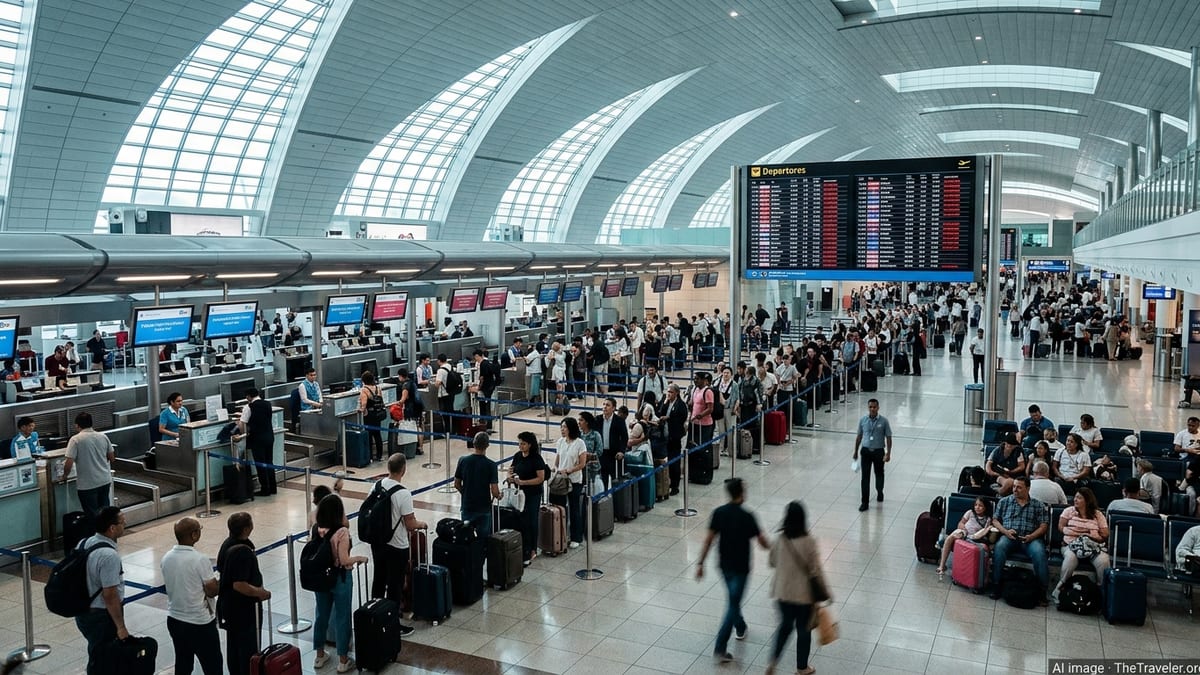
Flights across Dubai and the wider Middle East are slowly resuming on a limited basis after unprecedented airspace closures and drone and missile attacks brought major hubs to a standstill and left hundreds of thousands of passengers stranded.
Get the latest news straight to your inbox!
Key Gulf hubs edge back to life after regional shutdown
Dubai International Airport, one of the world’s busiest long-haul hubs, has begun operating a restricted schedule following the temporary closure of United Arab Emirates airspace in late February, when strikes linked to the Iran conflict disrupted operations across the region. Publicly available flight tracking data shows that a small number of arrivals and departures have now restarted from Dubai International and the city’s secondary hub at Dubai World Central, although frequencies remain far below normal levels.
Information from Dubai Airports and regional business media indicates that the limited restart began on March 2 with carefully managed services to select destinations. The focus has been on moving passengers who were already in transit when airspace was shut, as well as repositioning aircraft and crew that had been diverted or grounded during the height of the disruption.
Reports on aviation advisory bulletins suggest that airspace over the UAE and several neighboring states remains restricted, with flights subject to rerouting and last-minute operational changes. While some carriers have resumed operations under these constraints, many standard commercial schedules through Gulf hubs continue to be suspended, forcing travelers to seek alternative routings through Europe, Africa or Southeast Asia.
Published coverage also points to a phased reopening strategy designed to balance connectivity with risk management. Authorities and airports appear to be prioritizing evacuation-style services and high-demand trunk routes while maintaining limits on overflights and night operations in certain corridors.
Emirates, flydubai and Gulf rivals restart select services
Dubai-based Emirates, the largest long-haul airline serving the region, temporarily suspended regular operations when hostilities escalated and the UAE announced partial airspace closures. According to the airline’s publicly available travel advisories and schedules, Emirates has since introduced a reduced program of flights on key routes, with capacity directed first toward customers whose original journeys were disrupted.
Travel industry updates and passenger communications shared online indicate that these initial flights are operating with tight eligibility rules, often limited to travelers holding existing tickets from the affected period. New bookings on some Middle East and onward long-haul sectors remain constrained, reflecting the airline’s efforts to clear a backlog of stranded customers before expanding sales more broadly.
Flydubai, the city’s low cost carrier, has also begun operating a limited roster of services out of Dubai International and, in some cases, Dubai World Central. Regional media reports suggest that these flights are primarily targeting essential regional links and feeder traffic, with passengers urged to verify their flight status repeatedly in the 24 hours before departure because of the rapidly changing operating environment.
Elsewhere in the Gulf, Etihad Airways in Abu Dhabi and Qatar Airways in Doha are operating irregular schedules shaped by continuing restrictions on regional airspace. Industry data and travel advisories show that some long-haul services have been restored using altered routings that avoid closed corridors, often resulting in extended flight times and additional technical stops.
Wider Middle East sees patchwork of cancellations and partial resumptions
The broader Middle East continues to experience a complex mosaic of cancellations, diversions and partial resumptions. Flight tracking data and news reports describe widespread closures across the airspace of Iran, Iraq, Israel, Qatar, Bahrain and Kuwait around the time of the initial strikes, along with significant operational impacts at hub airports including Doha and Abu Dhabi.
According to regional travel coverage, some countries have since reopened their skies under emergency or limited conditions, primarily to facilitate passenger evacuations, cargo movements and essential government-related travel. Standard scheduled passenger services on many routes remain suspended or heavily reduced, while airlines weigh demand, insurance costs and evolving security assessments.
Carriers based outside the region have also adjusted their approaches. European and Asian airlines have extended suspensions on certain Middle East routes or introduced detours that bypass affected airspace, adding hours to flight times between Europe, South Asia and Australasia. Several operators continue to advise customers to avoid planning nonessential travel through the region until a clearer picture of long-term airspace availability emerges.
South Asian and African gateways are absorbing some of the displaced traffic. Reports indicate that airports such as Muscat, Addis Ababa and Istanbul are seeing increased use as alternative connection points, although these hubs are themselves constrained by aircraft and crew availability and the knock-on effects of earlier disruption.
Stranded travelers slowly move as governments add evacuation flights
The initial airspace closures and hub shutdowns left large numbers of travelers marooned in the Gulf and neighboring states. International news agencies have described scenes of crowded terminals, full hotels and long queues at airline service desks across Dubai, Abu Dhabi and Doha as passengers sought rebooking options or refunds.
As limited commercial flights resumed, several governments organized special services to repatriate their citizens from the UAE and other Gulf states. Recent coverage includes examples such as a dedicated Aegean Airlines operation from Abu Dhabi to Greece, arranged to carry more than 100 passengers and dozens of pets home after security concerns and a drone-related incident near Dubai prolonged delays.
Some of these repatriation flights have been mounted in coordination with the small number of regularly scheduled services that are beginning to operate again, allowing stranded passengers to connect onward via European or Asian hubs. However, capacity on these routes remains scarce and fares on remaining commercial options have risen sharply, according to fare-tracking and travel agency reports.
Travel advisories from multiple governments continue to urge citizens in parts of the Middle East to depart while commercial options exist, warning that further deterioration in security conditions could again reduce connectivity with little notice. The result has been intense demand for any available seat out of the region’s major hubs, especially during short windows when airspace restrictions are eased.
What passengers flying via Dubai and the Middle East should expect now
With aviation in the region still in flux, passengers planning to travel to, from or through Dubai and neighboring hubs are being cautioned by airlines and travel management companies to prepare for ongoing disruption. Publicly accessible advisory documents recommend checking flight status repeatedly before departure, allowing additional time at the airport and staying flexible on routing and dates where possible.
Industry guidance emphasizes that schedules are subject to last-minute changes as airlines respond to dynamic airspace rules, operational constraints and aircraft positioning requirements. Travelers may find their flights rerouted, delayed or rebooked via alternative hubs, and in some cases may be required to overnight en route if previously direct connections are no longer feasible in a single day.
Travel management firms also highlight the importance of understanding ticket conditions and rebooking rules during this period. Many airlines serving the Middle East have introduced short-term waiver policies, allowing one-time changes without standard penalties for passengers whose journeys are affected by the conflict-related disruptions, although fare differences can still apply.
For now, the cautiously expanding but still limited flight network out of Dubai and the wider Middle East offers a gradual release valve for the backlog of stranded travelers. How quickly full connectivity can be restored will depend on developments in the regional security situation and decisions by individual states on reopening their airspace to routine commercial traffic.