

More news on this day
Dubai’s status as the Gulf’s premier convention and business travel hub is facing its toughest stress test in years, as recent security incidents, airport closures and shifting corporate risk appetites ripple through the region’s lucrative meetings, incentives, conferences and exhibitions market.
Get the latest news straight to your inbox!
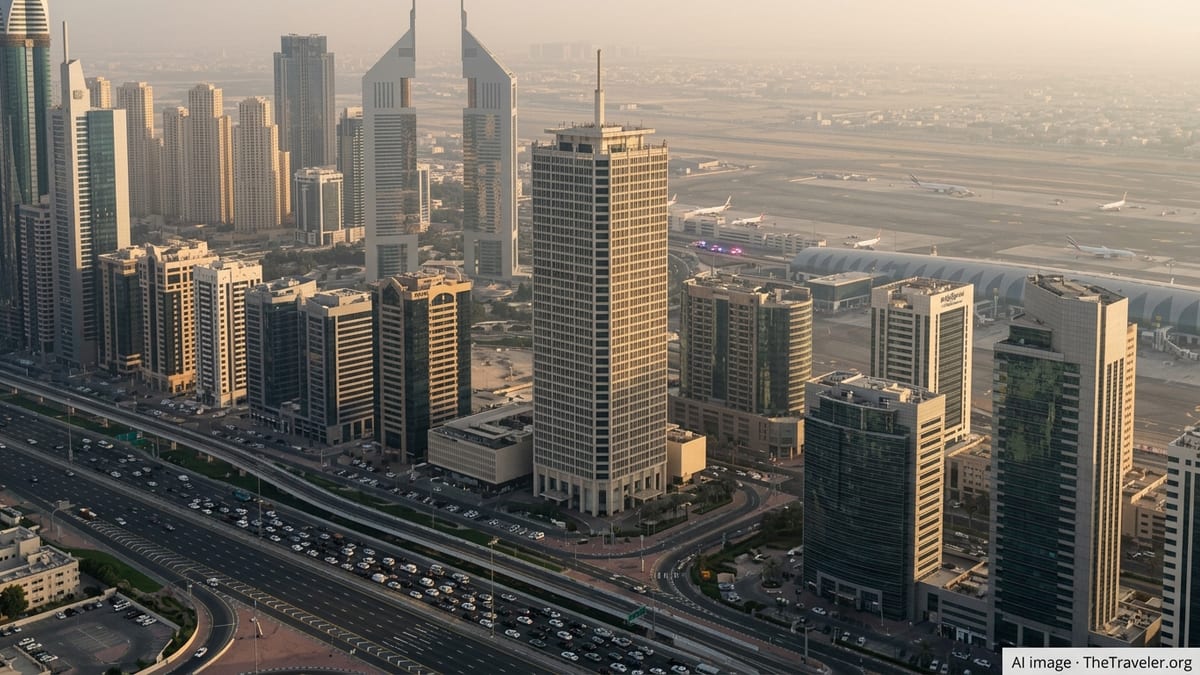
Convention Disruption Highlights New Vulnerabilities
In late February and March 2026, a series of missile and drone strikes linked to the wider Iran conflict hit the United Arab Emirates, with incidents reported near Dubai International Airport and key commercial districts. Publicly available timelines show that air defences were activated around the city, smoke and debris were reported in areas close to major tourism landmarks, and sections of Dubai International were temporarily evacuated as fire alarms and safety protocols were triggered.
These events coincided with a busy calendar of trade fairs, corporate meetings and industry congresses that normally fill Dubai’s convention centers and hotel ballrooms in the first quarter of the year. Organisers moved quickly to pause or reschedule sessions, while some delegates reported being unable to reach venues as flights were cancelled or diverted and public guidance urged travellers to avoid the airport during peak disruption.
While full casualty figures linked directly to convention facilities have not been reported, the impact on logistics and attendee confidence has been immediate. Travel forums, corporate advisories and specialist risk bulletins describe this period as the most far‑reaching disruption to Gulf business activity since the pandemic, with Dubai’s role as a central transit and events hub bringing both advantages and new exposure.
The episode has also forced a reappraisal of contingency planning for large gatherings, with attention focusing on how quickly venues can adapt formats, switch to hybrid participation or relocate high‑profile segments when transport infrastructure is suddenly constrained.
Airport Shutdowns Underscore Hub Risk for Business Travel
As airspace tensions escalated, Dubai International Airport experienced intermittent shutdowns and heavy schedule reductions. Published updates describe hundreds of flights cancelled or delayed over several days, and in at least one instance a near‑total suspension of operations following reports of a drone incident close to fuel facilities. Travel advisories circulated widely, with some airlines halting Dubai services on a rolling 24‑hour basis while damage assessments and safety checks were carried out.
The disruptions at Dubai International, one of the world’s busiest airports for international passengers, quickly propagated through corporate travel programs. Business travellers in transit to conferences in the UAE, Saudi Arabia, Qatar and other Gulf destinations faced missed connections, rerouting through secondary hubs and extended layovers. Company travel managers began revisiting routing assumptions that had long defaulted to Dubai as the most reliable choice for regional access.
Risk consultants and industry analysts note that this concentration of activity at a single mega‑hub has always been a double‑edged sword for the MICE sector. The same network effects that make it easy to attract thousands of delegates from across Europe, Asia and Africa can compound when a security or operational incident disrupts that hub, instantly affecting event attendance, sponsorship obligations and exhibition build‑out schedules.
In response, some event planners are reported to be exploring dual‑hub strategies, with back‑up routings through Doha, Riyadh, Jeddah or Manama and more flexible ticketing arrangements. Others are expanding their use of remote participation tools, not as a replacement for in‑person networking but as a resilience measure that allows panels and training tracks to proceed even if a segment of delegates is stranded.
Gulf States Compete and Collaborate in the MICE Arena
The disruption in Dubai is unfolding against a backdrop of intense investment by Gulf states to position themselves as global convention and corporate meeting destinations. Tourism and aviation reports describe how Saudi Arabia, Qatar, Oman, Bahrain, Kuwait and the UAE have all expanded exhibition space, upgraded airports and relaxed select visa procedures to capture a greater share of high‑spending business visitors.
Qatar’s post‑World Cup infrastructure, Saudi Arabia’s Vision 2030 mega‑projects, Oman’s focus on mixed leisure and conference resorts, and Bahrain’s push as a financial and events gateway are frequently cited as part of a broader regional strategy. Kuwait and Jordan, while smaller in absolute visitor numbers, are also targeting specialised conferences in finance, logistics, energy and professional services to attract repeat corporate audiences.
UAE cities, particularly Dubai and Abu Dhabi, have until now sat at the center of this ecosystem, offering a dense cluster of hotels, purpose‑built convention centers and year‑round air links. Market studies from 2024 and 2025 show that the UAE and Saudi Arabia together capture a substantial share of regional MICE demand, with Dubai World Trade Centre and major hotel‑attached venues consistently ranked among the busiest facilities in the Middle East.
Analysts suggest that recent events may accelerate both competition and collaboration across the Gulf. On one side, alternative hubs in Doha, Riyadh or Muscat could win short‑term relocations of specific congresses seeking perceived stability. On the other, shared initiatives such as a proposed common Gulf visa and the long‑planned GCC Railway project are designed to make cross‑border itineraries easier, allowing multi‑city conferences that distribute both risk and economic benefits.
Corporate Risk Management and Insurance Under the Spotlight
The Dubai convention incident and airport shutdowns are also reshaping how corporations and insurers view Gulf business travel. Travel risk advisories issued in early March emphasised the need for more granular contingency planning, including pre‑identified alternative meeting locations within the region, diversified routing via secondary airports and explicit thresholds for switching events from fully in‑person to hybrid formats.
Insurance specialists note growing scrutiny of policy language around war, terrorism and so‑called major disruptive events. Recent public disputes over whether conflict‑linked incidents in Dubai qualify guests or delegates for refunds under accommodation and event cancellation policies have brought attention to the fine print that governs how financial losses are shared between organisers, venues and travellers.
For the MICE sector, this recalibration is likely to manifest in higher demand for specialised event cancellation cover, more detailed risk assessments when choosing dates and locations, and closer alignment between security consultants, legal teams and marketing departments. Organisers are increasingly expected to communicate clear escalation protocols to exhibitors and delegates, outlining what will happen if airspace restrictions, transport shutdowns or local security alerts coincide with show dates.
Corporate travel managers, meanwhile, are under pressure to balance employee safety with the strategic importance of face‑to‑face engagement in markets such as the Gulf, where relationship‑driven business practices remain strong. Industry surveys conducted ahead of 2026 had already pointed to a robust rebound in Middle East business travel, driven in part by MICE demand; how that momentum adjusts in the wake of early‑year disruptions is now a key question for airlines, hotels and destination marketing bodies.
Short‑Term Shock, Long‑Term Test for Regional Tourism
Tourism forecasts for the Gulf entering 2026 were broadly optimistic, projecting steady growth in both leisure and business segments and highlighting the role of large‑scale events, exhibitions and corporate conventions as key demand drivers. The recent wave of disruptions has not yet overturned that long‑term narrative, but it has exposed how quickly confidence can be shaken when security incidents intersect with high‑density transport and events infrastructure.
In the near term, market observers anticipate a dip in international arrivals to Dubai relative to earlier projections, particularly among cautious corporate clients and travellers from markets with stricter internal risk thresholds. Some events are expected to scale back delegate numbers, extend virtual participation options or stagger programming to reduce crowding around specific dates perceived as higher risk.
At the same time, the broader Gulf region is working to maintain momentum by stressing diversification and redundancy. Abu Dhabi’s positioning as a stable policy and conference center, the growing convention offerings in Riyadh and Doha, and niche plays in Manama, Muscat and Amman create options for organisers seeking regional presence without concentrating all activity in a single city.
How quickly Dubai can normalise flight schedules, demonstrate the effectiveness of its protective infrastructure and reassure global meetings planners will help determine whether this episode is remembered as a temporary shock or a structural turning point. For now, the incident stands as a reminder that the same connectivity that built the UAE’s convention industry also makes it sensitive to geopolitical tremors, with implications for MICE and business travel strategies across Saudi Arabia, Qatar, Oman, Bahrain, Kuwait, Jordan and the wider region.