

More news on this day
Dubai and South Africa’s major coastal and commercial hubs are entering a new phase of cooperation, with fresh airline capacity, reinforced partnerships and targeted tourism campaigns tightening links between Dubai and Durban, Cape Town and Johannesburg and promising a reshaped experience for future travelers.
Air Connectivity Between Dubai and South Africa Accelerates
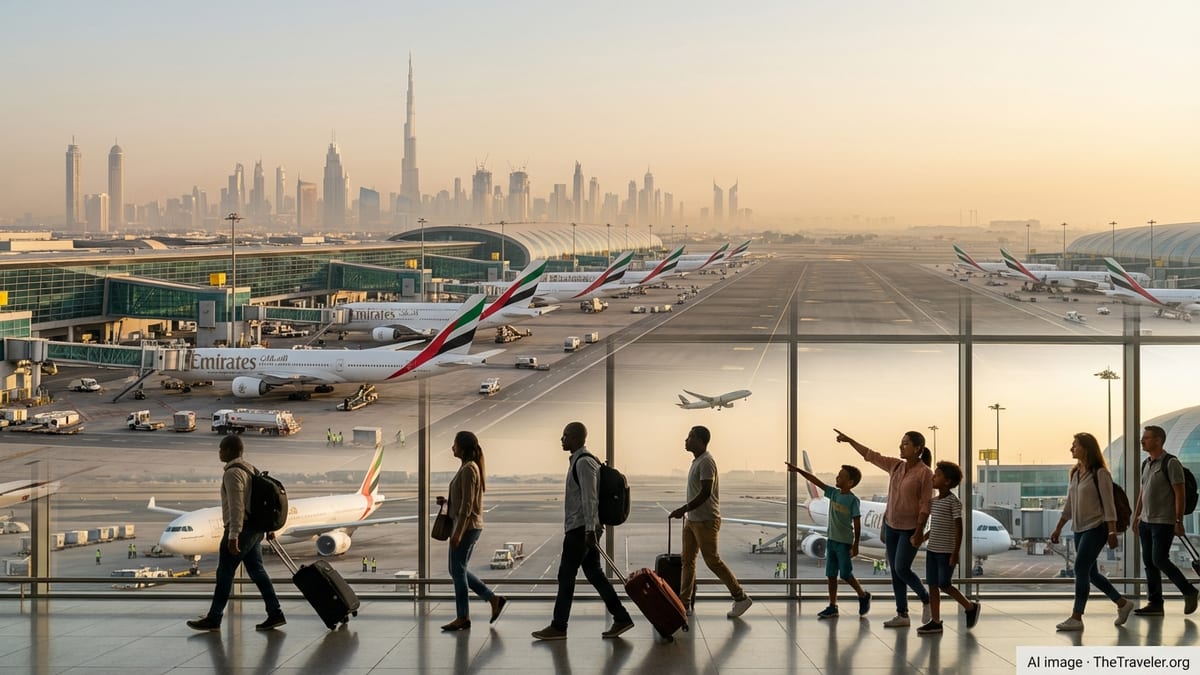
Air links between Dubai and South Africa’s three main gateways are being reinforced at a pace that underscores the strategic importance of the market for Gulf carriers. Emirates has restored and then steadily expanded operations to Johannesburg, Cape Town and Durban following the pandemic downturn, and is now planning one of its largest-ever schedule commitments to the country, cementing Dubai’s role as a primary hub for South African travelers heading to Europe, Asia and the Middle East.
Johannesburg, the country’s primary international gateway, has seen service built back up to four daily Emirates flights, including double daily A380 operations at peak periods. Cape Town is already served twice daily and is slated to receive a third daily frequency from mid-2026, adding more than 600 additional seats per day into the city. Durban, which returned to the carrier’s network when services to multiple African countries were restored, provides a crucial coastal link that channels leisure traffic from KwaZulu-Natal into long-haul routes via Dubai.
For South African passengers, these expanded schedules translate into more departure time options, shorter connection windows and better access to secondary destinations across Europe and Asia that are not served nonstop from Southern Africa. For Dubai, they ensure a steady and growing pipeline of high-yield leisure and business travelers, reinforcing its position as a super-connector between Africa and the rest of the world.
The increase in capacity also reflects a confidence that two-way tourism demand will continue to rise. South Africans are once again traveling abroad in higher numbers, while Dubai’s appeal as a short- to medium-haul holiday from South Africa is widening beyond traditional stopover traffic, supported by streamlined visa policies and a steady flow of city-led promotional campaigns.
Codeshares and Airline Partnerships Reshape the Travel Map
Beyond raw seat capacity, a new phase of strategic cooperation between airlines is quietly redrawing the map for travelers moving between South African cities and Dubai. Emirates and South African Airways have agreed a deeper partnership framework, building on nearly three decades of collaboration to move toward a fully reciprocal codeshare and expanded commercial cooperation.
Under the enhanced arrangement, Emirates customers connecting through Johannesburg will gain access via codeshare to domestic flights to Cape Town, Durban and Gqeberha, along with more than a dozen regional points elsewhere on the continent. South African Airways customers, in turn, can access a growing list of routes beyond Dubai on a single ticket, giving them smoother one-stop connections to Asia, the Middle East and parts of Europe that may otherwise require backtracking via other hubs.
For travelers, the practical impact will be felt in several ways: coordinated schedules that reduce connection times, through check-in of baggage from secondary South African cities to final destinations in Asia or Europe, and the ability to earn and redeem loyalty miles across a broader combined network. For Durban and Cape Town in particular, codeshare feed via Johannesburg is expected to enhance their visibility as origin points in airline reservation systems worldwide.
This tighter network integration comes as both Emirates and South African Airways seek to leverage their respective strengths: Dubai’s status as a global hub with extensive long-haul reach, and South Africa’s domestic and regional footprint. As the arrangement matures, industry analysts expect to see more joint marketing, aligned corporate sales efforts and potentially deeper cooperation in cargo, all of which would indirectly support tourism flows.
Tourism Boards Step Up Joint Marketing Efforts
Aviation capacity alone does not create tourism demand; destination marketing and on-the-ground experiences complete the picture. Dubai’s Department of Economy and Tourism has been increasingly active across South Africa, organizing roadshows in Johannesburg, Cape Town and Durban and working with local travel agents and tour operators to position Dubai as a stand-alone holiday destination rather than simply a transit point.
These initiatives foreground Dubai’s mix of shopping festivals, family attractions and beach resorts while also pushing emerging themes such as cultural tourism in historic neighborhoods, culinary experiences and desert-based eco-adventures. For South African travelers, who have traditionally favored destinations in Europe, the Indian Ocean islands and Southeast Asia, the message emphasizes convenience, competitive pricing during off-peak periods and a familiar blend of coastal leisure and urban entertainment.
On the South African side, national and city tourism bodies are eager to tap into Dubai’s outbound market and the broader Gulf region. Delegations from Cape Town, Durban and Johannesburg have participated in trade and investment summits hosted in the United Arab Emirates, promoting everything from wine tourism and wildlife reserves to major events and conference facilities. The aim is to capture a larger share of high-spending visitors who already see Dubai as an accessible hub and might be persuaded to bolt on a South African leg to their itineraries.
Joint campaigns are increasingly designed around specific themes, such as twin-center holidays that pair Dubai’s urban skyline with Cape Town’s mountains and vineyards, or packages that combine a few days in Dubai with a safari or beach stay near Durban. Over time, these curated products are expected to become more visible in global distribution systems and online travel agencies, giving future travelers more structured options to combine both destinations in a single trip.
Durban, Cape Town and Johannesburg Carve Out Distinct Roles
Although often grouped together in airline schedules and tourism campaigns, Durban, Cape Town and Johannesburg occupy distinct niches in the emerging Dubai–South Africa travel corridor. Johannesburg, as the country’s largest city and financial hub, remains the primary anchor for business travel and conference traffic. High-frequency widebody services into its main airport give corporate travelers flexible options and are attractive to global companies coordinating meetings across time zones.
Cape Town, with its landscape-driven appeal, continues to serve as South Africa’s flagship leisure destination. The planned third daily Dubai service is seen locally as an endorsement of the city’s year-round tourism potential, spreading arrivals more evenly across the calendar and reducing the extreme seasonality that has historically strained accommodation capacity in peak summer months. The additional evening departure also creates more seamless overnight connections for visitors from Asia and the Middle East heading directly to the Cape.
Durban, long considered a domestic beach favorite rather than an international gateway, is slowly emerging as a complementary coastal option for visitors from the Gulf and beyond. Its subtropical climate, surf culture and proximity to game reserves provide a different flavor of South African holiday compared with Cape Town, and tourism authorities are increasingly marketing it as a relaxed, family-friendly extension to Dubai stays. As connectivity consolidates and codeshares deepen, travel packages that include Durban as a secondary stop are expected to become more widely available.
For future travelers, this differentiation is likely to translate into more tailored itineraries. Business visitors may route through Johannesburg with side trips to Cape Town’s winelands, while families on multi-generational holidays could combine Dubai’s theme parks with Durban’s beaches and regional safaris. As airlines and tour operators refine their product offerings, the three cities’ varied identities will form a core part of the narrative sold to international customers.
New Airport Investments Signal Long-Term Growth
The strengthening of tourism links between Dubai and South Africa is unfolding against a backdrop of ambitious infrastructure investment in the Gulf. Dubai is pressing ahead with an expansive redevelopment of its secondary airport with the stated ambition of creating one of the world’s largest aviation hubs, featuring multiple runways and hundreds of gates capable of handling significantly more traffic than today’s main airport.
At the same time, carriers based in Dubai are ordering new-generation aircraft in large numbers, a signal that they anticipate sustained growth in medium- and long-haul demand. For South African routes, this opens the possibility of more capacity flexibility, with airlines able to deploy different aircraft types seasonally or add frequencies as demand justifies, especially on city pairs where load factors are consistently strong.
South African airports are also investing in modernization projects, including terminal enhancements and runway upgrades at Johannesburg and Cape Town, as well as facilities improvements at Durban’s international airport. While not as high-profile as Dubai’s mega-hub plans, these changes are aimed at improving passenger experience, reducing congestion at peak times and enhancing the attractiveness of South Africa as a long-haul destination.
The convergence of these investments suggests that the current wave of capacity growth between Dubai and South Africa is not merely a short-term recovery play. Instead, it points to a structural shift in how traffic between Africa and the wider world is routed, with Dubai securing an even more prominent role as a transfer and short-break destination for South Africans and as a springboard for Gulf travelers heading toward Southern Africa.
What Future Travelers Can Expect on the Route
For individual travelers planning trips in the coming years, the tangible benefits of these developments will largely manifest in choice and flexibility. Higher weekly frequencies from Johannesburg and Cape Town into Dubai mean more departure and arrival times to fit around business meetings, cruise departures or safari check-ins. As additional services are added and codeshares deepen, passengers originating in secondary cities will have more one-stop options rather than needing to position themselves via multiple hops.
Onboard, the gradual deployment of refitted widebody aircraft on South African routes is bringing upgraded cabins, including the introduction of premium economy on certain services. For long overnight flights between Dubai and South Africa, these changes could significantly improve comfort, particularly for leisure travelers who are price-sensitive but willing to pay a supplement for extra space and amenities.
At the booking stage, the integration of airline and tourism board campaigns should result in a wider selection of bundled products. Travelers may encounter more offers that combine flights, hotels and experiences across both Dubai and South Africa, with transparent pricing and pre-arranged transfers. For time-poor visitors, such packages remove the guesswork of building multi-stop itineraries, while still allowing for flexibility in the number of nights spent in each city.
Customer expectations will also be shaped by more seamless digital journeys. Enhanced cooperation between carriers and tourism authorities typically includes shared investment in apps and online platforms that support everything from visa information and itinerary planning to real-time alerts during disruptions. With both Dubai and South Africa keen to showcase themselves as modern, visitor-friendly destinations, digital convenience will likely become as important as physical connectivity in defining the overall travel experience.
Opportunities and Challenges for Both Destinations
While the trajectory for Dubai–South Africa tourism links appears positive, the evolving landscape presents both opportunities and challenges. On the opportunity side, South African destinations stand to benefit from diversifying their source markets, reducing overreliance on traditional origin countries in Europe and North America. Visitors arriving via Dubai are often part of a younger, more globally mobile demographic, with strong interest in experiential travel, food and culture, which aligns well with the offerings of cities like Cape Town and Durban.
Dubai, for its part, gains from anchoring itself more firmly in African travel patterns at a time when the continent’s middle class is expanding and outbound travel is projected to grow. South Africa provides a natural entry point for Gulf carriers seeking deeper penetration into the region, and a robust two-way tourism flow bolsters wider trade and investment relations discussed at forums and summits between the United Arab Emirates and African partners.
The challenges, however, should not be underestimated. South Africa’s tourism sector must continue addressing issues around safety perceptions, infrastructure reliability and service standards to ensure that first-time visitors arriving via Dubai become repeat customers. Dubai, meanwhile, faces intensifying competition from other global hubs aiming to capture African transit traffic, and must keep innovating in areas such as airport processing, pricing and visitor experiences to maintain its edge.
For future travelers, the pace and direction of policy decisions on both sides will matter. Continued simplification of visa processes, investment in sustainable tourism initiatives and coordination around major events will help determine how seamless and attractive combined Dubai–South Africa journeys become. What is clear is that Durban, Cape Town and Johannesburg will be central nodes in this evolving network, as Dubai’s expanding appeal intersects with South Africa’s enduring draw as one of the world’s most diverse long-haul destinations.