

More news on this day
From sunrise dune drives to starlit glamping, Dubai’s desert safaris are emerging as one of 2026’s most talked-about travel experiences, blending high-adrenaline adventure with slow-travel luxury in the Arabian sands.
Get the latest news straight to your inbox!
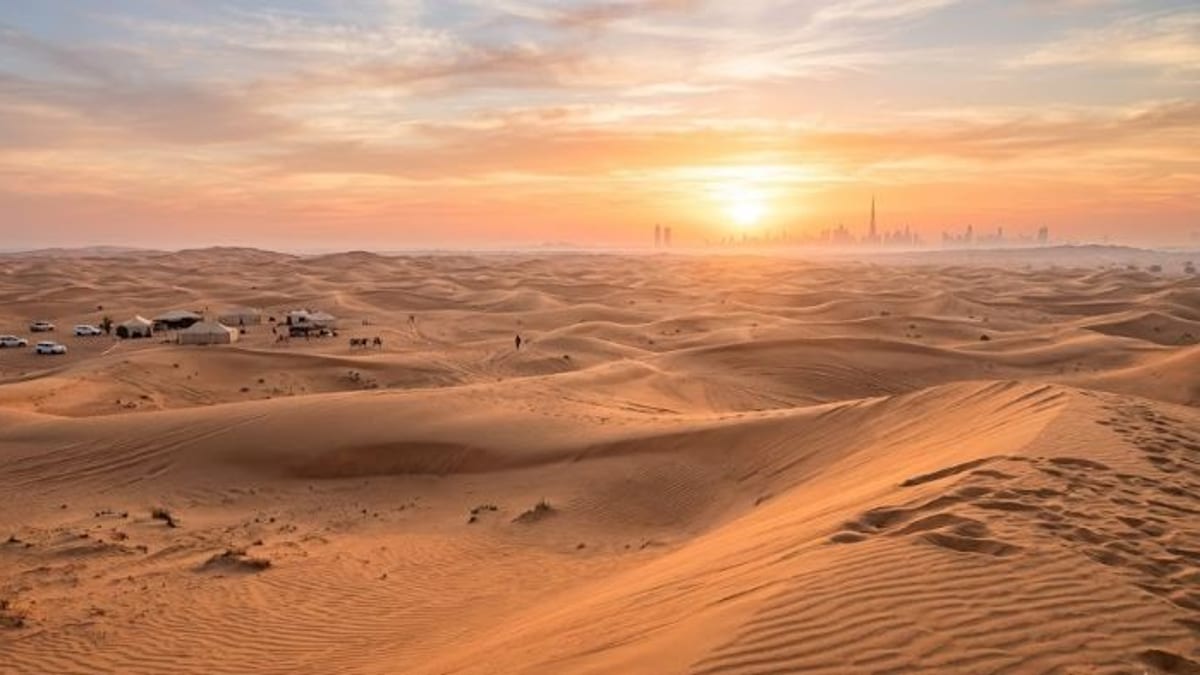
Image by Latest International / Global Travel News, Breaking World Travel News
Desert Safaris Move Center Stage in Dubai’s Tourism Boom
Dubai is entering another record tourism year, and the desert is playing a central role in that story. Recent visitor figures released by Dubai’s Department of Economy and Tourism show the emirate welcoming close to 20 million international travelers annually, with desert excursions now firmly established as a core part of the destination’s appeal. Industry briefings describe desert safaris as a bucket-list experience for international visitors, often ranked among the city’s most sought-after tours.
Desert safari participation is now measured in the millions each year, with one tourism analysis indicating that more than 40 percent of international visitors opt for at least one dune-based experience during their stay. Market research on desert tourism further suggests that safari-style activities, including four-wheel-drive dune drives and camel treks, account for a significant share of global desert travel bookings, underlining how Dubai’s model is shaping wider adventure trends.
Travel-focused outlets report that social media visibility has amplified the appeal of these trips, as images of sweeping golden dunes, sunset silhouettes and campfire gatherings circulate widely on platforms such as Instagram and TikTok. That visibility, paired with Dubai’s expanding air connectivity and year-round events calendar, is helping transform what was once a niche excursion into a headline reason to visit.
The city’s 2026 official visitor guide places desert experiences alongside beaches, shopping and dining as a primary pillar of the destination. This reflects a broader shift in traveler behavior, with global surveys showing rising demand for experiential, nature-based activities that go beyond traditional urban sightseeing.
From Dune Bashing to Desert Luxe: Experiences Go Upmarket
While classic dune bashing in a 4x4 remains a signature thrill, Dubai’s desert safaris are rapidly evolving into tiered experiences that range from budget-friendly group outings to ultra-luxury private expeditions. Tour operators are promoting premium products built around small-group or private vehicles, gourmet multi-course dinners, and curated camp designs that echo boutique hotels more than rustic encampments.
Local travel coverage highlights the rise of “desert luxe,” with new and upgraded camps offering plush lounges, air-conditioned lounges in select setups, curated menus and dedicated hosts. Recent reports in regional media describe intimate, low-density camps designed specifically for families and VIP travelers, with additional features such as private fire pits, telescope-assisted stargazing, and enhanced privacy away from the busiest sites.
Adventure specialists are also investing in high-spec vehicles, including powerful dune buggies and performance off-road models aimed at enthusiasts seeking more control than a standard shared 4x4 ride. Company announcements in early 2026 have showcased new fleets of advanced buggies and side-by-sides positioned as “ultimate dune machines,” signaling an arms race in both comfort and capability on the sand.
At the same time, evening and overnight safaris are gaining traction with travelers looking to balance thrill with atmosphere. Travel features published in 2025 and early 2026 note steady growth in sunset and after-dark departures, giving visitors a way to avoid midday heat while extending time in the dunes with live entertainment, fire shows and long-table dinners.
Sustainability, Heritage and Wildlife Shape the New Narrative
Alongside the luxe upgrade, Dubai’s desert safaris are being reshaped by sustainability and heritage storytelling. Publicly available information about the Dubai Desert Conservation Reserve highlights a protected area of more than 200 square kilometers, where a growing number of operators run low-impact, conservation-focused drives that emphasize native flora and fauna over aggressive dune bashing.
Several safari brands now market itineraries that swap high-speed driving for wildlife spotting, astronomy sessions and guided talks on Bedouin traditions. Industry articles describe a shift in guest preferences, with many visitors rating wildlife encounters, falconry demonstrations and traditional performances among the most memorable parts of their experience, often outranking pure adrenaline activities.
The trend mirrors global moves toward responsible tourism. Market research on desert tourism notes that operators worldwide are investing in eco-friendly camps, hybrid or low-emission vehicles and digital guide tools. In Dubai, this has translated into camps built with lighter infrastructure, reduced single-use plastics and initiatives to limit disturbance to fragile dune ecosystems.
Heritage is also stepping forward as a key selling point. Some experiences incorporate storytelling around historic desert trade routes, Bedouin hospitality rituals and Emirati cuisine, with menus increasingly spotlighting local dishes alongside international buffets. According to coverage in regional travel magazines, visitors are responding positively to this deeper narrative layer, viewing it as a way to connect with the culture behind the skyline.
Family-Friendly Thrills and Tailored Safaris for Every Traveler
Another reason Dubai’s desert safari is dominating travel talk in 2026 is its versatility. Operators are tailoring products to specific segments, from first-time family visitors to repeat travelers and serious photographers. Family-focused safari companies now advertise gentler dune drives, flexible pickup times and kid-friendly camp activities, positioning the desert as a place to unplug together rather than just chase thrills.
Budget-conscious group tours remain widespread, but premium and semi-private formats are expanding fast. Consultancy insights and trade coverage indicate growing demand from couples, multigenerational groups and corporate travelers for customizable itineraries that might combine dune bashing with sandboarding, quad biking, falcon encounters or extended camel treks, instead of a one-size-fits-all program.
Online discussion forums show that travelers are increasingly selective about which operators they choose, citing differences in driving intensity, crowding at camps and food quality. This scrutiny is pushing companies to differentiate through safety standards, staff training and transparent inclusions, while also encouraging innovation such as photography-focused safaris and yoga-in-the-desert experiences.
Dubai’s broader tourism strategy, as outlined in recent government and industry documents, emphasizes diversification across neighborhoods and natural landscapes. Desert safaris fit neatly into this plan, drawing visitors beyond the urban core and creating new demand for complementary services such as transport, hospitality and retail in surrounding areas.
What Travelers Should Expect From a 2026 Dubai Desert Safari
For travelers planning a Dubai trip in 2026, public information and current operator offers point to several defining features of the modern desert safari. Most itineraries bundle hotel pickup, a dune drive in areas such as Al Lehbab, a short camel ride and a visit to a desert camp, where guests can expect an evening of food, soft drinks, and live performances. Pricing spans a wide spectrum, from value group options to high-end conservation or private safaris costing several hundred dollars per person.
Recent consumer guides advise visitors to look closely at group sizes, vehicle types, conservation policies and camp locations when comparing offers. Crowding and brief activities are a common complaint on low-cost tours, while midrange and premium operators typically advertise longer dune drives, more spacious camps and upgraded dining experiences.
Seasonality also plays a role. Cooler months from roughly November to March remain the most popular time for desert activities, and industry briefings suggest operators are already forecasting strong demand through the 2025–2026 winter season. In the hotter months, interest is shifting toward early-morning and late-evening departures, as well as shorter or indoor-supported formats that keep guests comfortable.
With social media continuing to amplify the allure of the dunes and Dubai doubling down on experiential tourism, the desert safari is poised to remain at the center of the city’s travel narrative. For many visitors in 2026, it is no longer an optional add-on to a beach and shopping itinerary but a primary reason to book a ticket to Dubai in the first place.