

More news on this day
Unprecedented airport shutdowns in Dubai and Doha triggered by the escalating Iran conflict are rippling across global travel networks, stranding tourists and dealing a severe blow to Middle East tourism in March 2026.
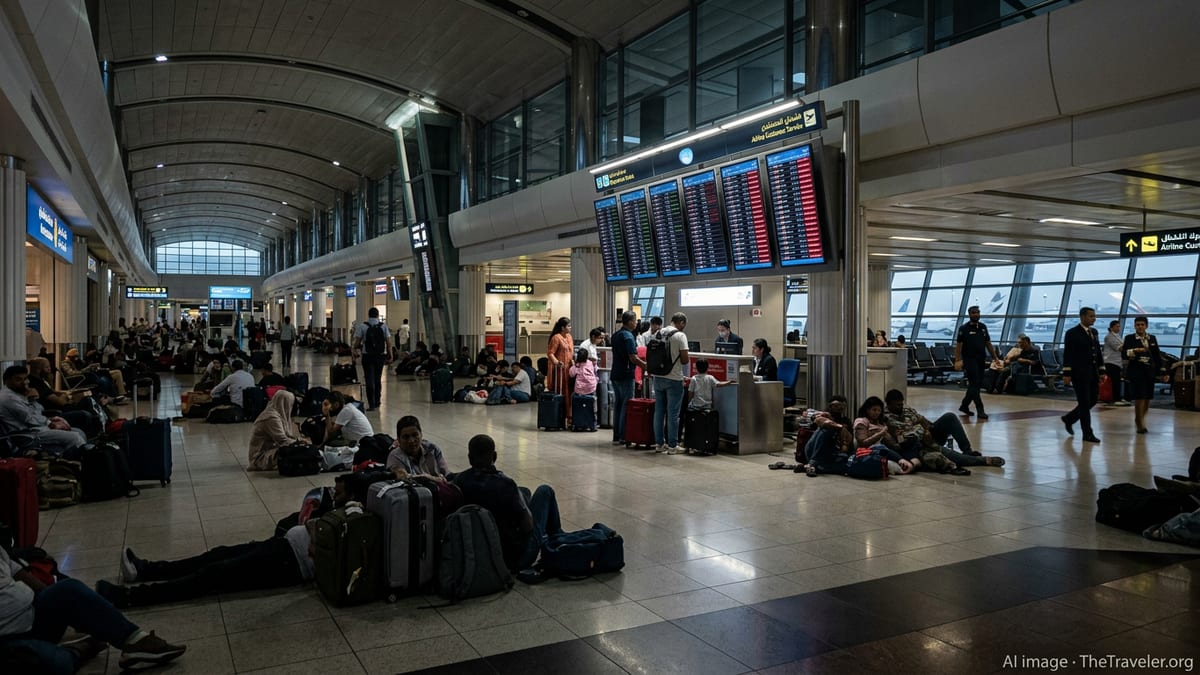
How the Iran Conflict Grounded the Gulf’s Biggest Hubs
The latest escalation in the U.S., Israel, and Iran conflict has turned the Gulf’s normally seamless air corridors into a patchwork of closures and no-fly zones, with Dubai International and Doha’s Hamad International at the center of the disruption. After Iranian missile and drone strikes targeted key infrastructure across the region, authorities moved swiftly to shut or severely restrict airspace over parts of the United Arab Emirates and Qatar.
By early March, major Gulf hubs including Dubai, Doha, and Abu Dhabi had either halted operations entirely or were running at a fraction of normal capacity. Flight tracking data indicates that more than 20,000 flights have been canceled across seven key Middle Eastern airports within just a few days, an interruption on a scale not seen since the height of the COVID-19 pandemic.
Dubai, typically the world’s busiest international airport, briefly went dark to commercial traffic before reopening on a limited basis for carefully routed departures and arrivals. Doha remains more constrained, with Hamad International effectively isolated for several days running and Qatar Airways suspending many regional services, leaving its usually bustling transit halls eerily quiet.
Authorities and airlines stress that the closures and restrictions are driven above all by airspace safety concerns. With Iranian-controlled skies and nearby flight information regions considered high-risk, carriers have been forced to reroute or ground services entirely, upending the Gulf’s role as a dependable bridge between Europe, Asia, Africa, and the Americas.
Stranded Travelers and Patchwork Evacuation Options
The immediate human impact has been visible in crowded terminals, hotel lobbies, and cruise ports from Dubai Marina to Doha’s West Bay. Tens of thousands of travelers have found themselves trapped in transit, unable to reach onward connections or return home as scheduled. Social media has been flooded with images of departure boards filled with cancellations and lines snaking through rebooking desks.
For many stranded visitors, especially those on package holidays or business trips, the only option has been to sit tight and hope for a seat on scarce relief or repatriation flights. Governments in Europe, Asia, and North America have begun coordinating charter operations to extract citizens, but capacity remains limited and demand far outstrips supply.
At the higher end of the market, the crisis has created a surge in demand for private and semi-private charter flights, with some travelers reportedly paying six-figure sums to secure last-minute departures to Europe via secondary airports judged to be safer. This stark divide between those able to buy their way out and families sleeping on terminal floors has further underscored the uneven nature of the disruption.
Travel advisories have hardened in recent days, with foreign ministries urging citizens to avoid nonessential trips to much of the region and, in some cases, to leave while commercial options remain. Airlines are advising passengers not to head to the airport without written confirmation that their flight is operating, a reversal of the pre-conflict norm in hubs famed for near-constant connectivity.
Tourism Revenues at Risk Across the Middle East
The timing of the closures could hardly be worse for Middle Eastern tourism. March is traditionally a peak month for city breaks and sun-seeking winter escapes in the Gulf, with Dubai and Doha marketing themselves aggressively as safe, modern stopover and destination cities. Instead, hotel booking systems are now processing a wave of cancellations and refund requests.
Early economic assessments suggest the region faces a multi-billion-dollar hit to tourism and travel revenues in 2026 if the crisis endures. Forecasts that had predicted double-digit growth in international arrivals have been hastily revised to project double-digit declines, with analysts warning that visitor spending losses could run into tens of billions of dollars as long-haul travelers reroute via hubs in Europe, Turkey, or South Asia.
Within the Gulf, the pain is unevenly spread. Dubai, which had diversified its visitor base and attractions, is still reeling from park closures, suspended attractions and a dramatic drop in transit traffic. In Qatar, where the national carrier relies heavily on its Doha hub for global connectivity, the shutdown of Hamad International has proved even more damaging, cutting off a vital artery for inbound tourism and business travel.
The broader Middle East is feeling the secondary shock. Beach resorts along the Red Sea, heritage destinations in Jordan and cultural hotspots in Lebanon and Egypt are all reporting cancellations from guests who were due to connect through Dubai or Doha. For many, the sheer uncertainty around flight operations is enough to prompt postponement until conditions stabilize.
What Current and Future Travelers Need to Know
For travelers already in the region, the most important step is to stay closely in touch with airlines or tour operators and to monitor official government travel advisories. Schedules are changing by the hour, and carriers are frequently retiming or rerouting flights as airspace permissions shift. Many airlines have expanded their waiver policies, allowing free date changes or refunds for tickets covering the Middle East and nearby regions through at least mid to late March.
Passengers with upcoming trips in March 2026 would be wise to confirm whether their flights transit through Dubai or Doha, even if those stops were initially intended as short layovers. In many cases, itineraries may need to be rebuilt via alternative hubs in Europe or Asia. Some long-haul airlines have already suspended services to Tel Aviv and other regional destinations through late March, and further schedule cuts remain possible.
Travelers should also review their insurance coverage carefully. Policies that explicitly include disruption caused by war, airspace closure, or government travel warnings are more likely to provide compensation for nonrefundable hotels, tours, and connecting flights. Standard policies with broad conflict exclusions may offer little protection, leaving out-of-pocket losses to be negotiated directly with airlines and travel providers.
Those still considering new bookings to the Gulf this month are being advised by agents to adopt a wait-and-see approach, particularly for leisure trips. Even as limited services resume at Dubai and evacuation flights lift off from Doha, the risk of renewed closures or last-minute airspace changes remains high while the conflict continues.
How Long Could the Disruption Last?
The key question for the travel industry is duration. Aviation safety experts emphasize that the crisis is driven less by damage to runways and terminal facilities and more by the volatility of the surrounding airspace. Until military activity and missile threats in and around Iran and the Gulf subside, airlines and regulators are likely to remain extremely cautious about restoring dense traffic flows through Dubai and Doha.
Some Gulf carriers have begun to tentatively add flights back into their schedules, particularly on routes that can be rerouted around the most sensitive air corridors. Dubai has announced carefully controlled departures and arrivals, while Qatar Airways is preparing limited relief flights out of Doha to help clear stranded passengers. Yet these moves are being framed as humanitarian or essential services rather than a full reopening.
Tourism officials across the region are bracing for a prolonged recovery even if airspace restrictions ease in the coming weeks. Travelers’ confidence, once shaken by images of grounded aircraft and crowded terminals, typically takes far longer to return than flight schedules do. The experience of previous conflicts and health crises suggests that some long-haul tourists will choose alternative destinations for the remainder of 2026, delaying a meaningful rebound.
For now, would-be visitors and those stuck in the middle of their journeys face a landscape defined by uncertainty. Dubai and Doha, long symbols of hyper-connectivity, have become case studies in how swiftly a regional conflict can unplug global tourism, leaving airlines, governments and travelers to improvise their way through one of the most severe shocks to Middle East travel in years.