

More news on this day
Dubai International Airport’s decision to restrict foreign airlines to one daily flight is rippling across global aviation networks, with new limits on services to and from the United Kingdom adding to mounting cancellations, diversions and stranded passengers already affected in Germany, India, Singapore, Hong Kong and other major markets.
Get the latest news straight to your inbox!
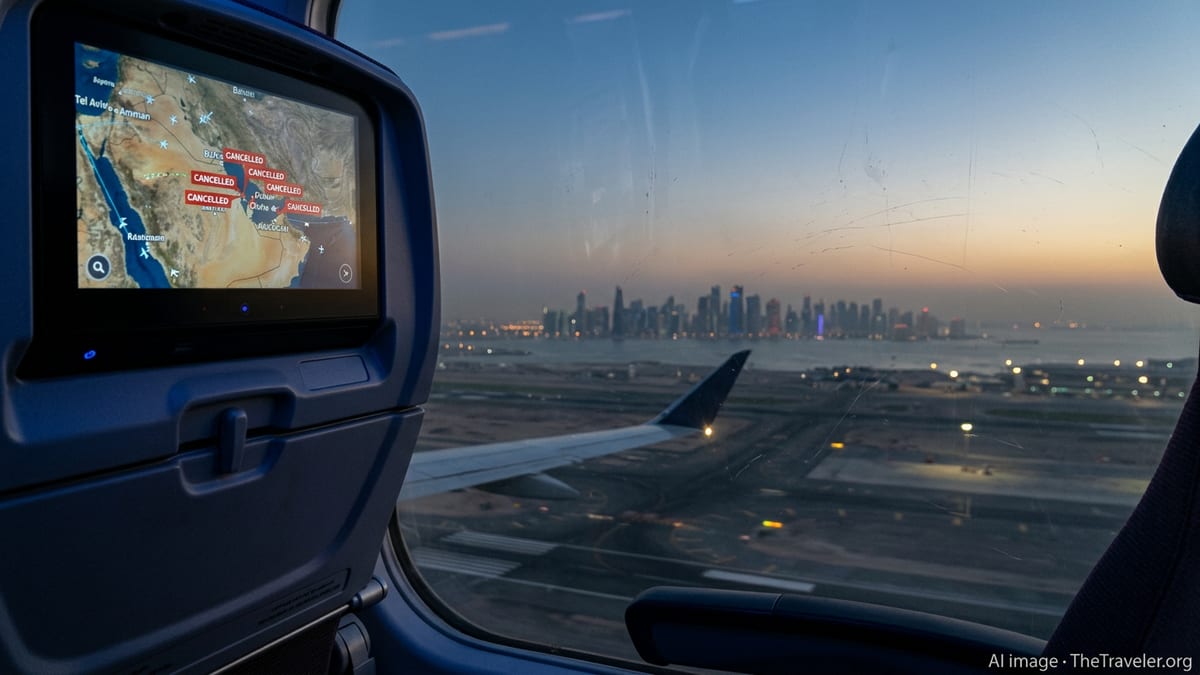
A Capacity Cap at the World’s Busiest International Hub
Publicly available information indicates that Dubai authorities have imposed a temporary cap limiting each foreign airline to a single daily flight into and out of Dubai International Airport. The measure is described in industry reports as part of a wider effort to manage congestion and operational risk at a hub that has been operating on a reduced footing following recent regional security crises and airspace disruptions.
Dubai International, which was ranked as the world’s busiest airport by international passenger traffic in 2024, had already been operating with constrained schedules after Iranian strikes and airspace closures in late February and early March 2026 damaged infrastructure and forced repeated shutdowns. Flight databases and airline advisories show that, although operations have resumed, capacity remains significantly below typical levels, particularly for non‑UAE carriers.
The one‑flight‑per‑day ceiling applies to foreign airlines across multiple regions, effectively freezing growth plans and sharply cutting frequencies on some of the world’s most heavily traveled routes. While the measure is currently framed as temporary, with some trade publications suggesting it could remain in place at least through late May, airlines and passengers are already grappling with its immediate consequences.
UK Added to Growing List of Affected Markets
Recent schedule updates and publicly available booking data indicate that airlines from the United Kingdom are now being folded into the one‑daily‑flight regime. This places UK carriers alongside counterparts in Germany, India, Singapore, Hong Kong and other jurisdictions that have already seen their Dubai schedules cut back to a single rotation per day.
The UK is among Emirates’ largest long haul markets, and Dubai has long served as a critical transfer point between Britain and destinations in Asia, Africa and Australasia. The new constraint on British and other European airlines is therefore having an outsized impact on connecting traffic, particularly for travelers who previously relied on multiple daily departures to secure last minute or time sensitive itineraries.
Industry analysts note that the cap does not affect Dubai based carriers in the same way, allowing local operators to maintain a much denser schedule of departures and arrivals. This imbalance is emerging as a point of contention for foreign airlines that see their own capacity reduced while Dubai’s home carriers continue to serve many routes at or near pre‑crisis frequencies.
Indian and Asian Carriers Face Sharp Frequency Cuts
Indian airlines appear to be among the hardest hit by the cap. Trade association statements and carrier disclosures reviewed by aviation outlets show that some Indian operators had been running well over a dozen daily flights to Dubai prior to the latest restrictions. Condensing that activity into a single daily round trip has left aircraft and crews underutilized and forced airlines to cancel hundreds of planned services.
Reports from airline scheduling systems describe a similar pattern for carriers in Singapore, Hong Kong and other Asian hubs, where services to Dubai are often used as feeders to long haul networks. With only one daily flight permitted, many of these connections are no longer viable or require long layovers, reducing Dubai’s utility as a same day transfer point and encouraging passengers to route through alternative hubs in Doha, Istanbul or European gateways instead.
Network planners across Asia are therefore being compelled to redraw route maps and redeploy capacity at short notice. Some airlines are shifting widebody aircraft to intra Asian or transpacific services, while others are holding back capacity in the hope that restrictions at Dubai will be eased once regional security conditions stabilize and airport operations return closer to normal.
Strikes and Security Tensions Amplify Disruption
The new capacity limits come at a time when global aviation is already under pressure from an overlapping series of crises. Across Europe, industrial disputes and strike actions affecting air traffic control and airport staff in countries such as Germany and the UK have triggered waves of cancellations and delays. At the same time, regional conflict and missile and drone attacks in the Gulf have led to periodic closures of airspace and physical damage to infrastructure at key airports, including Dubai.
Economic and transport analyses of the 2026 Iran conflict highlight that airspace restrictions across the Gulf, combined with precautionary flight suspensions by major international airlines, have resulted in thousands of daily cancellations and diversions. For carriers that continued to serve Dubai during and after the strikes, the subsequent introduction of a one‑flight cap has compounded an already fragile operating environment, making long term schedule planning difficult and eroding passenger confidence in route reliability.
Travel industry observers point out that the interaction between strike related disruption in Europe and conflict related constraints in the Middle East is especially problematic. Passengers are now exposed to a double layer of risk in journeys that connect through Dubai, as delays or cancellations at origin can cause them to miss the limited number of onward services that still operate through the hub.
Passengers Confront Cancellations, Rebookings and Higher Fares
For travelers, the practical impact of Dubai’s cap is being felt in the form of widespread cancellations, limited availability and sharply higher prices on the flights that remain. Airline notices and booking engine data show that many passengers with existing tickets to or through Dubai have been rebooked onto later dates, re‑routed via alternative hubs, or offered refunds where no suitable alternatives exist.
With only one daily flight allowed per foreign airline, seats on surviving services from cities such as London, Frankfurt, Mumbai, Singapore and Hong Kong are filling quickly, particularly in peak travel periods. Travel agencies report that economy fares on certain routes have climbed as capacity has been pulled from the market, while business travelers accustomed to same day changes are finding that flexible options are either unavailable or prohibitively expensive.
Consumer advocates are encouraging passengers to monitor their bookings closely, check for schedule changes well before departure, and build in longer connection times at Dubai to account for potential disruptions. Travelers with urgent or non‑flexible plans are being advised in public guidance materials to consider routings that avoid Dubai entirely while the one‑flight‑per‑day cap and broader regional instability remain in effect.
Airlines and aviation authorities have signaled that restrictions may be reassessed as security conditions and operational capacity improve. Until that happens, the combination of flight caps at Dubai, industrial unrest in Europe and ongoing regional tensions is likely to keep global air travel on an uncertain footing, with the UK’s inclusion in the cap regime underscoring the far reaching implications for international connectivity.