

More news on this day
Travelers connecting through Dubai International Airport faced major disruption today as FlyDubai, Emirates and Gulf Air recorded 116 delays and 5 cancellations on services linking the hub with London, New Delhi, Cairo and Sydney, leaving hundreds of passengers stranded across terminals.
Get the latest news straight to your inbox!
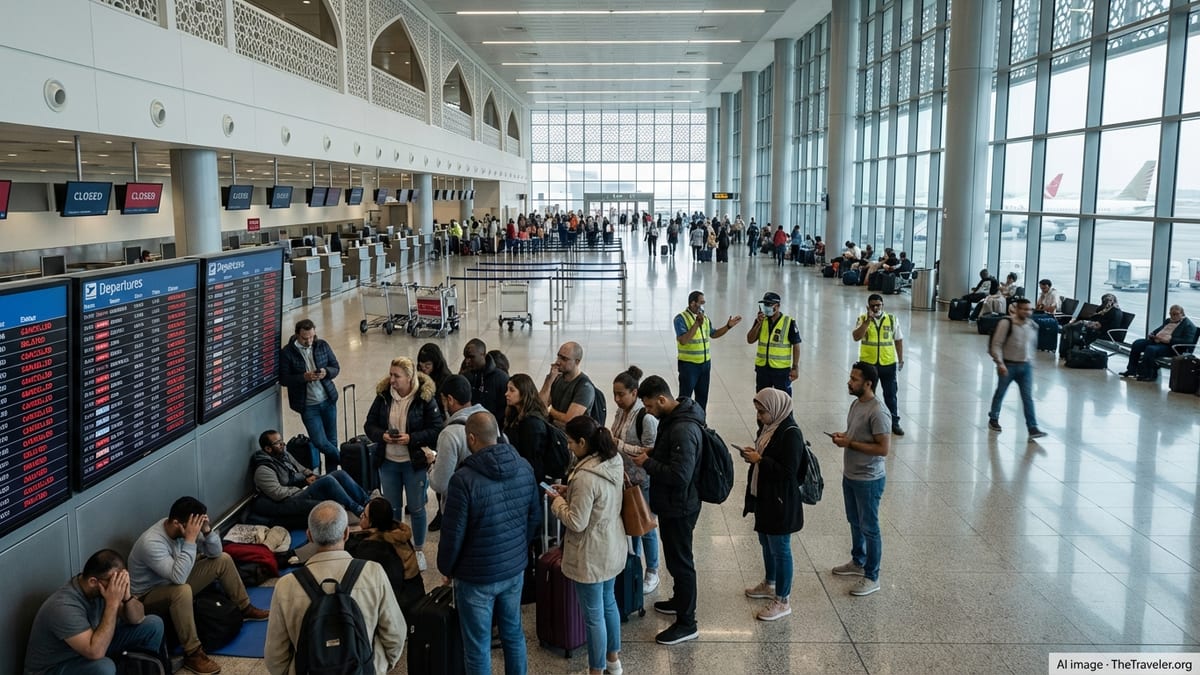
Dubai Hub Struggles Under Wave of Disruptions
Publicly available flight-tracking data and industry reports indicate that Dubai International, one of the world’s busiest hubs, experienced an intense period of operational strain, with delays and cancellations mounting across a single day. Services operated by FlyDubai, Emirates and Gulf Air on strategic long and medium haul routes were among the worst impacted, with disruption concentrated on flights to and from London, New Delhi, Cairo and Sydney.
The 116 delays logged at the airport reflect a pattern of late departures and extended ground holds, in some cases stretching into multiple hours. While only five flights were formally cancelled on the affected routes, the high volume of late-running services resulted in missed connections, extended layovers and mounting queues at transfer desks throughout the day.
Published coverage links the latest disruption to the wider instability that has affected Middle East airspace since late February 2026, when a combination of regional security tensions, temporary airspace restrictions and adverse weather triggered rolling schedule changes at Gulf hubs. Operations at Dubai have gradually been rebuilt, but the figures reported today show that the network remains vulnerable to knock-on effects and capacity constraints.
Dubai’s role as a super-connector means that a relatively small number of cancellations can have an outsized impact. Passengers who began their journeys in Europe, Africa, Asia or Australasia and were due to change planes in Dubai for London, New Delhi, Cairo or Sydney found themselves caught in lengthy backlogs as airlines attempted to re-accommodate travelers on limited remaining seats.
FlyDubai, Emirates and Gulf Air Among the Worst Affected
According to aviation disruption trackers and regional travel media, FlyDubai, Emirates and Gulf Air featured prominently in the latest wave of delays. FlyDubai, which operates a dense regional network out of Dubai, has already been reporting elevated disruption levels in recent weeks as it adjusts to route changes and slot constraints. The new figures show that short and medium haul operations remain exposed to any upstream disturbance in the region’s crowded skies.
Emirates, the largest operator at Dubai International, has been working to restore capacity after earlier schedule reductions tied to airspace restrictions and security concerns. Reports indicate that the carrier suffered numerous late departures on the affected day, particularly on flagship services to London and high-demand links to New Delhi, Cairo and Sydney. Even where aircraft eventually departed, revised timings disrupted carefully calibrated banks of connecting flights at the hub.
Gulf Air, which relies heavily on connectivity between its Bahrain base and Dubai as well as onward links across the Middle East and South Asia, was also listed among the worst hit. Disruption on Gulf Air services feeding into or out of Dubai added another layer of complexity for passengers whose itineraries spanned multiple Gulf carriers, and for ground teams trying to manage minimum connection times that were rapidly eroded by rolling delays.
Operational data published in recent weeks has highlighted elevated cancellation rates for several Gulf airlines during the height of the regional airspace closures. While the latest event at Dubai International appears to have produced more delays than outright cancellations, analysts note that persistent schedule volatility can be just as disruptive for travelers when rebooking options remain limited and aircraft and crews are already stretched.
Key Routes to London, New Delhi, Cairo and Sydney Hit Hard
The focus of disruption on services linking Dubai with London, New Delhi, Cairo and Sydney underlines the strategic importance of these corridors. London remains one of Dubai’s highest-volume long haul markets, serving both point-to-point travelers and transfer passengers onward to North America and Europe. When Dubai to London flights run late or are cancelled, passengers across multiple continents face missed onward connections and extended time in transit.
New Delhi and Cairo, two of the region’s most heavily trafficked city pairs with Dubai, form vital links for labor, family and business travel. Published accounts from recent weeks describe crowded departure halls, long lines at check-in and security, and last-minute gate changes as airlines attempt to consolidate services and re-time departures to reflect available airspace corridors.
Sydney, one of Emirates’ and FlyDubai’s most high-profile long haul destinations via codeshare and partner connections, has also seen its schedules repeatedly adjusted in response to shifting flight paths and duty-time limits on ultra long haul crews. A single-day spike in delays at Dubai can cascade across the entire Dubai to Sydney rotation, complicating aircraft positioning and forcing airlines to make difficult decisions about which sectors to prioritize for on-time departure.
For passengers booked on multi-sector itineraries, the concentration of disruption on these four cities created a particularly challenging scenario. Travelers heading from Europe to India via Dubai, or from the Middle East to Australia via London or Sydney, frequently rely on tight connections. Extended holds at Dubai reduced the margin for error to almost zero, and even minor additional delays at departure or arrival were enough to trigger missed onward flights.
Ongoing Regional Turbulence Keeps Schedules Fragile
The latest operational difficulties at Dubai International come against a backdrop of ongoing turbulence in Middle East aviation. Industry analyses published in March 2026 point to a combination of regional security incidents, temporary airspace closures and severe local weather as primary drivers of elevated disruption levels across Gulf hubs including Dubai, Abu Dhabi and Doha.
Following late February airspace closures, capacity at Dubai was significantly reduced, with some carriers operating limited schedules and others temporarily suspending flights altogether. More recent updates suggest that overall activity at the hub has been gradually ramping up, but with networks still running close to the edge of their available resources. In such an environment, even short-lived constraints at air traffic control, ground handling bottlenecks or crew availability issues can quickly translate into widespread delays.
Travel industry commentators note that Dubai’s complex wave-based scheduling model, where large numbers of arrivals and departures are synchronized to maximize connections, is particularly sensitive to such shocks. Once one or two key inbound services arrive late, knock-on delays propagate through subsequent departures, amplifying the impact that passengers experience on the ground.
The disruption also intersects with peak demand periods on several of the affected routes. London, New Delhi, Cairo and Sydney all see pronounced seasonal surges tied to holidays, school breaks and major events. When those peaks coincide with constrained capacity and lingering airspace challenges, options for same-day recovery through rebooking or extra sections become more limited, prolonging the time it takes for schedules to stabilize.
What Stranded Passengers Are Being Advised to Do
Consumer advocacy groups and travel rights organizations have issued general guidance for passengers caught up in the latest disruption at Dubai International. Publicly available advice emphasizes the importance of checking flight status frequently through official airline channels, as departure boards at the airport can change quickly and automated notifications may lag behind operational decisions in periods of heavy congestion.
Travel experts also recommend that affected passengers keep all boarding passes, booking confirmations and receipts for meals, accommodation and ground transport incurred during the delay. These documents can be crucial when seeking reimbursement under airline policies or, in some cases, pursuing compensation through regional or international passenger rights frameworks where applicable.
Guidance shared by travel industry publications suggests that travelers with connections through Dubai on routes to London, New Delhi, Cairo and Sydney should consider allowing extra buffer time between flights where possible, or exploring re-routing options via alternative hubs if their journeys are time-sensitive. For those already at the airport, remaining in close proximity to departure gates and monitoring real-time updates is advised, as some services may depart with shortened boarding windows once slots become available.
With no immediate end in sight to the broader regional factors affecting Middle East aviation, analysts expect Dubai International to experience intermittent bouts of disruption in the coming weeks. Passengers planning to transit the hub are being encouraged by travel platforms to build flexibility into their itineraries, remain vigilant about schedule changes and familiarize themselves with the support and rebooking options offered by FlyDubai, Emirates, Gulf Air and other carriers operating through the airport.