

More news on this day
As widespread flight cancellations to and from Dubai continue amid ongoing regional instability, airBaltic has moved to shield its customers by offering free reroutes onto a range of popular European and Mediterranean destinations, providing an alternative path for travelers whose Gulf itineraries have abruptly collapsed.
Get the latest news straight to your inbox!
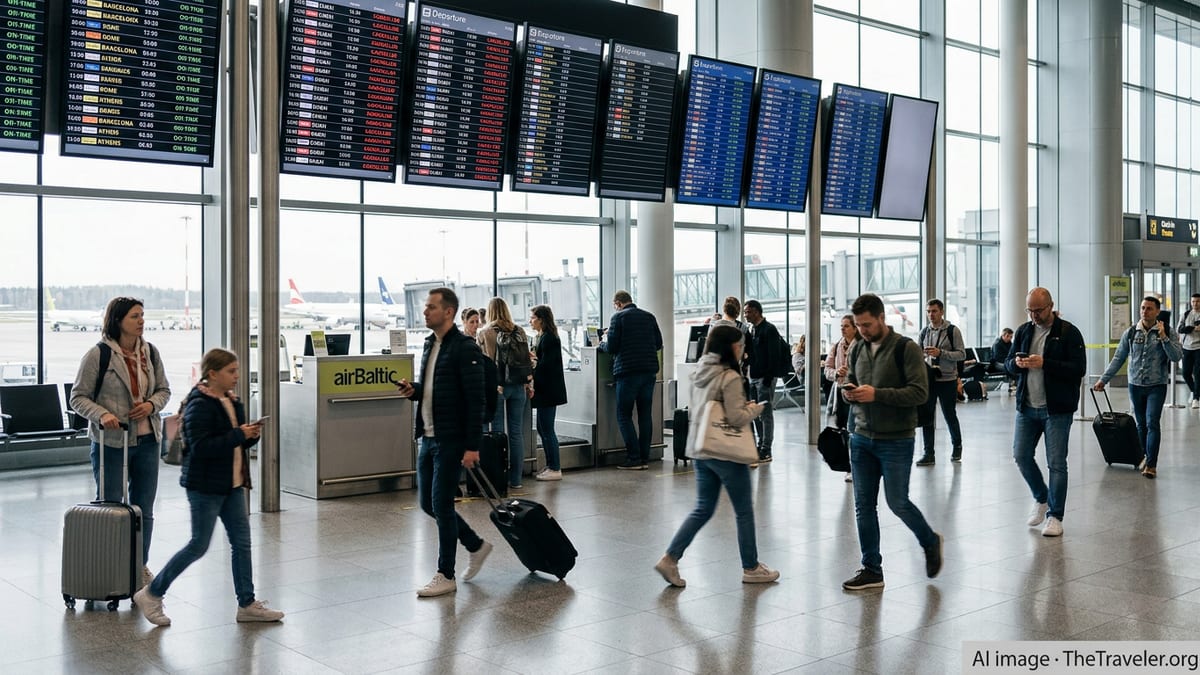
Dubai Disruptions Reshape Spring Travel Plans
Flight operations across the United Arab Emirates have been heavily disrupted since late February, when regional tensions escalated and led to repeated closures and restrictions of local airspace. Publicly available information shows that Dubai International Airport, one of the world’s busiest hubs, has faced rolling cancellations, limited operating windows, and shifting schedules that have stranded and rerouted passengers worldwide.
Reports indicate that thousands of flights involving Dubai and neighboring hubs have been canceled or reconfigured, with airlines forced to adjust routings away from affected corridors. Long-haul services between Europe, North America, Asia, and Africa have been among the most impacted, as carriers reassess flight paths, crew positioning, and aircraft availability.
Travel forums and airline updates suggest that, even when some services operate, capacity remains constrained and schedules can change at short notice. Many travelers who had planned to transit through Dubai at the start of the northern hemisphere spring travel period are now seeking alternative routes that bypass the Gulf entirely.
The latest measures from European carriers, including airBaltic, reflect a broader shift toward re-anchoring itineraries around stable hubs on the continent, particularly for leisure routes into southern Europe and the Mediterranean basin.
airBaltic Introduces Free Reroutes for Affected Passengers
In response to the extended uncertainty around Dubai operations, airBaltic has introduced a policy that allows eligible passengers booked on disrupted Dubai itineraries to reroute without an additional fare charge onto select destinations across its European network. According to published coverage, the move applies to customers whose tickets involve canceled or severely altered flights touching Dubai or other affected Gulf gateways, subject to availability and booking class.
The carrier, headquartered in Riga and known for its hybrid network of business and leisure routes, is positioning the policy as a temporary relief measure during a period of exceptional operational volatility. Publicly available information shows that airBaltic has been emphasizing flexibility for passengers willing to switch their trips from the Gulf region to European or Mediterranean holiday destinations served by the airline.
While specific terms can vary by ticket type, reports indicate that many customers are being offered a one-time reroute to eligible routes without a change fee, and in numerous cases without additional fare collection if they remain within a comparable travel period. Travelers are being encouraged to use airline-managed channels to request alternative journeys early, as peak-season capacity on some leisure routes is already tight.
Industry observers note that this type of rerouting policy is increasingly common when geopolitical or operational events hit a particular region. For airBaltic, the focus appears to be on keeping passengers within its own network rather than offering refunds that could prompt travelers to shift to competing carriers or postpone travel altogether.
European and Mediterranean Getaways Take Center Stage
airBaltic’s decision to pivot disrupted Dubai passengers toward European and Mediterranean destinations aligns closely with broader travel demand patterns. The airline’s network connects the Baltic region with a growing list of city-break and beach destinations that are likely to appeal to travelers whose Gulf trips have been derailed but who still want to salvage planned time off.
Publicly available route maps and schedules show that airBaltic’s portfolio of leisure-oriented destinations includes cities such as Barcelona, Rome, Athens, and various holiday islands and coastal gateways in the Mediterranean. These routes, already popular for late spring and summer escapes, are now being promoted as alternative options for those who can no longer transit via or travel to Dubai.
Reports indicate that some passengers are opting to convert long-planned stopovers in Dubai into multi-center European itineraries, combining Baltic capitals with southern European beaches or historic cities. Travel agents and online booking platforms are reflecting this shift, showing an uptick in interest in sun destinations reachable via northern European hubs rather than Gulf stopovers.
This redirection of demand could further reinforce the role of mid-sized European carriers such as airBaltic in the leisure market, particularly for travelers seeking relatively short-haul options that feel more predictable than long-haul journeys routed through a region experiencing airspace and airport restrictions.
What Passengers Should Know Before Requesting a Reroute
For travelers considering a switch from Dubai-bound services to European or Mediterranean alternatives with airBaltic, several practical factors are emerging from publicly available information and traveler reports. First, eligibility generally hinges on holding a ticket that directly involves a canceled or significantly altered flight related to Dubai or affected regional operations. Voluntary changes from unaffected itineraries may still incur standard fees or fare differences.
Second, capacity on sought-after summer routes can be limited, especially during weekends and school holiday periods. While airBaltic is attempting to accommodate as many disrupted travelers as possible, reports suggest that securing seats to the most popular island and beach destinations may require flexibility on dates, departure airports, or times of day.
Third, travelers are being advised to review onward arrangements such as hotels, car rentals, and tours carefully before confirming a reroute. A switch from a Gulf itinerary to a European city-break or coastal holiday may involve changes to visa requirements, insurance coverage, and cancellation policies, all of which can vary significantly by destination.
Finally, industry commentators note that conditions around Dubai operations remain fluid, and further changes to flight schedules across multiple airlines are possible. For some travelers, locking in an alternative European or Mediterranean trip now can offer greater certainty than waiting for full restoration of long-haul services through the Gulf.
Broader Implications for Gulf Hubs and European Carriers
The decision by airBaltic to foreground free reroutes away from Dubai underscores a wider rebalancing in global air travel prompted by the latest wave of Middle East disruptions. Publicly available analyses point out that Gulf hubs have long relied on their role as intercontinental crossroads, funnelling traffic between Europe, Asia, Africa, and Oceania. When that role is weakened by airspace closures or operational restrictions, carriers and passengers are forced to re-examine routing assumptions.
European airlines with flexible narrow-body fleets are relatively well placed to absorb some of this displaced demand by offering dense networks of short- and medium-haul options. By channeling disrupted passengers into intra-European holiday routes, airBaltic is effectively converting long-haul disruption into regional leisure traffic, potentially softening the financial blow of suspended Gulf services.
For travelers, the immediate result is a set of trade-offs. Those who originally chose Dubai for shopping, stopover experiences, or onward connections to Asia may need to reset expectations toward European beaches, historic centers, and city nightlife instead. At the same time, the emergence of free reroute options offers a path to preserve planned vacations, even if the destination changes.
As airlines, regulators, and airports continue to adapt to evolving conditions in the Gulf, measures like airBaltic’s free reroute program illustrate how carriers are attempting to balance operational constraints with customer expectations. The coming weeks are likely to show whether travelers embrace these European and Mediterranean alternatives in large numbers, or continue to wait in hope of a rapid normalization of Dubai’s role at the heart of global aviation.