

More news on this day
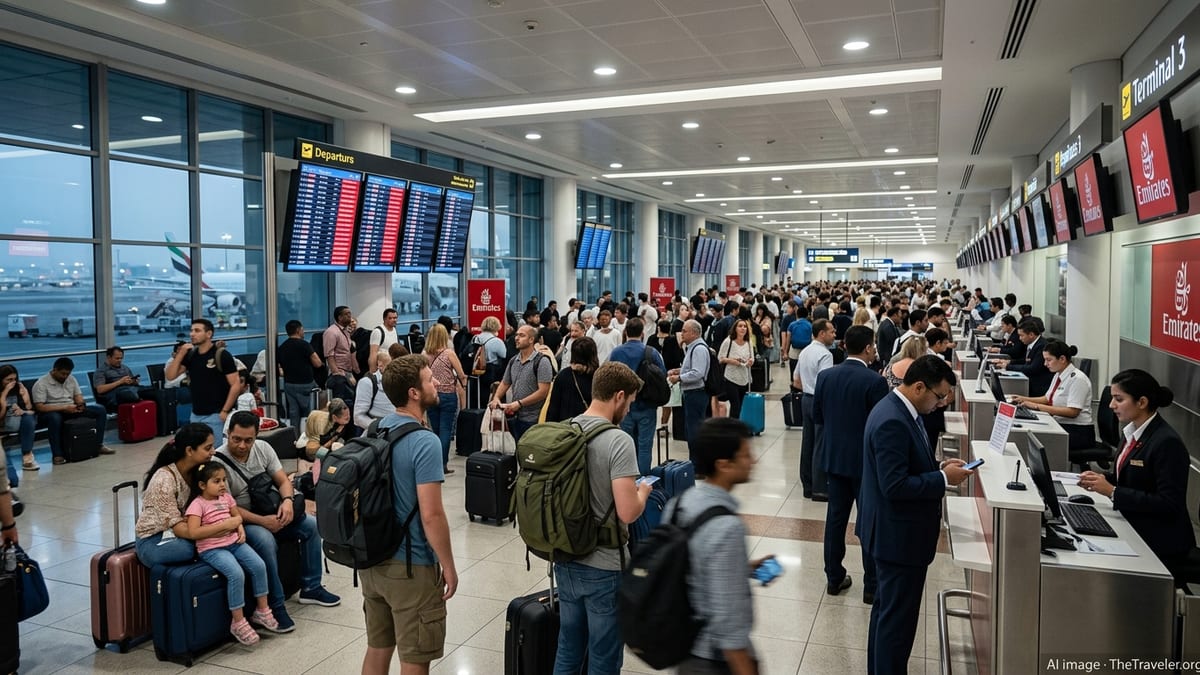
Hundreds of travelers were left stranded at Dubai International Airport after a new wave of flight cancellations disrupted operations at the world’s busiest hub for international passengers, with more than 30 services reportedly grounded in a single day.
Get the latest news straight to your inbox!
Disruptions Follow Weeks of Regional Turmoil
Dubai International Airport has been operating under strain since late February 2026, when regional tensions and airspace restrictions began to ripple across commercial aviation in the Gulf. Publicly available information shows that Dubai’s main airport shifted to a reduced schedule in early March after a series of security incidents and missile and drone activity in the wider region disrupted normal traffic patterns.
Reports indicate that on several days in March, including the latest incident, dozens of flights were cancelled or significantly delayed at short notice, resulting in a backlog of passengers in Dubai and at connecting airports worldwide. In addition to the cancellations, many airlines have been running limited or exceptional services focused on repatriating stranded customers rather than operating full commercial schedules.
According to published coverage of the crisis, carriers using Dubai as a key hub have been juggling fast-changing airspace permissions, crew duty limits and aircraft availability, which has led to rolling schedule changes. Even as some flights resumed in partial form earlier in March, subsequent security scares have caused fresh rounds of disruption, including the cancellation of more than 30 flights that left hundreds of passengers unable to depart on time.
Travel advisories and airline updates throughout March have consistently warned that previously announced timetables may no longer be reliable, stressing that what is true in the morning can shift by afternoon as conditions evolve.
Scale of Cancellations and Who Is Affected
Recent operational data and local media coverage suggest that the latest cluster of disruptions involved over 30 cancelled flights in a 24-hour period at Dubai International Airport, affecting both outbound and inbound services. These cancellations came on top of an already reduced network, amplifying the impact on passengers who were relying on Dubai as a transit point between Europe, Asia, Africa and the Americas.
Hundreds of travelers with connecting itineraries have been particularly hard hit. Many had already experienced previous schedule changes or rolling delays since late February and were attempting to leave Dubai on the first available flights. When additional services were scrubbed, airport hotels, terminal seating areas and airline service desks saw renewed crowds of frustrated passengers seeking rebooking and accommodation.
Reports from travelers and aviation observers describe a patchwork of outcomes. Some passengers have been successfully rerouted via alternative hubs in the region or further afield, while others have been offered new departure dates several days later due to limited seat availability. In certain cases, ticket holders reported that earlier flights were cancelled after boarding or just before check-in cut-off times, adding to confusion and stress for those already at the airport.
The disruption has not been confined to one airline. While Dubai-based carriers remain central to the situation because of their large operations at the airport, published coverage notes that multiple international airlines have adjusted or suspended Dubai services during the current period of instability, further constraining options for stranded travelers.
Current Operating Status at Dubai International Airport
As of late March 2026, publicly available information indicates that Dubai International Airport is open but operating below normal capacity, with a mix of scheduled services, limited repatriation flights and ad hoc cancellations. Flight operations have been closely tied to evolving regional airspace restrictions and security assessments, resulting in frequent timetable revisions.
Travel alerts and airline notices emphasize that passengers should not assume their flight will operate as originally booked, even if it appears on an earlier schedule. Instead, travelers are being urged to rely on the most up-to-date flight status information from their airline and, where available, real-time airport departure and arrival boards before setting out for the terminal.
Reports further indicate that on days with intensified security concerns or new incidents, airlines have at times suspended most regular passenger services, prioritizing special operations such as repatriation flights or repositioning aircraft and crew. On other days, the airport has handled a higher volume of departures and arrivals, but still significantly below its normal throughput.
Due to this fluctuating environment, capacity on operating flights has often been tight, with many services departing fully booked. Travelers whose flights were cancelled have sometimes struggled to find seats within their original travel window, particularly on long-haul routes to North America, Europe and Australia.
What Stranded Passengers Are Experiencing on the Ground
Accounts shared by travelers and reported in regional and international media describe crowded terminals, long queues at airline counters and extended waits on customer service hotlines. Many stranded passengers have spent multiple nights in Dubai, either in airport hotels, city accommodations or, in some cases, in terminal waiting areas while awaiting confirmed rebookings.
Passengers with tight onward connections, such as those heading for exams, medical appointments or work commitments, have reported particular anxiety as cancellations compound earlier delays. Some travelers have described being rebooked several times in succession as new flights, once confirmed, were later removed or rescheduled in response to changing operational conditions.
At the same time, published coverage indicates that airlines and airport stakeholders have been working to clear the backlog by operating additional services when airspace and resources allow, and by prioritizing customers whose earlier flights were disrupted. Exceptional flights from Dubai to certain high-demand destinations have been arranged specifically to move stranded passengers, although demand has frequently exceeded available capacity.
Anecdotal reports also point to a wide variation in passenger experiences. Some travelers have been able to secure prompt assistance and hotel vouchers, while others have reported difficulties obtaining clear information about their options, particularly during peak disruption periods when call centers and service desks were overwhelmed.
Key Advice for Travelers With Upcoming Dubai Flights
For travelers scheduled to fly to, from or through Dubai in the coming days, publicly available guidance from airlines and travel advisories highlights the importance of verifying flight status repeatedly in the run-up to departure. Timetables remain fluid, and flights that appear confirmed several days in advance may still be adjusted closer to the travel date.
Passengers are being urged to avoid heading to the airport without a clearly confirmed, operating flight. Reports indicate that access to terminals has occasionally been limited to travelers with same-day departures and verifiable bookings, and that walk-up rebooking options at the airport can be scarce when a fresh wave of cancellations occurs.
Airlines serving Dubai have generally offered flexibility in the form of free rebooking, vouchers or refunds for affected itineraries during the disruption period. Travelers are advised to review the latest policy information from their carrier, including specific eligibility dates, as some waivers apply only to tickets originally scheduled between late February and the end of March 2026.
Travel industry guidance further suggests that passengers maintain updated contact details in their bookings and monitor airline apps, text messages and email notifications closely. Given that more than 30 flights can be affected in a single day during heightened disruption, early awareness of any changes improves the chances of securing alternative arrangements before seats on remaining services are fully allocated.