

More news on this day
Dubai’s role as a global aviation crossroads remains under intense pressure as Emirates and a growing roster of international airlines navigate rolling suspensions, reduced schedules, and complex rerouting that are now expected to unsettle travel plans into late May.
Get the latest news straight to your inbox!
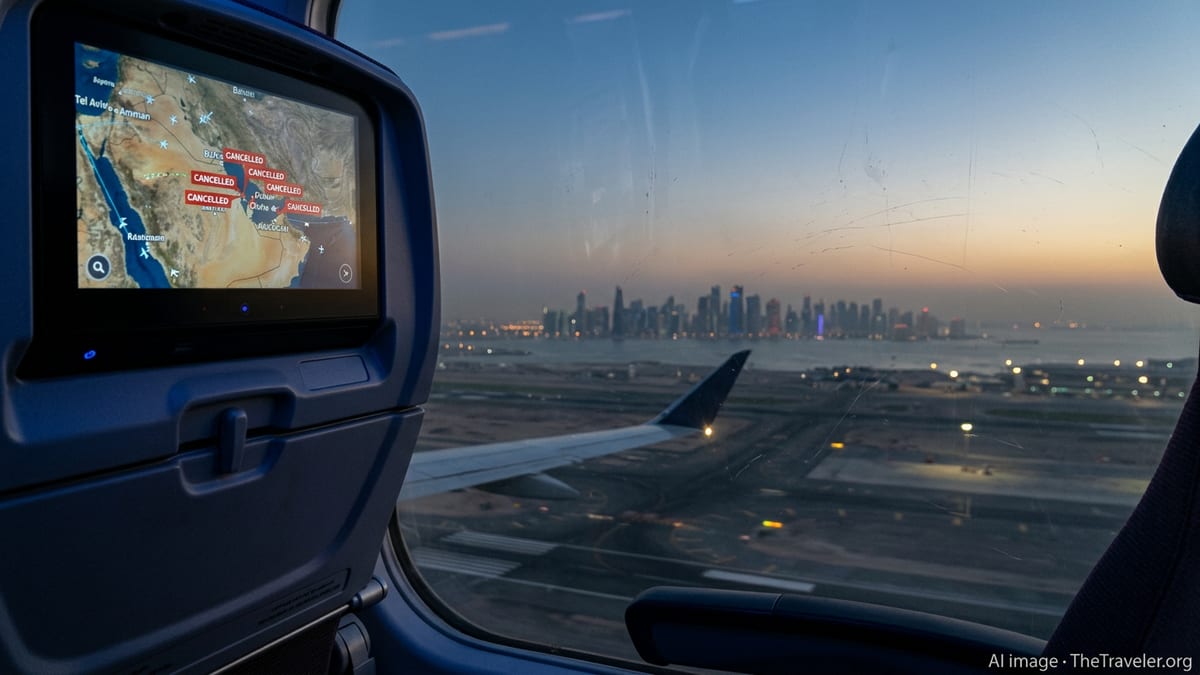
Airspace Closures Ripple Through Dubai’s Global Hub
Regional tensions and airspace restrictions since late February have reshaped flight patterns across the Gulf, with Dubai International Airport at the center of the disruption. Publicly available information shows that United Arab Emirates airspace was temporarily closed after missile and drone strikes linked to the Iran conflict, triggering what analysts describe as one of the most serious shocks to regional aviation since 2020.
Reports indicate that Dubai International and other UAE airports halted services during the peak of the crisis, affecting operations at Emirates, flydubai, Etihad Airways, and Air Arabia. As airspace gradually reopened, the recovery has been cautious and uneven, with airports in nearby states also managing closures or capacity limits that complicate routings into and out of Dubai.
Travel-industry trackers describe a rolling pattern of cancellations, diversions, and extended block times that continues to affect long haul connections between Europe, Asia, and Africa. With Dubai positioned as a key transfer point for those markets, any reduction in capacity quickly spreads across airline networks far beyond the Gulf.
Emirates Leads a Fragile Rebuild of Capacity
Emirates, the largest operator at Dubai International, has moved from a blanket suspension at the height of the crisis to what its public travel advisories describe as “limited” or “reduced” operations. Published updates and passenger reports indicate that the carrier is rebuilding its schedule through safe corridors, with priority given to stranded travelers and those holding earlier bookings.
Analyses of daily flight data compiled by independent aviation trackers suggest that by late March and early April the airline was operating at a materially reduced share of its prewar network, with frequencies restored on some trunk routes but still constrained in others. Travelers report that specific city pairs, including select services into East Asia and secondary European markets, remain subject to short-notice cancellation or aircraft downgrades as the airline reallocates capacity.
Public guidance shared by the airline and summarized by travel advisories points to flexible rebooking policies that extend into late May, including the option to shift travel dates without change fees in many cases. This extended window is seen by analysts as a signal that planners expect operational turbulence, even if not full suspensions, to remain a feature of the schedule for several more weeks.
Foreign Carriers Trim or Reroute Dubai Services
Dubai’s constraints are not limited to homegrown airlines. According to aviation-industry coverage, a significant number of foreign carriers have sharply reduced or temporarily halted service to the city while regional airspace remains partially restricted and route economics remain volatile. Reports highlight adjustments by European and Asian airlines, including Lufthansa Group, SWISS, British Airways, and Singapore Airlines, among others.
Some carriers are reported to have suspended certain frequencies or redirected traffic via hubs such as Doha and Abu Dhabi when slots and airspace permissions allow. Others have consolidated departures, shifting passengers onto a smaller number of daily services in order to maintain at least a skeletal presence in the market while minimizing exposure to last minute operational changes.
Travel advisories compiled by consumer-rights organizations and specialist aviation sites suggest that passengers booked on non-Gulf airlines may face particularly complex itineraries, with rebookings often involving multiple stops and longer routing around closed or congested air corridors. The knock-on effect on premium and connecting traffic has raised broader questions about yield management and capacity planning for the remainder of the spring season.
Connecting Hubs Across the Gulf and Asia Feel the Strain
The disruption centered on Dubai has intensified a wider aviation crunch spanning the Gulf and parts of Asia. Industry data aggregating operations at Dubai, Abu Dhabi, Doha, Riyadh, and major Asian hubs shows thousands of cancellations and many more delays since late February, illustrating how quickly shocks can cascade across interconnected networks.
Analysts note that each cancelled leg removes an aircraft and crew from downline rotations, leading to schedule gaps that surface days or weeks later in seemingly unrelated markets. For travelers, this can translate into late-notice cancellations or significant delays on flights that are not obviously linked to the Middle East, as airlines reposition aircraft and prioritize routes with the highest strategic value.
Published commentary from air travel compensation specialists underscores that many of these disruptions stem from external security and airspace decisions, rather than airline-specific operational failures. That distinction is central to whether passengers can claim regulatory compensation in certain jurisdictions, even when their journeys involve carriers such as Emirates, Etihad Airways, or major European and Asian airlines.
Extended Uncertainty for Travelers Into Late May
While Dubai’s airports are no longer in a state of complete shutdown, schedule volatility remains pronounced and is increasingly framed as a medium term challenge rather than a short, sharp shock. Public guidance from airlines serving the city, including Emirates and flydubai, indicates that flexible rebooking and waiver policies are being maintained for travel dates reaching toward the end of May.
Travel experts interpret these timelines as an acknowledgment that the regional security situation and associated airspace constraints may evolve in unpredictable ways through the coming weeks. Timetables are being rebuilt in stages, and airlines are urging passengers to monitor flight status repeatedly in the days and even hours before departure rather than relying on original booking confirmations alone.
For Dubai, the stakes are high. The city’s status as a global connector depends on predictable, high frequency links operated by both local and foreign airlines. The current period of disruptions, capacity cuts, and reroutings represents a significant test of that model. How quickly airlines such as Emirates, Air Arabia, flydubai, Etihad Airways, Singapore Airlines, British Airways, SWISS, and Lufthansa are able to restore more stable operations through the hub will shape not only individual travel plans but also trade, tourism, and investment flows that rely on Dubai’s role as a bridge between continents.