

More news on this day
Passengers connecting through Dubai International Airport have faced hours-long waits and missed connections after a fresh wave of disruption triggered 116 flight delays and 5 cancellations on key routes linking the hub with London, New Delhi, Cairo, and Sydney.
Get the latest news straight to your inbox!
Major Gulf Carriers Bear Brunt of New Disruption
Publicly available airport and schedule data indicate that services operated by FlyDubai, Emirates, and Gulf Air were among the most affected as operations at Dubai International remained fragile following weeks of regional airspace instability and earlier weather-related disruption. While the airport stayed open, tight slot controls and frequent operational revisions translated into rolling delays across departure banks.
According to aggregated flight tracking summaries and travel industry reporting, Emirates accounted for the largest share of delayed departures at Dubai International, reflecting the carrier’s dominant presence at the hub and its extensive long haul network. FlyDubai, which concentrates on short and medium haul regional routes, and Gulf Air, linking Dubai with Bahrain and beyond, also recorded elevated delay levels as congestion rippled through shared airspace and ground handling resources.
The 116 delayed flights and 5 outright cancellations affecting London, New Delhi, Cairo, and Sydney services formed part of a wider pattern of disruption across the Middle East’s main hubs over recent days. Data compiled by specialist aviation outlets show that Dubai, Riyadh, Jeddah, Doha, and Cairo collectively logged hundreds of late departures and dozens of cancellations as airlines adjusted routings and crew schedules to shifting operational constraints.
Travel advisory bulletins note that while the number of cancellations has eased from the peaks seen earlier in March, on-time performance at Dubai International remains volatile, especially during peak connecting waves when even minor schedule changes can cascade into missed slots and extended ground times.
London, New Delhi, Cairo and Sydney Routes Hit Hardest
Long haul and high frequency city pairs bore the brunt of the latest issues. Flights between Dubai and London, one of the world’s busiest intercontinental corridors, saw multiple services pushed back by several hours as carriers juggled aircraft rotations and crew duty limits. Passengers reported missed onward connections in Europe and North America after overnight departures from Dubai were rescheduled at short notice.
Services to New Delhi and Cairo, crucial gateways for South Asian and North African traffic, also featured prominently among the disrupted flights. Industry trackers highlighted repeated knock on delays for departures to the Indian capital as aircraft and crew arriving late from other regional points struggled to be turned around on time, compressing already tight ground windows at Dubai International.
On the Sydney route, a small number of long haul services were delayed or cancelled, creating particular difficulty for travelers with limited alternative options. The sheer length of the journey and the need to coordinate with slot availability at both ends meant that a single cancellation could not be easily absorbed within the same operating day, forcing some passengers to remain in Dubai for extended periods.
Published travel guidance notes that passengers on these trunk routes often rely on carefully choreographed connections at Dubai International. When departures are pushed back by several hours, even if the flight ultimately operates, onward itineraries can become unworkable, generating additional rebooking demand that further strains airline support channels.
Stranded Travelers Face Long Queues and Limited Rebooking Options
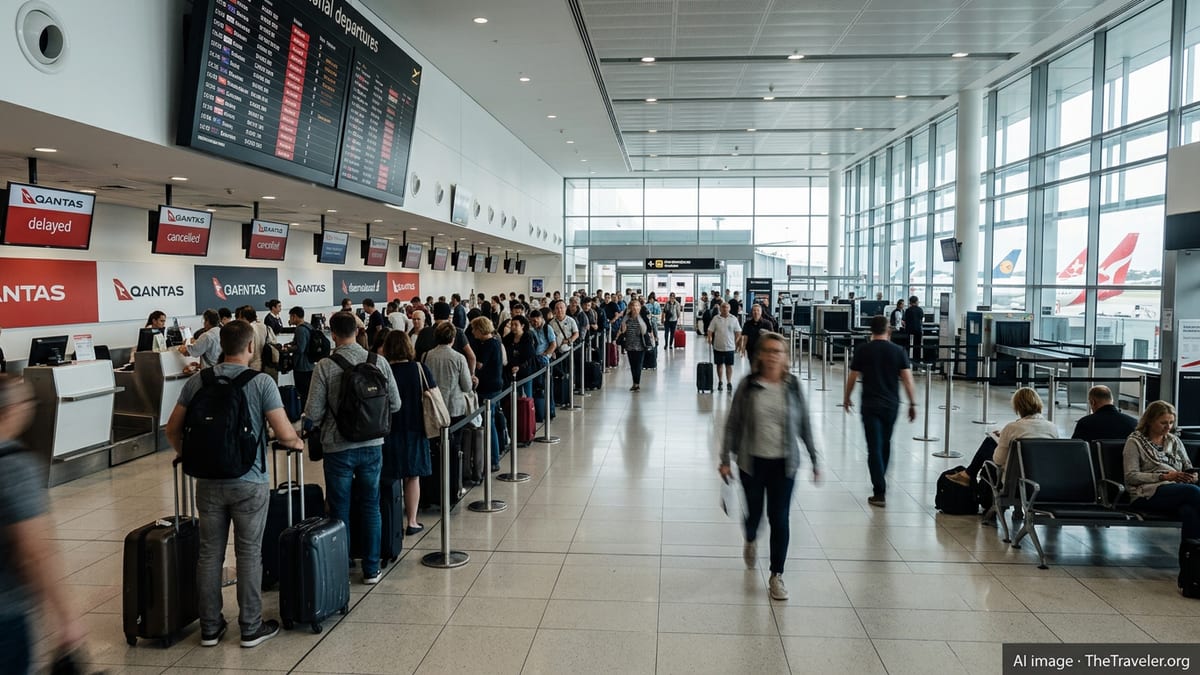
Reports from passengers and travel agencies describe scenes of crowded terminal areas at Dubai International as travelers waited for clarification on revised departure times and alternative routings. With multiple carriers adjusting schedules simultaneously, check in counters and customer service desks experienced heavy pressure, and some travelers reported waiting hours to secure new itineraries.
Travel forums and social media posts compiled by travel news outlets point to a patchwork of experiences. Some passengers connecting through Dubai described relatively minor delays and smooth rebookings, while others reported overnight stays in the terminal, difficulty accessing timely information on their flight status, and challenges arranging accommodation during extended layovers.
Publicly available guidance from airlines and travel advisors continues to stress that passengers should not proceed to the airport in Dubai or at origin points for flights via Dubai until they have received clear confirmation of departure times and ticket status. In several cases over recent weeks, flights that initially appeared as delayed were later cancelled or retimed again, leaving those who had already reached the airport with few immediate options.
For travelers whose flights were among the five cancellations linked to London, New Delhi, Cairo, and Sydney, rebooking options were constrained by limited spare capacity on alternative services. With many carriers already operating near maximum load factors on these routes, especially during school holidays and peak business travel periods, same day or next day alternatives proved difficult to secure.
Regional Turbulence Keeps Recovery Fragile
Aviation analysts note that the latest spike in delays at Dubai International is occurring against a backdrop of broader operational stress across Gulf and Middle Eastern hubs. Recent weeks have seen a combination of regional security concerns, modified airspace corridors, and lingering weather related impacts converge to reduce flexibility within airline networks that rely heavily on tightly timed connections through a small number of major hubs.
Industry briefings point to temporary restrictions and diversions in parts of the region that have forced carriers to adopt longer routings or adjust cruising levels, adding minutes to block times and complicating crew duty planning. Even marginal additions to typical sector lengths can tighten turnaround windows for aircraft scheduled to operate multiple legs in quick succession through Dubai.
Advisories from travel management companies describe the disruption as entering a more chronic phase, with airlines in the Gulf and neighboring regions continuing to trim schedules and consolidate services in an effort to create greater buffer within their operations. While this has helped reduce the total number of cancellations compared with earlier in March, it has also meant that many remaining flights are running at or near full capacity, leaving little slack when new disruptions occur.
Observers also highlight the role of previous extreme weather events, including flooding episodes that temporarily closed runways and access roads in Dubai, in underscoring the vulnerability of hub dependent models to multiple stressors at once. Although current disruption is driven more by regional and operational factors than by immediate weather at the airport, the cumulative effect has been to keep recovery fragile and on time performance inconsistent.
Advice for Travelers Transiting Through Dubai
Travel experts and consumer advocates recommend that passengers due to travel through Dubai International in the coming days continue to monitor their bookings closely and maintain flexible plans where possible. Current airline and airport advisories consistently urge travelers to check flight status on official channels shortly before leaving for the airport, and to expect that departure times may change even within a few hours of scheduled takeoff.
For those booked on the heavily affected routes to and from London, New Delhi, Cairo, and Sydney, travel management firms suggest allowing longer minimum connection times when rebooking or planning new itineraries, particularly when separate tickets are involved. Passengers are also being encouraged to keep essential items, including medications and a change of clothes, in carry on baggage in case of unscheduled overnight stays during transit.
Consumer organizations advise travelers to retain documentation such as boarding passes, booking confirmations, and written notices of delay or cancellation, which may be useful when seeking compensation under applicable regulations or when filing claims with travel insurers. They also note that policies and entitlements differ significantly depending on the operating carrier, ticket type, and jurisdiction, and that passengers may need to review specific terms carefully.
While operational data suggest that conditions at Dubai International are gradually improving compared with the worst of the recent disruption, the cluster of 116 delays and 5 cancellations linked to key intercontinental and regional routes underlines that the situation remains fluid. For now, industry guidance continues to emphasize preparation, patience, and close communication with airlines as the most practical tools for travelers navigating the world’s busiest international hub.