

More news on this day
Gulf giants Emirates, Etihad Airways and Qatar Airways have issued new travel advice for Edinburgh-bound and departing passengers as the Dubai flight crisis of March 2026 continues to snarl connections between Scotland and key hubs in the United Arab Emirates and Qatar.
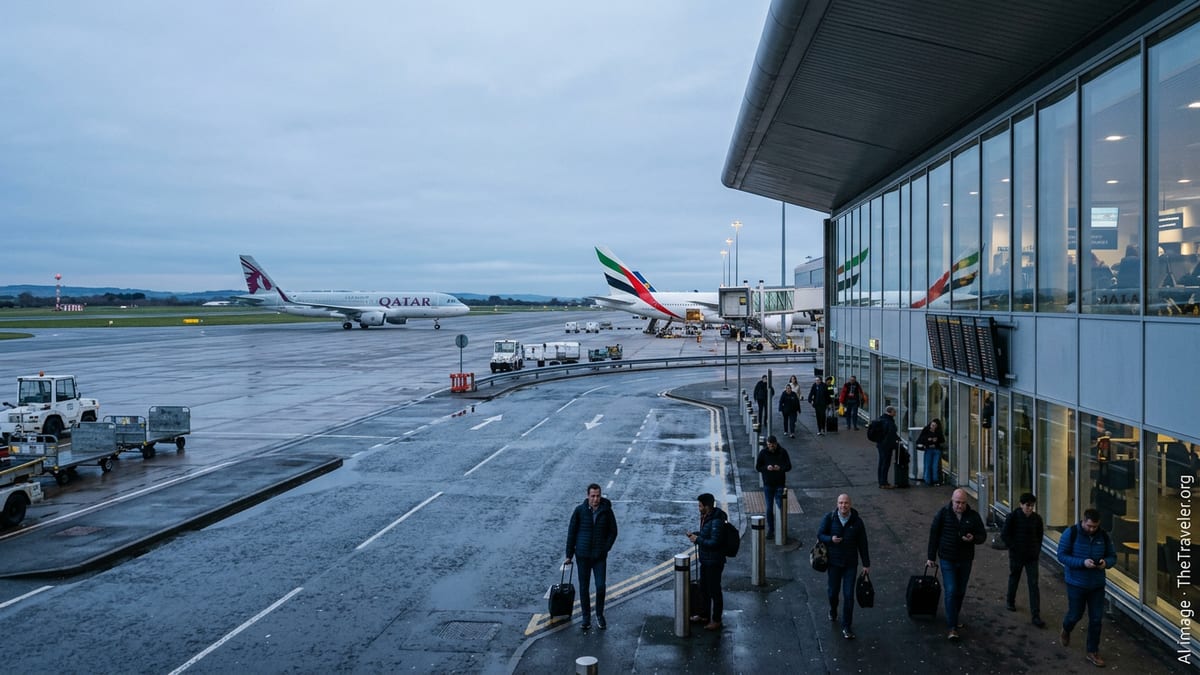
Regional airspace closures ripple through Edinburgh schedules
The latest guidance from the three Gulf carriers follows days of rolling disruption triggered by widespread airspace closures across the Persian Gulf and surrounding region at the end of February and early March. The shutdown has forced wholesale cancellations and diversions at Dubai, Abu Dhabi and Doha, straining already busy spring travel between the United Kingdom and the Middle East.
While Emirates and Etihad have begun restoring limited operations from their UAE hubs, overall capacity remains sharply reduced and routings heavily constrained. Qatar Airways is operating only a tightly controlled relief schedule from Doha under temporary air traffic corridors, with its main hub still subject to strict limits. For Edinburgh passengers, that has translated into cancelled nonstops and broken long-haul itineraries to Asia, Africa and Australasia that depend on Gulf connections.
Aviation analysts say Scotland’s capital has been particularly exposed because its long-haul offering is dominated by Middle East transfer traffic rather than point-to-point flights. With Emirates, Etihad and Qatar Airways all affected at once, travelers who would normally connect in Dubai, Abu Dhabi or Doha have found themselves scrambling for scarce seats via European or Turkish hubs, often at far higher fares and with longer journey times.
Industry data compiled over the past week suggest that multiple Edinburgh services to and from the Gulf have been either cancelled outright or converted to irregular relief flights, with late-notice schedule changes becoming common. The unpredictability has left passengers heavily reliant on direct communication from their airline to know whether to proceed to the airport.
Emirates prioritises confirmed Edinburgh services and flexible rebooking
Emirates, which normally operates one of the most heavily used Gulf links from Edinburgh via Dubai, has confirmed that its scheduled network is running at a fraction of normal capacity while UAE airspace remains restricted. The carrier has told customers that it is concentrating resources on a limited number of trunk routes and select regional links, including certain United Kingdom services that help clear backlogs of stranded passengers.
For Edinburgh-based travelers, Emirates is advising that only flights specifically shown as operating in the manage-booking section or confirmed in recent notifications should be treated as active. Tickets issued from late February through the end of March are generally eligible for free date changes within a defined window, or for refunds if the customer chooses not to travel. The airline has urged passengers not to travel to the airport unless they have received up-to-date confirmation that their flight is operating.
Passengers connecting beyond Dubai have been warned to expect nonstandard routings and potential overnight layovers as Emirates works around closed or congested airspace. Some long-haul services are being operated with technical stops or detours that extend block times significantly, reducing the number of rotations that can be flown each day. Travelers from Edinburgh heading to Asia and Australasia are being offered alternative journeys via partner carriers or other hubs where possible, but seats remain in short supply over the coming days.
The carrier has also reminded customers who booked through online travel agencies or tour operators that changes must usually be processed through the original point of sale. That has added a further layer of complexity for some Edinburgh passengers who are dealing with both airline and intermediary at a time when call centres and chat channels are reporting heavy backlogs.
Etihad’s limited schedule raises connection risks in Abu Dhabi
Etihad Airways has restarted a restricted commercial programme out of Abu Dhabi, operating to a smaller list of destinations under revised timings and routings. The airline has stressed that safety and regulatory approvals remain the primary constraints on its network, and that it is adding flights only when it can do so consistently and within permitted corridors.
The Abu Dhabi-based carrier has told Edinburgh passengers with itineraries via its hub that they should treat all travel plans for the next two weeks as subject to change. Even where a flight is still listed, Etihad is cautioning that connections may no longer be guaranteed and that minimum transfer times have been lengthened to allow for additional security and operational checks.
Travel waivers currently in force allow many customers with tickets issued before the crisis to rebook onto later dates without penalty or to change their origin or destination within the Etihad network in some cases. However, availability out of Abu Dhabi into Europe and North America is constrained as the airline concentrates on core routes and repatriation flows. Scottish travelers connecting through Edinburgh’s European links onto Etihad flights from other UK airports are being advised to pad itineraries with extra time to account for possible schedule shifts.
Etihad has also warned that passengers should not self-connect onto its reduced schedule from separate tickets, particularly across Abu Dhabi, as onward flights cannot be guaranteed and local authorities are maintaining tight control on who can enter the terminal. The airline is instead directing affected travelers to its official channels for rebooking or to consider delaying nonessential trips until the operating environment stabilises.
Qatar Airways keeps Edinburgh customers on standby as Doha hub stays constrained
Qatar Airways, traditionally a key player on the Edinburgh to Asia corridor via Doha, remains the most constrained of the three Gulf carriers following severe disruption to Qatari airspace. The airline has confirmed that its main scheduled programme at Hamad International Airport is still largely suspended, with only a small number of controlled relief and repatriation flights operating along designated corridors.
Edinburgh passengers booked on the nonstop route to Doha have seen a run of cancellations over the past week as Qatar Airways focuses its limited capacity on priority routes and urgent travel cases. The carrier has issued broad travel waivers covering tickets with travel dates in the first half of March, allowing complimentary date changes within a specified period or refunds of unused ticket value for those no longer able or willing to travel.
Qatar Airways is urging customers not to attempt to re-route themselves via third countries without first securing confirmed space on an approved itinerary. With Doha’s hub function impaired, many of the ultra-long-haul connections that normally define the airline’s appeal from Edinburgh, such as services to Australia, Southeast Asia and parts of Africa, are either not operating or are running with heavily altered schedules.
The airline has also highlighted that it is working with foreign governments and partner carriers on ad hoc solutions to move stranded passengers, which may include one-off charter or relief flights. Edinburgh-based travelers are being told to monitor direct communication from Qatar Airways closely, as seats on such operations are typically assigned on a priority basis and may become available at short notice.
Advice for Edinburgh travelers navigating the Gulf disruption
Across all three carriers, the central message for Edinburgh passengers is to verify, and then re-verify, any upcoming itinerary involving Dubai, Abu Dhabi or Doha. Airlines and travel agents are updating systems several times a day as new air traffic permissions are granted or withdrawn, and a flight that appears available in the morning can be removed by the afternoon.
Travel experts recommend that passengers with flexible plans consider postponing nonessential trips through the Gulf until at least late March, when more stable schedules may emerge. Those who must travel are being encouraged to accept alternative routings via European, Turkish or other regional hubs if offered, even where journeys are longer or less convenient, simply to secure a confirmed seat out of Scotland.
For travelers already overseas and trying to reach Edinburgh, the latest advice is to stay in close contact with their airline, ensure contact details are up to date in booking profiles, and keep digital copies of tickets and travel documents handy in case they are re-protected onto other carriers. Observers warn that conditions may continue to evolve quickly as regional security and airspace policies shift, making short-notice changes a continuing feature of the Dubai flight crisis in the days ahead.