

More news on this day
Dubai International Airport experienced a fresh wave of disruption on March 30, as a drone-related fire near fuel facilities prompted a morning suspension of flights before operations gradually resumed on a limited basis.
Get the latest news straight to your inbox!
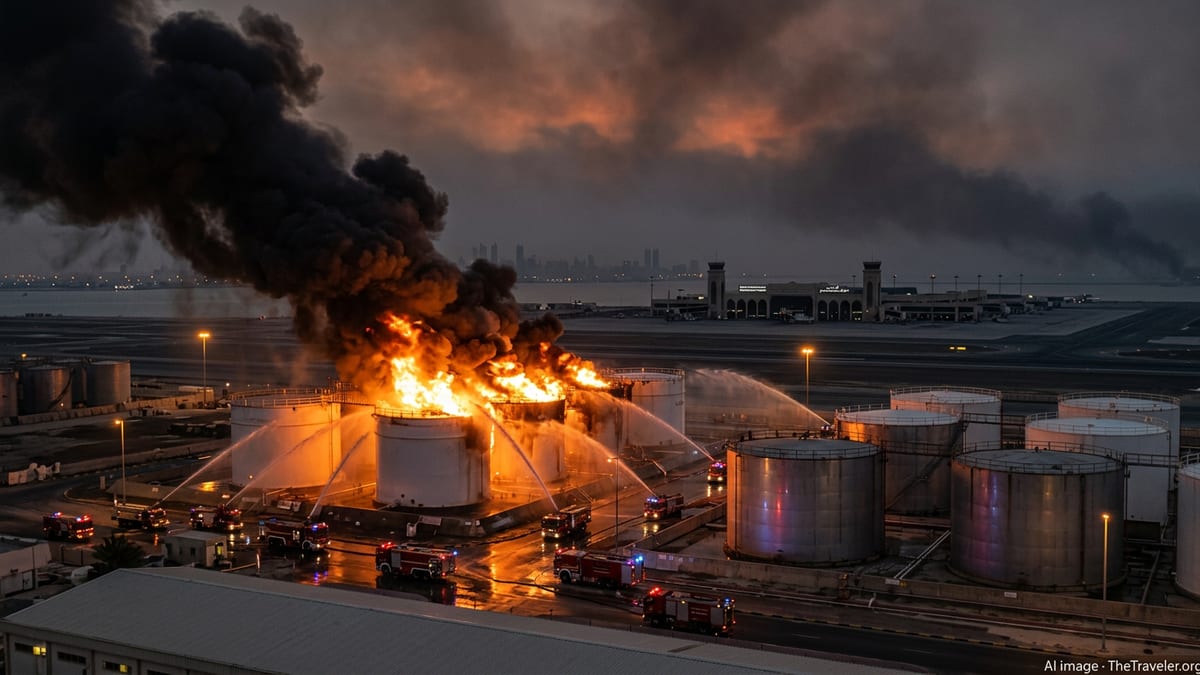
Morning Suspension After Drone-Linked Fire
Publicly available information from regional and international outlets indicates that flight movements at Dubai International Airport were halted early on the morning of March 30 after a drone incident triggered a fire near airport fuel infrastructure. Initial reports describe a blaze that began in the pre-dawn or early morning hours, prompting a temporary shutdown of arrivals and departures while emergency teams worked to contain the situation and assess damage.
Several accounts point to a link between the fire and ongoing drone activity tied to wider regional tensions. The March 30 disruption follows a series of earlier drone and missile incidents affecting the United Arab Emirates in recent weeks, including strikes that have previously led to short-notice suspensions and diversions at Dubai International.
Flight-tracking snapshots and airline advisories from the morning show multiple Dubai-bound services entering holding patterns, diverting to alternate airports or returning to their origin points as the closure took effect. Travelers scheduled to land at or depart from Dubai International during the early hours of March 30 encountered sudden changes to their itineraries as the airspace around the hub was temporarily restricted.
Is Dubai International Airport Open on March 30?
By late morning on March 30, publicly accessible updates suggest that Dubai International Airport was technically open, but operating under constrained conditions. Coverage from regional business media and travel-focused outlets describes a gradual restart of services, with a limited schedule resuming after several hours of suspension.
Reports indicate that some airlines reinstated selected departures and arrivals after mid-morning, prioritizing aircraft and routes that could be accommodated within revised safety and capacity parameters. However, these operations took place alongside continued delays and a backlog of disrupted flights, meaning that many passengers remained grounded or in transit at alternate airports.
Travel advisories and airline communications reviewed on March 30 and in the immediate aftermath consistently advise passengers not to proceed to the airport without a confirmed, operating flight. The overall picture for that date is one of partial reopening: Dubai International was open for business on March 30, but far from normal, with schedules significantly thinned and subject to rapid change.
Impact on Airlines, Diversions and Cancellations
The morning suspension at Dubai International on March 30 had a visible knock-on effect across airline networks using the hub. Flight-monitoring snapshots and published coverage note that several inbound services were diverted to other airports in the United Arab Emirates, including Al Maktoum International, while some long-haul flights turned back to their origin points after the closure became clear.
Major Gulf carriers operating through Dubai appear to have adopted a mix of diversions, rolling delays and outright cancellations to manage the disruption. Long-haul routes from Asia, Europe and Africa were among those affected, with aircraft re-routed, turnaround times extended and onward connections missed as the morning suspension rippled through connecting banks of flights.
Even after operations restarted on a limited basis, airlines continued to flag the potential for significant delays on March 30, citing airspace constraints, crew duty-time limits and congestion from earlier cancellations. Passengers with onward connections, particularly those relying on tight transfer windows through Dubai, faced rebooking challenges and extended layovers as carriers rebuilt their schedules.
Wider Context: Drone Threats and UAE Airspace
The March 30 disruption at Dubai International fits into a broader pattern of drone-related incidents and regional security tensions that have affected air travel in the Gulf throughout early 2026. Open-source timelines of the conflict involving Iran and regional states record multiple episodes in which drones or missiles have reached areas close to key transport and energy infrastructure in the United Arab Emirates.
In the weeks leading up to March 30, Dubai International and other UAE airports experienced earlier suspensions or partial shutdowns linked to drone strikes and debris, including an incident in which a fuel tank near Dubai’s main hub was set ablaze and flights were halted for several hours. These recurring episodes have underscored the vulnerability of dense air traffic hubs to even localized security incidents.
Analysts and travel advisories consulted for context emphasize that the UAE’s air defense systems have intercepted a large proportion of incoming projectiles, but note that falling debris and near-miss incidents can still trigger safety shutdowns. For airports that typically handle hundreds of thousands of passengers a day, even short-lived closures can create extensive knock-on disruption across global networks.
Advice for Travelers Transiting Dubai Around March 30
For travelers scheduled to pass through Dubai International on March 30 or in the days immediately following, public guidance from airlines and travel risk consultancies stressed vigilance and flexibility. Passengers were urged to monitor their carrier’s app or website closely, verify that flights were operating before heading to the airport, and be prepared for last-minute schedule changes.
Several carriers offered rebooking and refund options for customers unwilling or unable to travel in the wake of the drone-related fire and airspace disruption. Travel insurance providers and corporate travel managers also issued updated advisories, highlighting the potential for renewed interruptions if regional tensions generated further drone or missile activity near major hubs.
For those who did travel through Dubai on or after March 30, anecdotal accounts describe terminals that felt less crowded than usual but still subject to extended processing and boarding times as ground operations adjusted to revised patterns. With the situation evolving day by day, the consistent message from publicly available information is that passengers should treat March 30 as a day of disrupted yet partially resumed operations at Dubai International, rather than a return to fully normal service.