

More news on this day
Dubai International Airport, one of the world’s busiest long-haul hubs, has temporarily suspended flights after a drone incident linked to the escalating Iran conflict, sending fresh shockwaves through an already fragile global air travel network.
Get the latest news straight to your inbox!
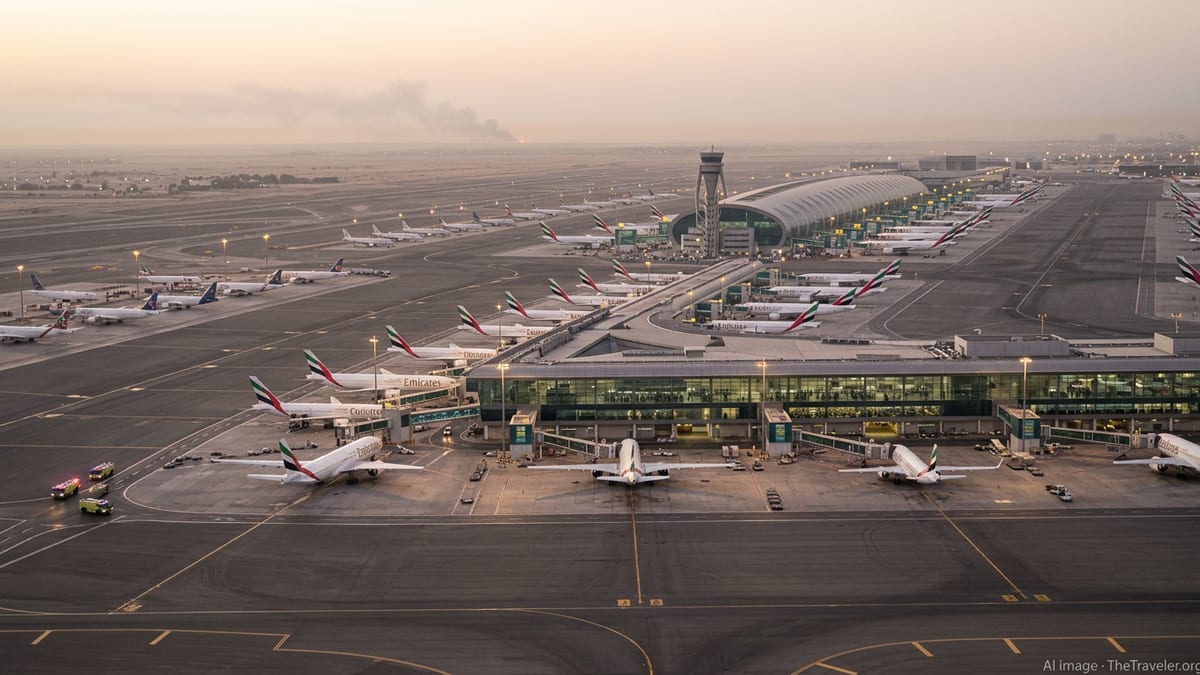
Drone Incident Forces Sudden Halt at Key Global Hub
Publicly available information indicates that flight operations at Dubai International Airport were halted after air defenses intercepted a drone near the airfield amid a broader barrage of Iranian missile and drone attacks across the Gulf region. Reports describe debris falling close enough to the airport to trigger fire alarms and precautionary evacuations, prompting air traffic controllers to suspend arrivals and departures for safety checks.
According to recent coverage tracking events in the United Arab Emirates, the most serious disruption came around March 7, when Dubai temporarily closed its airspace following an aerial interception in the vicinity of the airport. Separate reporting on the ongoing Iranian strikes on the UAE notes that more than a thousand drones and hundreds of missiles have been launched at targets across the country since late February, sharply raising the risk profile for civilian aviation.
Risk advisories issued to airlines and corporate travelers describe a patchwork of closures and partial resumptions at Dubai and nearby hubs, with Dubai International initially shutting down, then moving to limited operations. Analysts note that even short suspensions at a hub of this size can take days to unwind, as aircraft, crews, and passengers are left out of position around the world.
Wider Middle East Conflict Spills Into Civil Aviation
The temporary shutdown at Dubai is unfolding against the backdrop of a rapidly widening conflict between Iran and a US and Israeli-led coalition. Open-source timelines show that Iran began large-scale missile and drone strikes on the UAE and other Gulf states after coordinated attacks on Iranian territory in late February, with multiple waves aimed at ports, energy infrastructure, and military sites.
Regional airspace quickly became a patchwork of closures and severe restrictions. Travel security bulletins issued in early March describe airspace closures or tight limitations across several Gulf countries, with carriers advised to avoid large swathes of the northern Gulf and the Strait of Hormuz. In practice, this has forced airlines either to suspend flights entirely or to adopt lengthy detours skirting the conflict zone.
Dubai’s role as a major connecting hub means that any local disruption instantly acquires global significance. Long-haul services linking Europe and North America with Asia, Africa, and Australasia frequently rely on Dubai as a transfer point. With the latest suspension layered on top of weeks of missile and drone alerts, international aviation planners now face a more deeply entrenched operational crisis rather than a brief regional scare.
Airlines Cut Routes, Reroute Jets, and Warn of Ongoing Disruptions
Airlines across the Middle East and beyond have responded by suspending flights, consolidating routes, and rerouting aircraft around the most exposed corridors. A regional shipping and port advisory from early March notes that Saudi Arabia’s national carrier paused services to Dubai and several other Gulf and regional destinations, while Egypt’s flag carrier halted flights to Dubai, Abu Dhabi, Sharjah, Doha, and multiple other cities until further notice.
Separate travel advisories focused on aviation highlight that Dubai International and other Gulf airports have shifted between full suspension, partial operation, and limited repatriation flights as security assessments evolve. Some Gulf and European carriers have concentrated on operating a small number of long-haul services to repatriate stranded travelers, often with extended routings that avoid Iranian and neighboring airspace entirely.
Global flight-tracking data and airline schedule updates now show pronounced gaps on routes that would typically cross the Gulf and western Iran. Instead, aircraft are flying longer corridors over the Arabian Sea, the Red Sea, or via more southerly paths around the Arabian Peninsula. Aviation analysts caution that these adjustments are likely to remain in place as long as missile and drone launches continue at the current intensity.
Knock-On Effects for Travelers Worldwide
For passengers, the most immediate impact has been a wave of cancellations, diversions, and last-minute schedule changes affecting journeys far beyond the Middle East. Travel forums and social media posts from early to mid-March describe travelers stranded in transit hubs from Europe to South Asia after onward flights through Dubai and other Gulf airports were scrapped or repeatedly delayed.
Corporate travel risk briefings emphasize that even travelers not flying to or from the region may feel the effects, as aircraft and crew shortages cascade through global networks. With aircraft diverted onto longer detour routes, airlines face higher fuel burn, tighter crew duty limits, and reduced aircraft availability for other sectors. As a result, some carriers have trimmed frequencies on secondary routes, adjusted departure times, or upgauged aircraft to consolidate demand.
Travel management companies advise clients to build extra buffer time into itineraries, monitor airline notifications closely, and remain prepared for multi-leg rebookings through alternative hubs such as Istanbul, Athens, or major European capitals. Insurance specialists also note a spike in interest in policies covering geopolitical disruption and travel delays, reflecting a growing perception that the conflict could reshape travel patterns for months rather than days.
Strategic Chokepoints and the Future of Gulf Aviation
The drone-related shutdown in Dubai underscores how exposed modern aviation is to geopolitical shocks at key chokepoints. The Gulf region functions as an aerial crossroads between continents, much as the Strait of Hormuz does for global energy shipments. Recent marine and port advisories report sharply reduced shipping traffic through the Strait as vessels divert for safety, mirroring the disruption unfolding in the sky.
Aviation experts point out that major Gulf hubs, including Dubai, Abu Dhabi, and Doha, have spent years building dense global networks based on their location and open airspace. The current conflict challenges that model by injecting sustained security risk into the very air corridors that made the hubs successful. If Iranian missile and drone activity continues at scale, airlines may be forced to rethink how much traffic they route through the region and for how long.
At the same time, the episode is likely to accelerate investment in missile defense, hardened terminal infrastructure, and more sophisticated airspace management around key hubs. Public discussions in policy and industry circles already reference the need for clearer multinational protocols on airspace closures during conflict, improved real-time information sharing with airlines, and contingency routing plans that can be activated within minutes.
For now, the temporary suspension of flights at Dubai International stands as one of the clearest signs that the Middle East conflict has moved beyond military targets to disrupt the everyday flows of people and commerce. As airlines, governments, and travelers adapt, Dubai’s experience may shape how global aviation prepares for and navigates future crises in other strategic regions.