

More news on this day
British holidaymakers face severe disruption today as Dubai’s airports suspend all flights and Gulf airspace closures ripple across the Middle East in the wake of US-Israeli strikes on Iran, triggering widespread airline cancellations, diversions and urgent safety warnings.
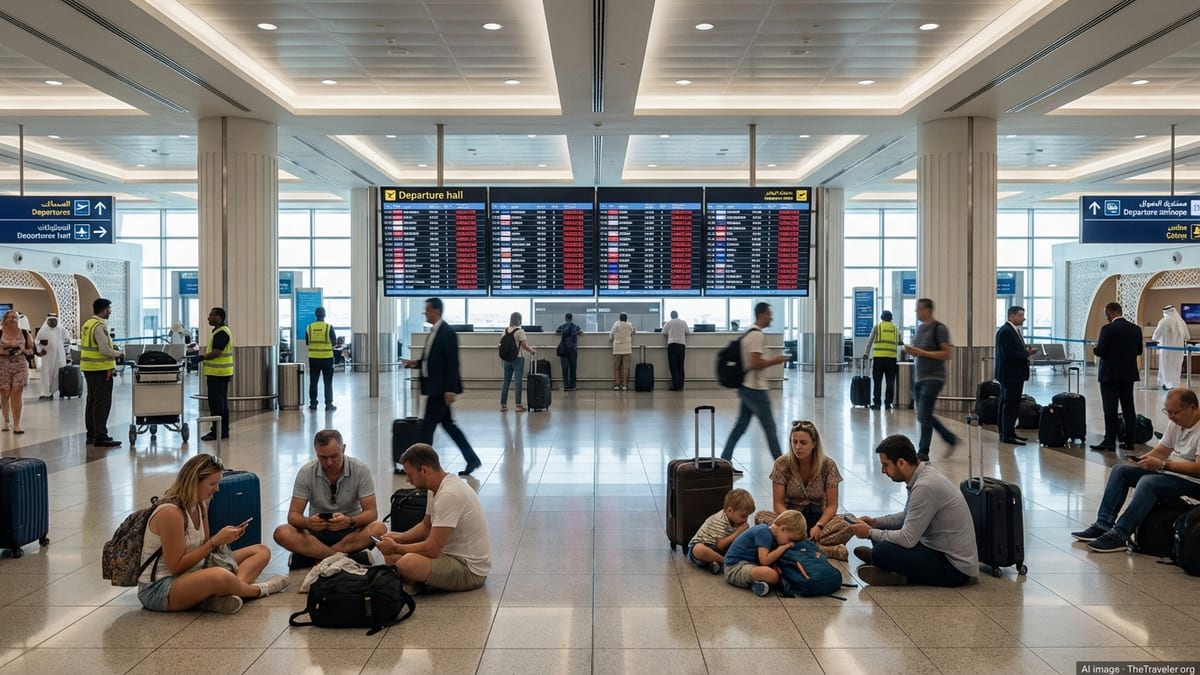
Dubai Airports Shut as UAE Partially Closes Airspace
Dubai International Airport and Al Maktoum International Airport have halted all flight operations until further notice after the United Arab Emirates ordered a temporary partial closure of its airspace on Saturday, February 28. Dubai Airports and the Dubai Media Office confirmed that both arrivals and departures are suspended, turning one of the world’s busiest hubs into a standstill at the height of the weekend travel peak.
Authorities have urged passengers not to travel to either airport and to seek information directly from their airlines. Ground staff are working to manage growing crowds and assist stranded travelers, but congestion inside terminals is already significant, with seating, food outlets and hotel accommodation under mounting pressure.
The UAE’s move follows a dramatic escalation in regional tensions after coordinated US and Israeli strikes on targets in Iran and subsequent retaliatory missile launches against bases in the Gulf. Aviation regulators describe the airspace measures as precautionary but necessary in light of heightened security and the risk to civil aviation.
With no clear timeline for reopening, the closure has immediate consequences far beyond the Gulf. Dubai is a key connector for flights between the UK, Europe, Asia, Africa and Australasia, meaning the shutdown is reverberating throughout global airline networks.
Airlines Cancel, Reroute and Suspend Middle East Services
The grounding of operations in Dubai comes amid a wider wave of cancellations and rerouting across the region. Emirates has suspended all flights to and from Dubai as it responds to multiple airspace closures, while flydubai has cancelled its schedule for the day and is issuing rolling operational updates to passengers.
Across the Gulf, Qatar, Bahrain, Kuwait and Oman have also restricted or closed their airspace following the strikes on Iran, effectively creating a broad corridor that many airlines are currently unable or unwilling to enter. Carriers including Qatar Airways, Saudia, EgyptAir, Turkish Airlines and Air India have all temporarily suspended or curtailed flights to key Middle Eastern destinations, citing safety and regulatory constraints.
European and Asian airlines are being forced into long detours to avoid affected skies, driving up journey times and fuel burn. Some long haul services have turned back mid-flight or diverted to alternate airports when updated restrictions were issued. Industry analysts warn that if closures persist, airlines could face sustained pressure on schedules and costs, even if demand for travel remains strong.
Several carriers have activated flexible rebooking and refund policies for passengers booked to transit the Middle East in the coming days. However, the rapidly changing situation means that operations may shift at short notice and that today’s cancellations could extend if security conditions deteriorate or regulators prolong airspace bans.
What This Means for British Tourists Heading to Dubai and Beyond
For British travellers, the immediate impact is most acute for those booked to fly to, from or via Dubai and other Gulf hubs over the next 48 hours. Flights from UK airports that were en route to the region have been diverted or returned, and airlines are advising customers not to go to the airport unless they have received confirmation that their service is operating.
Passengers with itineraries involving connections through Dubai, Doha, Abu Dhabi or other Gulf cities should expect severe disruption, including missed onward flights to destinations in Asia, Australia, East Africa and the Indian Ocean. Many itineraries built around Dubai as a transit point will need to be rebooked via alternative hubs, such as Istanbul, European capitals or direct services where available, subject to any new overflight constraints.
Travelers already in Dubai or neighboring states may find their return journeys postponed or rerouted, and accommodation costs could rise as thousands of passengers compete for limited hotel rooms. Travel insurance policies vary, but many comprehensive plans cover additional expenses arising from official airspace closures and security incidents; British tourists are being urged to retain receipts and documentation in case they need to claim.
For those planning imminent half term or spring getaways to Dubai, Abu Dhabi and wider Middle Eastern resorts, the advice from airlines and tour operators is increasingly to monitor communications closely and be prepared for itinerary changes, date shifts or alternative destinations if the closures extend.
UK Government Advice and Security Guidance for the Region
The UK government has convened emergency meetings to assess the developing crisis and its implications for British nationals in the Middle East. Officials have already advised against travel to several high risk areas and have urged citizens in affected Gulf states to follow local guidance, remain indoors where instructed and stay alert to official communications.
Britons currently in the UAE, Qatar, Bahrain and Kuwait are being told to register contact details with consular services where possible and to ensure their mobile phones remain charged and connected to receive alerts. Embassies are prioritising assistance for those directly affected by airspace closures, including tourists who cannot leave due to cancelled flights.
Security experts caution that while most Gulf cities remain calm, the risk profile for civil aviation and critical infrastructure has shifted quickly. British travellers transiting the region are being reminded that situations on the ground and in the air can change at speed, and that they should factor in contingency time, flexible tickets and robust insurance when making plans.
The Foreign Office is expected to refine its travel advisories as more information emerges about the trajectory of the conflict and the duration of aviation restrictions. Tourists are encouraged to check the latest official guidance on their specific destination before travelling and to stay in touch with their tour operator or airline.
Practical Steps British Travellers Should Take Right Now
For UK passengers with bookings today or in the coming days, the first step is to check the status of flights directly with the airline via official apps, call centres or reservation systems. Many carriers are proactively contacting customers whose journeys are affected, offering options such as date changes, ticket vouchers or refunds, but high call volumes mean queues are likely.
Those already at UK or Middle Eastern airports are advised to seek assistance from airline desks and ground agents rather than attempting to rebook independently at premium last minute fares. In some cases, airlines may arrange accommodation, meals or onward connections, especially for passengers on through tickets whose journeys have been disrupted mid transit.
Travellers whose trips are not scheduled for the next few days should avoid making hasty changes until airlines clarify their medium term schedules. With airspace policies still in flux, additional cancellations or reopenings could significantly alter the options available. Holding off on costly self funded reroutes until an airline has formally updated a booking may preserve more generous flexibility rights.
Finally, British tourists are being advised to monitor reputable news outlets and official advisories rather than relying on speculation circulating on social media. With much of the region’s airspace now subject to temporary closure and key hubs like Dubai effectively offline, the situation remains highly dynamic, and accurate, up to date information is critical for making safe and informed travel decisions.