

More news on this day
Dubai International Airport and Al Maktoum International Airport have suspended all flight operations until further notice, after rapidly escalating regional tensions triggered emergency airspace restrictions across the Gulf on February 28, 2026.
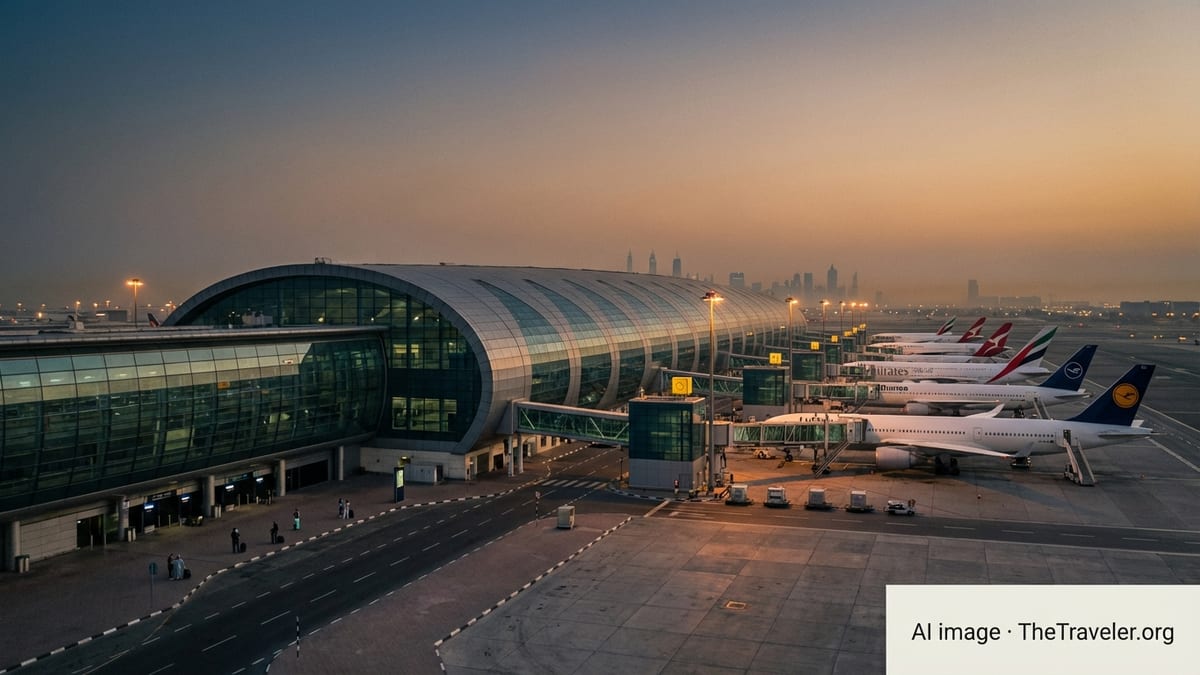
Airspace Closures Force Sudden Shutdown of Major Hub
The halt in operations at Dubai’s two airports followed a wave of regional airspace closures linked to U.S. and Israeli strikes on Iran and subsequent retaliatory missile fire across parts of the Middle East on Saturday. Authorities in the United Arab Emirates confirmed that the country’s airspace had been partially closed as an exceptional precautionary measure in response to evolving security risks.
Dubai Airports, which operates Dubai International (DXB) and Dubai World Central – Al Maktoum International (DWC), said all arrivals and departures were suspended, with no immediate timeline for resumption. Officials stressed that the move was driven by safety considerations, citing the need to protect passengers, crew and airport staff as regional skies became increasingly congested with diversions and military activity.
Flight tracking data throughout the day showed wide swathes of airspace over Iran, Iraq, Kuwait, Bahrain and parts of the Gulf effectively empty of commercial traffic, as governments imposed short-notice restrictions on civilian overflights. With Dubai serving as one of the world’s busiest international hubs, the shutdown has quickly emerged as one of the most disruptive aviation events in the region in recent years.
In public statements, Dubai’s civil aviation officials characterized the suspension as temporary but declined to offer a firm reopening estimate, noting that operational decisions would depend on real-time security assessments and coordination with military and air navigation authorities across neighboring states.
Passengers Urged to Stay Away as Terminals Fill
As news of the closures spread, Dubai Airports issued repeated appeals for passengers not to travel to DXB or DWC, advising travelers to contact their airlines directly for the latest status updates, rebooking options and refund policies. The operator said its priority was to keep terminals from becoming overly congested while departure boards remained almost entirely blank.
For many travelers already in transit when the restrictions took effect, the shutdown resulted in sudden diversions or returns to origin airports, with some long-haul flights spending more than a dozen hours in the air before landing back where they started. Those who did reach Dubai ahead of the full suspension reported long queues at airline service desks, as staff worked to rebook itineraries without clarity on when normal operations might resume.
Hotels near the airports and in central Dubai began filling with stranded passengers by late afternoon, as airlines invoked contingency plans to arrange accommodation and meal vouchers. Travel advisers warned that even once flights restart, pressure on local hotel inventory is likely to remain intense while carriers work through backlogs of disrupted journeys.
Airport officials said they were deploying additional ground staff and customer care teams across both hubs to manage crowds and provide information, while security personnel oversaw access to terminals to prevent unnecessary build-up of passengers without confirmed departures.
Global Airlines Reroute and Cancel Across the Region
The closures in Dubai came amid broader turmoil in Middle East aviation, as multiple states moved to restrict or shut their skies to commercial traffic. Major carriers across Europe, Asia and North America cancelled or rerouted flights that would normally cross key air corridors over Iran and the Gulf, leading to cascading delays well beyond the immediate conflict zone.
Emirates, Dubai’s flagship airline and one of the world’s largest long-haul carriers, suspended all operations to and from its home hub for the duration of the airspace restrictions, telling customers that services would not resume before at least late on Sunday. Sister carrier Flydubai halted its schedule as well, including flights to destinations such as Tehran, Mashhad and Tel Aviv that had already seen heightened disruption in recent days.
Other Gulf and international airlines, including Qatar Airways, Etihad Airways and several European and Asian network carriers, pulled services to Dubai or diverted aircraft to alternative airports once it became clear that regional airspace closures would not be short-lived. Aviation analytics firms reported hundreds of cancellations across the Middle East on Saturday alone, with a significant share linked directly to Dubai’s shutdown.
Industry analysts noted that the impact is magnified by Dubai’s role as a global connection point linking Europe, Africa, Asia and Australasia. Many passengers affected by the closures were not originally bound for the UAE but relied on DXB as a transfer hub, leaving itineraries fragmented and requiring large-scale re-accommodation on completely different routings.
Knock-On Effects for International Travel and Tourism
The sudden suspension of flights through Dubai is expected to reverberate through international travel and tourism for days, if not weeks. Tour operators reported immediate disruption to package holidays connecting through the emirate, while corporate travel managers began scrambling to rebook executives on longer, indirect routes that avoid restricted airspace.
Travel advisors said that for the short term, itineraries between Europe and parts of Asia are likely to involve longer flight times and more fuel-intensive routings as airlines skirt closed or high-risk zones. This will add operational costs for carriers and could reduce seat availability on some popular long-haul sectors, particularly during already busy travel periods.
Within Dubai, the halt is a significant setback for a tourism sector that relies heavily on seamless global connectivity. Hotels, attractions and retailers that cater to international visitors may experience an abrupt drop in arrivals while airports remain closed. However, local tourism officials pointed to Dubai’s strong track record of recovering from shocks, including prior regional tensions and the pandemic-driven border closures earlier in the decade.
Analysts said much will depend on how long it takes for security conditions to stabilize sufficiently for regulators to reopen airspace and for airlines to restore normal schedules. Even a disruption measured in days can take a week or more to unwind as aircraft and crews are repositioned, maintenance cycles are adjusted and backlogged passengers are re-accommodated.
What Affected Travelers Should Do Now
For travelers with imminent plans to transit Dubai, industry experts urged close monitoring of airline alerts, booking portals and airport advisories. Most carriers are offering fee-free rebooking, date changes or refunds for customers scheduled to fly through Dubai in the coming days, with flexibility windows typically extending several days beyond the initial shutdown.
Passengers already in Dubai were advised to remain in their hotels or current accommodation rather than heading to the airport without confirmed flight details. Airlines have encouraged customers to use mobile apps and contact centers instead of queuing at airport counters, where staff capacity is being prioritized for those whose flights were interrupted mid-journey.
Travelers planning future trips that would normally route via Dubai may wish to discuss contingency options with agents, including alternative hubs or carriers that are currently using different corridors to connect Europe, Asia and Africa. However, aviation specialists cautioned against making hasty changes, noting that airspace restrictions can evolve quickly as diplomatic and security dynamics shift.
While there is no official indication yet of when Dubai International and Al Maktoum airports will reopen, both authorities and airlines have signaled that safety will remain the overriding factor in any decision to restart operations. Until then, the closure of one of the world’s largest aviation gateways stands as a stark reminder of how swiftly geopolitical tensions can upend global travel.