

More news on this day
Dubai International Airport is gradually restoring operations after several days of significant disruption and travel delays, with limited flights resuming and airlines adjusting schedules as the hub works to stabilize passenger flows.
Get the latest news straight to your inbox!
Gradual Recovery After Regional Airspace Incident
Publicly available information indicates that Dubai International Airport began a phased resumption of flights following an operational suspension linked to heightened regional tensions in early March 2026. Reports describe an initial halt to many departures and arrivals on March 7, as carriers temporarily suspended services and advised passengers to delay travel plans while airspace risks were assessed.
By March 8, recovery efforts had shifted toward a limited restart of operations, with a reduced number of flights arriving and departing from Dubai International and, in some cases, from Al Maktoum International Airport. Airlines operating at the hub have been working to reconfigure rotations, reposition aircraft and crews, and prioritize stranded travelers as capacity is gradually brought back online.
The phased approach reflects the complexity of restarting activity at one of the world’s busiest international airports. Even as aircraft movements increase, the lingering effects of earlier cancellations and diversions continue to weigh on the network, leading to rolling delays and adjusted departure times for several routes.
Passenger Experience: Longer Queues and Ongoing Delays
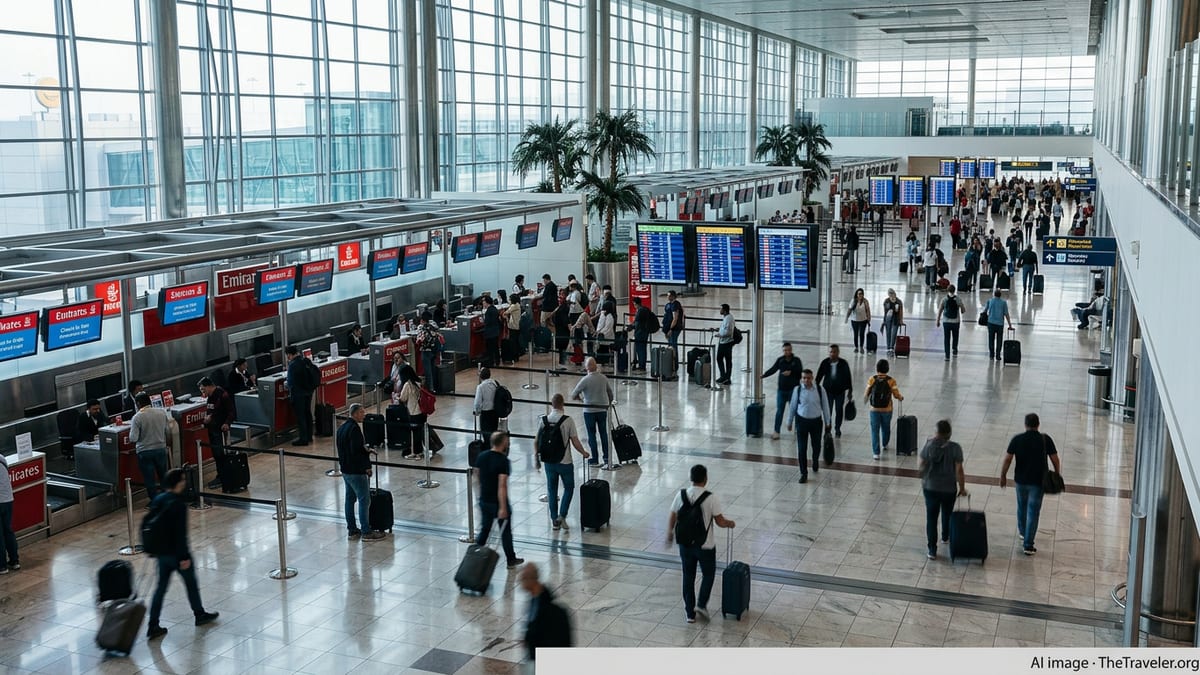
Travelers passing through Dubai International in recent days have encountered a mix of normal and disrupted conditions, according to published coverage and first-hand accounts shared on public platforms. Some passengers describe relatively smooth processing once inside terminals, while others report extended check-in times, crowded departure halls, and uncertainty around last-minute schedule changes.
Airlines have encouraged customers to monitor their flight status closely and to avoid heading to the airport without a confirmed booking, particularly while access controls and capacity limits remain in place to ease congestion. In several instances, carriers have advised against early arrivals at the terminal, seeking to prevent overcrowding at security and check-in counters.
Rebooking remains a key challenge for those whose journeys were disrupted at the height of the operational suspension. Seat availability on near-term departures is constrained as airlines attempt to accommodate both previously scheduled passengers and those whose flights were canceled or heavily delayed. Travel industry observers note that it can take days before schedules fully stabilize after such large-scale disruption.
Airlines Rebuild Schedules and Clear Backlogs
Major carriers using Dubai International as a hub are progressively rebuilding their schedules, drawing on measures that have become familiar from earlier regional weather and airspace events. Publicly available advisories highlight efforts to operate additional sectors on select routes, upgauge aircraft where possible, and optimize connections to move the highest number of stranded passengers.
Industry scheduling documents indicate that capacity remains below normal levels, with some flights still canceled or consolidated as airlines prioritize operational reliability over immediate volume. A reduced schedule can help limit further last-minute disruptions and offers ground handlers and airport teams more breathing room as they work through accumulated backlogs of baggage, catering, and aircraft servicing.
For connecting travelers, the hub’s gradual recovery means that minimum connection times may be harder to guarantee than under ordinary circumstances. Travel experts recommend allowing extra time between flights where itineraries can be adjusted, particularly for long-haul passengers whose journeys involve onward links to Europe, North America, or Asia-Pacific.
Operational Lessons After Recent Years of Disruption
The latest disruption comes after a series of operational shocks that have affected Dubai’s aviation system in recent years, including severe flooding in April 2024 that temporarily submerged parts of the airport precinct and prompted days of flight cancellations and diversions. Public reporting on those events described extensive clean-up and repair work, along with temporary schedule reductions and the use of Al Maktoum International to absorb diverted services.
Since then, Dubai’s aviation authorities and airport operators have been widely reported as investing in resilience measures, from upgraded drainage and infrastructure to refined contingency playbooks for schedule recovery. The current phased resumption, with carefully metered increases in flight activity, appears to draw on those lessons by prioritizing manageable throughput and safety over a rapid return to full capacity.
Analysts suggest that such events underscore the vulnerability of global aviation networks to shocks ranging from extreme weather to geopolitical tensions. For a mega-hub like Dubai International, even a short suspension can have ripple effects across continents, given the airport’s role as a key connector between East and West.
Guidance for Upcoming Travelers Through Dubai
For passengers with upcoming itineraries via Dubai International Airport, publicly available guidance from airlines and travel operators points to a cautious but improving outlook. As more flights return to service, options for rebooking and same-day connections are widening, although peak times are likely to remain busy while the system works through residual disruptions.
Travel experts advising through media and industry channels recommend that passengers reconfirm flight details directly with airlines on the day of travel, arrive within the recommended check-in window rather than excessively early, and build in additional time for border control and security. Those starting their journeys in Dubai are also being encouraged to use online check-in and baggage tracking tools where available to streamline their airport experience.
While the immediate travel chaos is easing as operations gradually stabilize, a full return to normality is expected to be incremental. Waiting times, last-minute gate changes, and some lingering delays remain a possibility in the days ahead. However, with each additional wave of successfully operated flights, Dubai International Airport moves closer to restoring the high-frequency global connectivity that has long defined its role in international travel.