

More news on this day
Dubai International Airport is moving into a phased restart of passenger operations following a period of severe disruption and widespread flight cancellations linked to recent regional airspace closures and security concerns.
Get the latest news straight to your inbox!
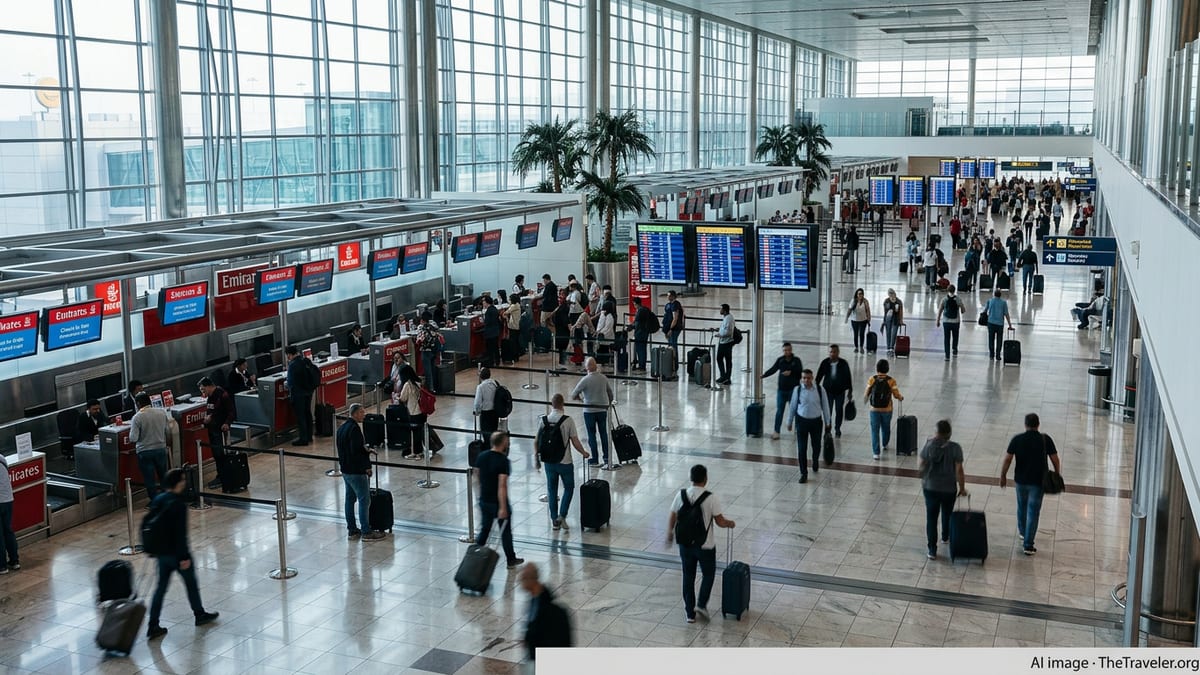
Phased Reopening After Widespread Flight Suspensions
Recent days have seen Dubai International Airport, one of the world’s busiest aviation hubs, shift from near standstill to cautious, managed activity as regional airspace gradually reopens. Publicly available information indicates that commercial flights, which were heavily curtailed at the start of March 2026 due to security-related airspace restrictions, are now operating on a reduced schedule.
Reports from regional media and airline advisories describe a limited resumption of traffic from March 2 onward, with a small number of departures and arrivals cleared to operate under special routing. Flight-tracking data and airport updates show that this has allowed some stranded travelers to continue their journeys, although movements remain well below typical volumes for the airport.
While the restart marks a significant shift from the full suspension that followed late February’s escalation in regional tensions, the airport is still described as operating under constrained conditions. Airlines are prioritizing certain routes, often focusing on long-haul trunk services and repatriation needs, while secondary and feeder connections remain patchy.
Industry analysts note that this measured approach reflects both safety considerations and the complexity of re-synchronizing aircraft, crew and ground operations after an abrupt halt. The result is a gradual, rather than immediate, normalization of schedules at Dubai International.
Passengers Face Ongoing Delays, Cancellations and Rebooking Challenges
Despite the shift toward recovery, travelers using Dubai International Airport continue to experience substantial disruption. Airline bulletins and traveler accounts describe rolling delays, last-minute schedule changes and a backlog of passengers awaiting rebooked connections. Many carriers are advising customers not to go to the airport unless they hold a confirmed booking for a specific, operating flight.
Some international airlines serving Dubai have introduced temporary caps on new bookings, concentrating instead on clearing existing backlogs. Others have consolidated services, combining passengers from multiple cancelled flights onto a reduced number of departures. This has resulted in heavily loaded flights on certain routes while other city pairs remain suspended or served only intermittently.
Travel industry observers indicate that rebooking has been complicated by the network effects of the shutdown. Aircraft and crews are out of position, slots at other regional airports have been reshuffled, and knock-on effects are visible across Europe, Asia and Africa. Passengers with tight onward connections, including those traveling through Dubai from South Asia and Africa toward Europe and North America, have been particularly vulnerable to extended delays.
Consumer guidance from airlines and travel agents consistently emphasizes checking flight status frequently, allowing extra time for check-in and security procedures, and being prepared for itinerary changes at short notice as schedules are updated.
Operational Priorities: Safety, Airspace Coordination and Capacity Management
Aviation specialists point out that the pace of the restart at Dubai International is closely tied to evolving airspace arrangements across the wider Middle East. According to open-source reporting, multiple regional airspace segments were restricted or closed during the recent period of heightened tension, affecting not only flights to and from the United Arab Emirates but also overflight corridors used by carriers from Europe, Asia and Oceania.
As restrictions ease, coordination between civil aviation authorities, air navigation service providers and airlines is shaping what traffic can be safely accommodated. This coordination determines which routes reopen first, what altitudes and corridors can be used, and how much capacity can realistically be handled at peak periods. Industry reports describe this as a dynamic process that can change day by day as risk assessments evolve.
On the ground at Dubai International, the gradual return of flights is also a matter of capacity management. Ground handling teams, security staff and air traffic controllers must be carefully rostered back to full strength after the slowdown, while contingency planning remains in place in case of further airspace restrictions. Publicly available airport communications highlight efforts to balance the desire to restore connectivity quickly with the need to prevent congestion in terminals and on the airfield.
Airlines are using a mix of widebody and narrowbody aircraft as they rebuild their schedules, often deploying larger jets to key destinations to carry more passengers per movement while total slot availability remains constrained.
Impact on Dubai’s Role as a Global Transit Hub
The disruption has temporarily muted Dubai International Airport’s role as a global transfer point, with ripple effects across airline networks that depend on the city as a central connecting node. Published coverage notes that thousands of passengers who would normally make seamless same-day connections have faced extended layovers, overnight stays or rerouting via alternative hubs.
For Dubai’s home-based carriers, the interruption has affected both passenger and cargo operations. Long-haul belly cargo capacity, which typically moves in the holds of widebody passenger aircraft, has been curtailed on some routes, influencing the movement of high-value and time-sensitive goods. Logistics analysts observe that this has added pressure to supply chains already navigating capacity constraints in other regions.
Travel and tourism stakeholders in Dubai are also monitoring the situation closely. While hotels and hospitality businesses have seen an influx of unexpected stopover guests due to disrupted itineraries, forward bookings from key source markets may be affected if potential visitors perceive ongoing instability in regional air travel. Market commentators suggest that clear, frequent communication about the gradual normalization of operations will be important to restore traveler confidence.
At the same time, the airport’s rapid move from complete suspension to a structured restart underscores its strategic importance in global aviation. Industry watchers note that carriers are keen to restore Dubai frequencies as soon as conditions allow, given the hub’s central role in connecting traffic between continents.
What Travelers Need to Know in the Coming Days
Looking ahead, airlines and travel platforms indicate that schedules at Dubai International Airport are likely to remain fluid for at least several days as operations stabilize. Even as more flights are added, departure and arrival times may shift at relatively short notice, and certain destinations could see uneven service as airlines prioritize core routes and equipment repositioning.
Passengers with upcoming travel through Dubai are being advised, through publicly accessible advisories, to monitor their booking details closely, make use of airline apps and notification services where available, and consider flexible arrangements for ground transport and accommodation. Those planning tight connections may wish to allow additional buffer time where possible until timetables become more predictable.
Travel industry experts also highlight the importance of understanding ticket conditions, particularly for itineraries involving multiple carriers or codeshare arrangements. Options such as free date changes, rerouting via alternative hubs, or credit vouchers may be available in some cases, depending on the airline and fare type.
While the current phase remains challenging, the visible increase in daily movements and the reopening of more routes suggest that Dubai International Airport is on a recovery trajectory. Barring further regional disruptions, observers expect flight volumes to continue climbing progressively as March 2026 unfolds, with the hub working to regain its usual position at the heart of global long-haul travel.