

More news on this day
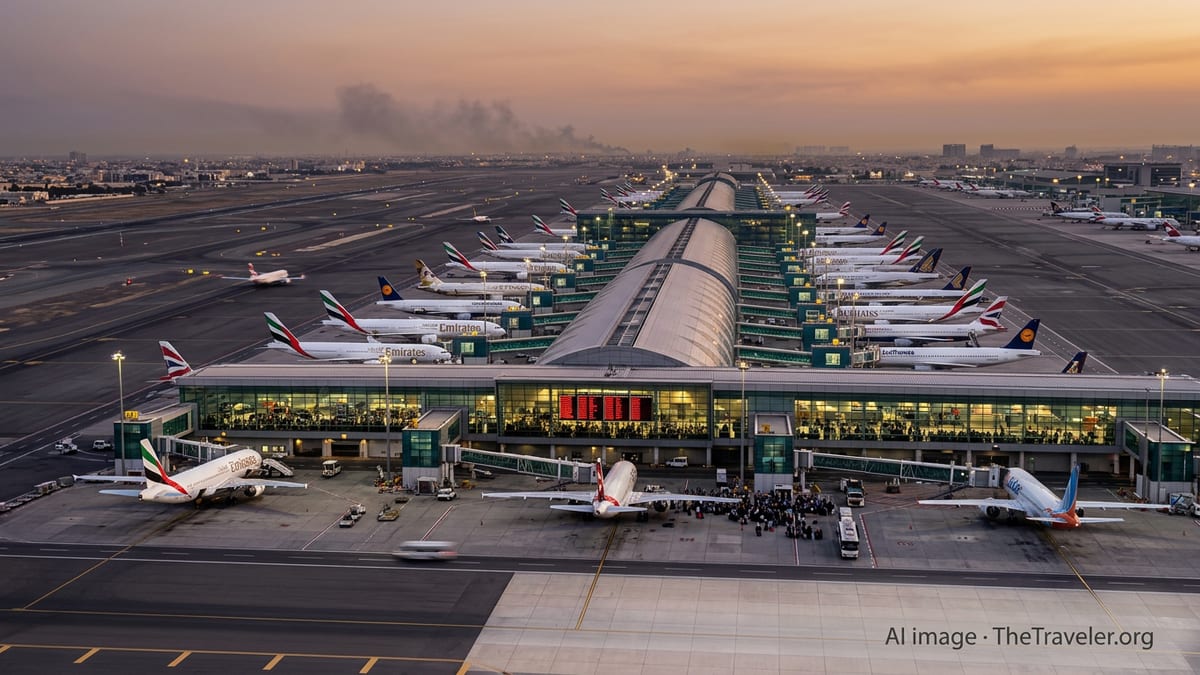
Dubai International Airport has become the latest major Gulf hub to buckle under sweeping airspace closures, joining Ben Gurion, Hamad, Abu Dhabi and Bahrain airports in an unprecedented wave of flight cancellations and delays that has grounded thousands of services and stranded hundreds of thousands of travelers worldwide.
Chain Reaction After Strikes on Iran Shuts Key Air Corridors
The disruption began on February 28, when coordinated US and Israeli strikes on Iran triggered a cascade of retaliatory missile and drone attacks across the Gulf, prompting Iran, Iraq, Kuwait, Bahrain, Qatar and other states to close large portions of their airspace. Within hours, one of the world’s most important aviation corridors between Europe and Asia was effectively severed, forcing airlines to cancel or divert flights mid-journey.
As missiles targeted infrastructure around major cities, authorities ordered full or partial shutdowns at several airports, including Ben Gurion near Tel Aviv and Hamad International in Doha. By the weekend, airports in the United Arab Emirates were drawn into the crisis as Dubai and Abu Dhabi reported damage from nearby strikes and halted most traffic in coordination with national air defense measures.
Aviation data firms report that more than 3,000 flights were canceled globally in the immediate aftermath, with cancellations and diversions continuing to mount into March. Analysts say the scale and speed of the airspace closures have eclipsed other recent geopolitical shocks, with some experts calling it the most disruptive aviation event since the onset of the Covid-19 pandemic.
Dubai International’s Rare Standstill Reverberates Worldwide
Dubai International Airport, normally the world’s busiest international hub, moved from rolling delays to a near-total halt as the United Arab Emirates temporarily closed its airspace. Emirates and flydubai suspended all flights to and from Dubai for extended periods, while services via Dubai World Central were also curtailed, ending a 48-hour stretch in which almost no commercial traffic moved through the emirate.
Limited flights have now begun to operate from both Dubai International and Abu Dhabi’s Zayed International Airport, but schedules remain skeletal. Authorities in Dubai have urged passengers not to travel to the airport unless they have been directly contacted by their airline with a confirmed departure time, underscoring the scale of the backlog and the challenges of rebalancing crews and aircraft.
For a hub that typically handles tens of thousands of transit passengers each day, the near standstill is unprecedented outside of the pandemic period. Industry observers note that even Russia’s invasion of Ukraine did not shut down these Gulf waypoints, which serve as essential bridges for journeys between Europe, Asia, Africa and Australasia.
Ben Gurion, Hamad, Abu Dhabi and Bahrain Struggle to Reopen
Across the region, other major hubs are facing similar turmoil. Ben Gurion International, already accustomed to heightened security procedures, has seen waves of cancellations and diversions as missile threats have repeatedly forced ground stops. Airlines have pared back direct services to Israel, choosing to reroute or suspend flights altogether until risk levels fall.
In Qatar, Hamad International Airport has been repeatedly disrupted as Iranian missiles and drones targeted sites across the country, leading to full airspace closures and fresh cancellations. Bahrain International has likewise endured high cancellation rates, with data showing more than half of inbound services scrubbed during the peak of the crisis.
Abu Dhabi’s Zayed International Airport, a key base for Etihad Airways, has struggled to gradually restart operations after a full suspension of commercial traffic. Flight tracking platforms show that more than 2,000 services to and from a cluster of seven Gulf airports, including Dubai, Doha, Abu Dhabi and Bahrain, have been canceled in recent days as airlines react to fast-changing security assessments and restricted flight corridors.
Thousands of Flights Grounded, Hundreds of Thousands Stranded
As the week opened, global totals for scrapped flights continued to climb. Aviation analytics firms estimate that more than 1,500 flights to the Middle East were canceled in a single day, with total worldwide cancellations now running into several thousand as airlines adjust long-haul routes and reposition aircraft.
The ripple effects extend far beyond the region. Long-haul carriers that rely on Gulf hubs to connect Europe and North America with Asia and Australasia have been forced to add hours to flight times, detour around closed airspace, or abandon routes entirely for now. Some planes were turned back mid-flight over the weekend, resulting in marathon journeys that ended where they began, with passengers never reaching their destinations.
Travelers have reported crowded terminals, limited accommodation near airports and difficulty rebooking onward journeys as seat availability tightens. Industry groups warn that the financial impact for airlines, airports and tourism providers is already running into hundreds of millions of dollars, with further losses likely if airspace restrictions remain in place or intensify.
Airlines, Governments and Travelers Scramble for Contingency Plans
Airlines across the Gulf and beyond are racing to adapt. Emirates, Etihad, Qatar Airways, flydubai, Air Arabia and major Indian and European carriers have all announced rolling suspensions, selective resumptions and complex rerouting strategies designed to keep some connectivity alive while avoiding the most volatile areas.
India’s aviation authorities say hundreds of flights on key Gulf routes have been canceled or rescheduled, with carriers such as Air India and IndiGo extending suspensions to airports in the United Arab Emirates, Qatar, Bahrain, Kuwait and Saudi Arabia. European and Asian airlines, meanwhile, are updating timetables on a near-hourly basis as they consult defense and aviation safety agencies.
Governments are also weighing emergency measures. The United Kingdom and other European states are exploring charter and potential military-supported evacuations from Gulf hubs once safe corridors can be agreed, while consular staff have been deployed to airports to support stranded nationals. In the Gulf, authorities have coordinated with hotels and local residents to provide temporary accommodation for travelers unable to leave.
Travel experts advise passengers with upcoming journeys through Dubai, Doha, Abu Dhabi, Bahrain or Tel Aviv to assume that schedules are fluid and to maintain close contact with airlines rather than relying on static booking apps or airport displays. With tensions still elevated and further missile strikes possible, the region’s airports remain on high alert, and the battle to restore reliable connections across one of the world’s busiest aviation crossroads is only just beginning.